


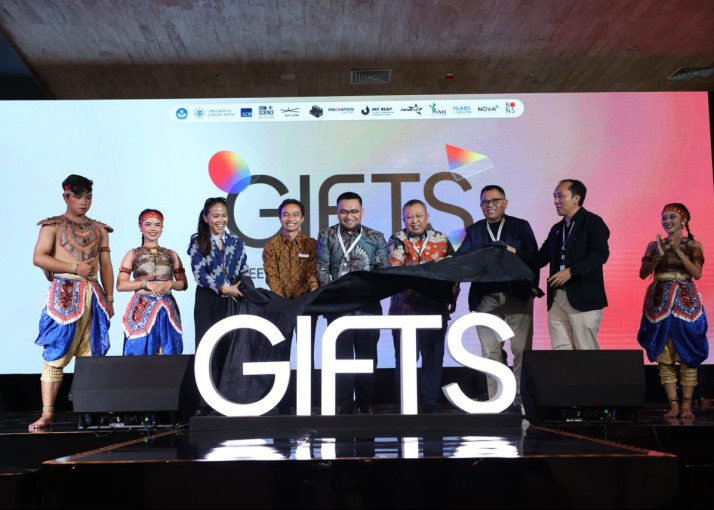
Universitas Gadjah Mada (UGM) once again hosted the Global Innovation & Future Technology Summit (GIFTS) 2025 at the UGM Innovation and Creativity Hub (GIK UGM) on Thursday (Dec. 4). Carrying the theme “Sustainable Technology for Future Earth”, the second year of GIFTS showcased sustainable innovations from 43 industry and startup partners to foster interdisciplinary dialogue and strengthen individual and institutional capacity.
The Vice Rector for Research, Business Development, and Partnerships at UGM, Dr. Danang Sri Hadmoko, stated that GIFTS serves as a strategic forum to identify global partners in innovation and to encourage the submission of research and technology development initiatives that are impactful, sustainable, and responsible for national interests.
“This activity is part of the Promoting Research and Innovation through Major and Decent Science and Technology Project agenda to strengthen science and technology capacity at several PKNBH institutions, including UGM,” said Dr. Hadmoko.
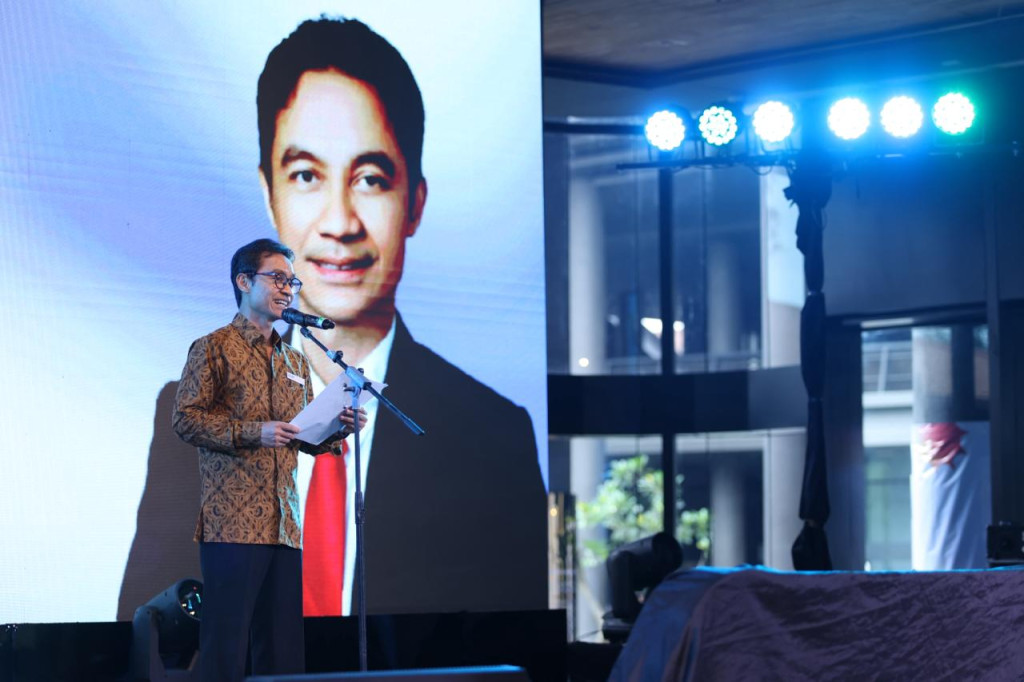
Dr. Hadmoko also emphasized the importance of government support in adopting innovations produced by researchers and startups, while expressing appreciation to the 43 partners who have demonstrated a strong commitment to collaborating with UGM innovators through the Innovative Academy program.
“With the theme we have adopted, we hope to strengthen UGM’s innovation ecosystem as a catalyst for the emergence of innovations and startups that generate economic and social impacts for the community,” he added.
On the same occasion, Oki Earlivan Sampurno, Special Staff for Industry and International Cooperation at the Ministry of Higher Education, Science, and Technology, highlighted the major challenges facing Indonesia’s research and innovation ecosystem.
He explained that for the past two decades, Indonesia has discussed technology, innovation, and sustainability. Yet, many research outcomes have been constrained by barriers that prevent them from becoming tangible innovations.
“Indonesia has abundant natural resources, human resources, and outstanding innovators, but not all research can be developed due to differences in the lingua franca between academia and industry. This is why research investment often fails to result in innovations or products that can be scaled up,” Sampurno said.
Sampurno stressed that a significant opportunity lies in laboratory-scale innovations developed by academics. According to him, these innovations can be developed into startups and industrial products if supported by adequate capital and appropriate collaboration.
He noted that forums such as GIFTS 2025 can serve as strategic spaces for Micro, Small, and Medium Enterprises (MSMEs), industry, investors, media, and students to collectively develop technologies that address industrial needs, investor interests, and societal challenges.
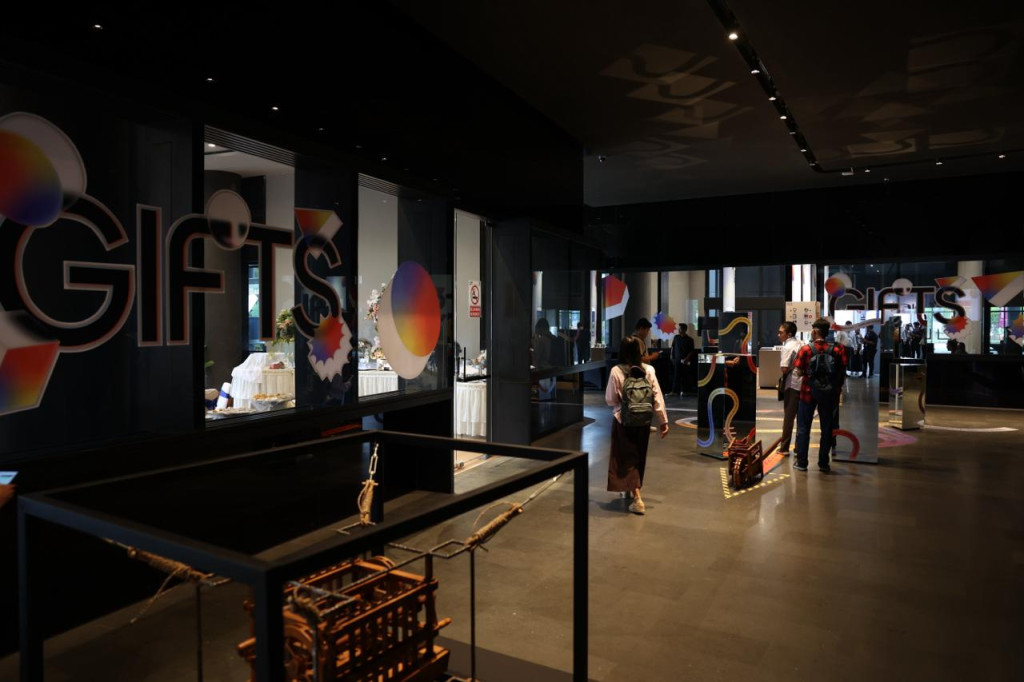
In its second year, GIFTS featured a series of events open to participants. GIFTS 2025 presented two Plenary Sessions, two Panel Sessions, an Innovation Exhibition showcasing products, prototypes, and innovative services from startups, companies, and university research teams, as well as various workshops.
During the first plenary session, speakers including Irwansyah Panjaitan (Ministry of MSMEs of the Republic of Indonesia), Bayu Ardias Kurniadi (Assistant to the Vice President’s Special Staff), Oki Earlivan Sampurno (Special Staff for Industry and International Cooperation, Kemdiktisaintek), Denni Puspa Purbasari (Lecturer at the UGM Faculty of Economics and Business and Economist at the Indonesian Business Council), and Muhammad Neil El Himam (Deputy for Digital Creativity and Technology, Ministry of Creative Economy) discussed the theme “Exploring Government Policy Insights: Designing a Sustainable Future Through Technology”.
In the session, Sampurno stated, “Publications and research on campus are certainly important, but what we truly want to encourage is a shift in mindset from merely achieving academic impact to generating social and economic impact.”
Meanwhile, the second plenary session discussed how industry and universities can align innovation, research, and talent development to address future global challenges. Salman Subakat, CEO of Paragon and Innovation, highlighted that UGM possesses strong resources and talented students capable of driving innovation.
“Innovation is born from passion and the courage to push boundaries to create something different,” he said.
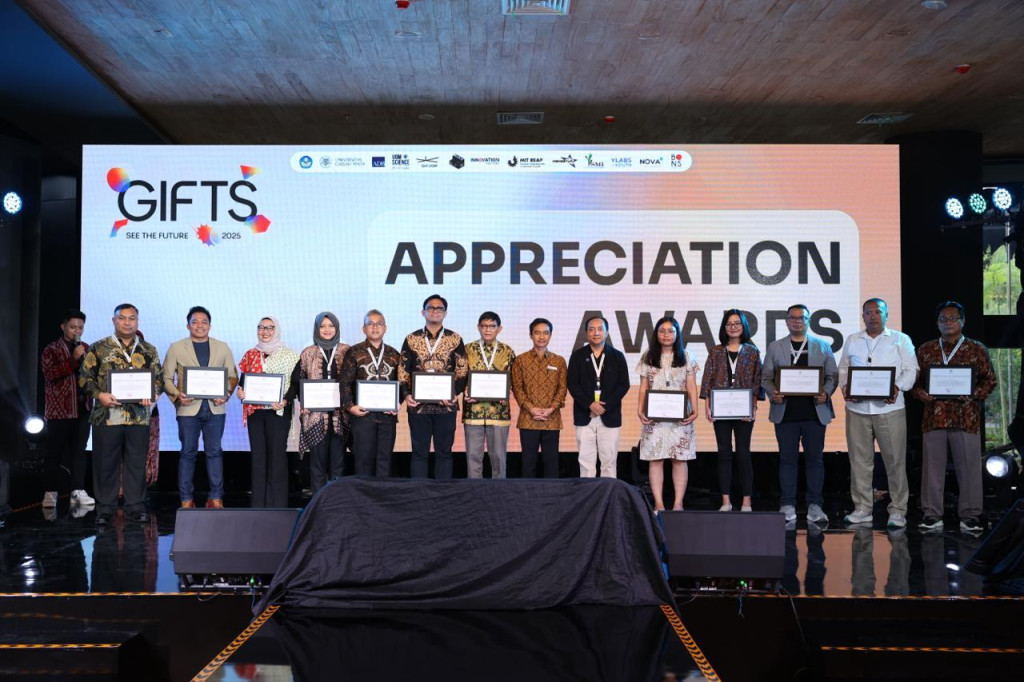
At GIFTS 2025, the event also featured the signing of Memoranda of Understanding (MoUs) and the presentation of awards between UGM and nine venture capital and investment companies, five associations, and 29 partners from government and industry, all committed to supporting UGM’s efforts to strengthen the innovation and startup ecosystem.
The signing marked a milestone for UGM in formalizing the synergy between UGM Science Techno Park and GIK UGM as an “Ecosystem Builder for Innovation, Startup, and Venture”.
It is hoped that this synergy will catalyze the development of a more integrated, globally competitive collaboration platform, fostering innovative initiatives with broad impact on the national innovation ecosystem.
Author: Lintang Andwyna
Editor: Gusti Grehenson
Post-editor: Rajendra Arya
Photographer: Firsto Adi