


Universitas Gadjah Mada (UGM) will introduce a new university-wide curriculum in the first semester of the 2026/2027 academic year, as mandated by Rector Regulation No. 19 of 2025 on Education. Developed through extensive consultations with alumni, industry partners, and other stakeholders, the curriculum aims to align with workforce demands and global developments.
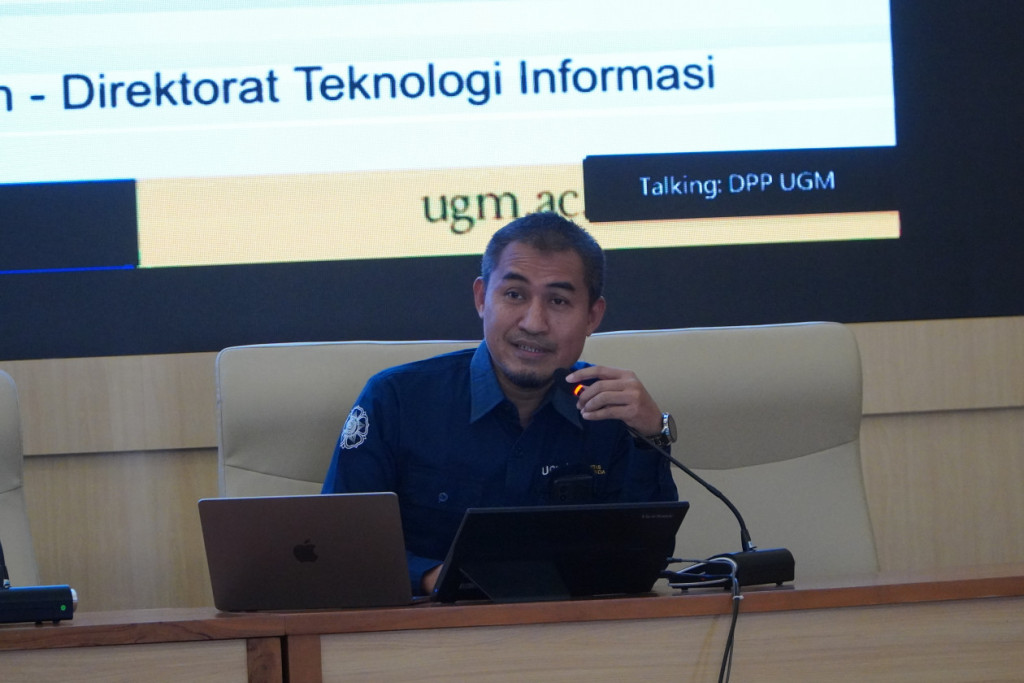
According to UGM Vice Rector for Education and Teaching, Prof. Wening Udasmoro, the curriculum is structured around four key pillars to support students’ academic and personal growth: integrity, proficiency in English and other foreign languages, teamwork, and resilience.
“We hope this new curriculum will stay relevant to workforce needs and global developments,” she said.
Prof. Wening explained that integrity forms the foundation of students’ academic character and professional ethics, while proficiency in English and other foreign languages is intended to strengthen their international competitiveness. Teamwork is designed to develop students’ ability to collaborate effectively in dynamic organizational settings, while resilience prepares them to face academic and professional challenges.
She added that shifting student learning preferences, such as an increasing tendency to work independently instead of collaboratively, underscore the need to strengthen teamwork and resilience.
“The new curriculum is expected to address these challenges while preparing graduates who are ready to contribute to organizations, society, and the workforce,” she said.
Prof. Wening also emphasized UGM’s commitment to continuing to improve educational governance to provide students with relevant, adaptive, and competitive learning experiences.
Secretary of the Directorate of Education and Teaching, Dr. Sigit Priyanta, explained that the new curriculum introduces four major changes. The first is a streamlined structure that is easier for both students and study programs to navigate.
“The curriculum has been simplified into three main learning blocks with nine clearly defined pathways, making it easier for students to understand and for programs to manage,” he said.
The second is a transdisciplinary approach, enabling students to take courses across various study programs through options like second majors, minors, intensification programs, and accelerated pathways.
“The curriculum is designed to leverage expertise across programs and faculties, fostering collaboration, integration, and knowledge synthesis to address increasingly complex challenges,” Dr. Sigit said.
A key feature of the new curriculum is a 23-credit university-wide core, intended to provide all UGM graduates with a shared academic foundation and essential competencies, while preserving the distinctive strengths of each discipline.
The core curriculum includes Religious Education, Pancasila, Citizenship, Indonesian Language, Digital Literacy, Sustainable Future Skills, the Community Service Program (KKN-PPM), and foreign language proficiency. Each study program will retain the flexibility to develop its own curriculum in accordance with accreditation and professional standards.
The curriculum also introduces a Personalized Education and Employability framework, allowing students to tailor their learning pathways to their interests and career goals.
“Students will have greater flexibility to shape their academic journey with second majors, minors, intensification programs, and electives aligned with their career goals and research interests,” Dr. Sigit explained.
To support implementation, UGM has gradually developed an integrated academic system to ensure consistent application of the curriculum across faculties and programs. The system standardizes course codes and recognizes cross-disciplinary learning, ensuring students’ learning activities are properly recorded in their official academic records.
During the transition period, faculties and schools will finalize curriculum adjustments by August 1, 2026. The new curriculum will apply to all students entering the 2026/2027 academic year, while current students may either continue with their existing curriculum or transition to the new one if their program adopts it.
Reporter: B. Diah Listianingsih/ DPP
Author: Zabrina Kumara
Editor: Gusti Grehenson
Photo: Documentation of DPP and UGM Public Relations