


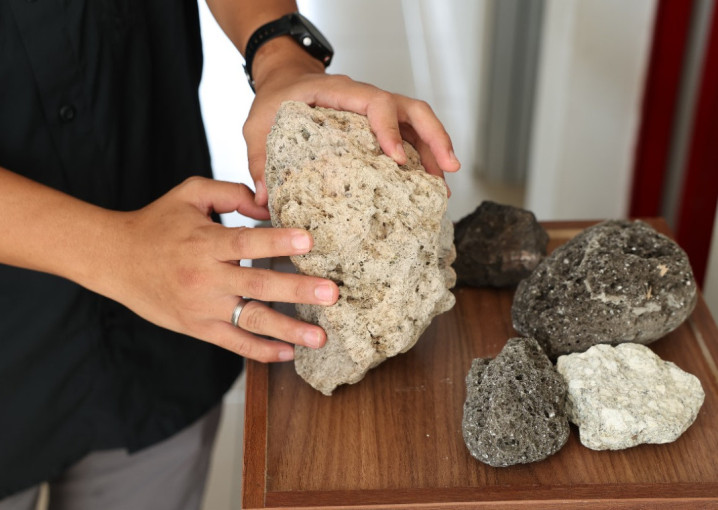
The Faculty of Engineering (FT) and the Faculty of Mathematics and Natural Sciences (FMIPA) at Universitas Gadjah Mada (UGM) have jointly introduced a new master’s degree specialization. One of the transdisciplinary graduate-level specializations now offered is in metallurgy, a field that combines engineering processes with chemical sciences. This program is expected to play a vital role in applied sciences related to the management of Indonesia’s mining and mineral resources.
“The collaboration was initiated due to the strong presence of applied learning in chemical engineering that inherently involves chemistry,” explained Professor Indra Perdana, a lecturer at the Department of Chemical Engineering, FT UGM, on Thursday, Jun. 19, 2025, at the UGM Campus.
According to Professor Perdana, the development of the master’s program in chemical engineering involves numerous learning activities that intersect with chemistry.
“While our focus is on processing, adding value to mineral resources, we recognize that chemistry plays a critical role in that process,” he said.
Currently, the metallurgy specialization initiated by FT UGM is the first of its kind in Indonesia.
Most existing programs in this field are rooted solely in chemical sciences.
Professor Perdana noted that one of the program’s core strengths lies in its foundational interdisciplinary integration.
This approach is essential, as mineral production processes involve more than just treatment and processing; they also require resource mapping, understanding environmental impacts, and ensuring sustainability.
“The mineral processing chain is long. For example, separating minerals requires deep chemical knowledge,” he added.
He elaborated that the metallurgy specialization is designed to cover more than one or two aspects of mineral processing.
Instead, it takes a holistic approach to understanding the entire value chain as an integrated system.
This metallurgy specialization can be pursued through two graduate programs.
In FT UGM, it is offered through the Master’s Program in Chemical Engineering.
Meanwhile, in FMIPA UGM, it is available under the Master’s Program in Chemistry.
Professor Perdana noted that each faculty offers distinct pedagogical approaches and academic strengths, but the program’s applied nature bridges both scientific domains.
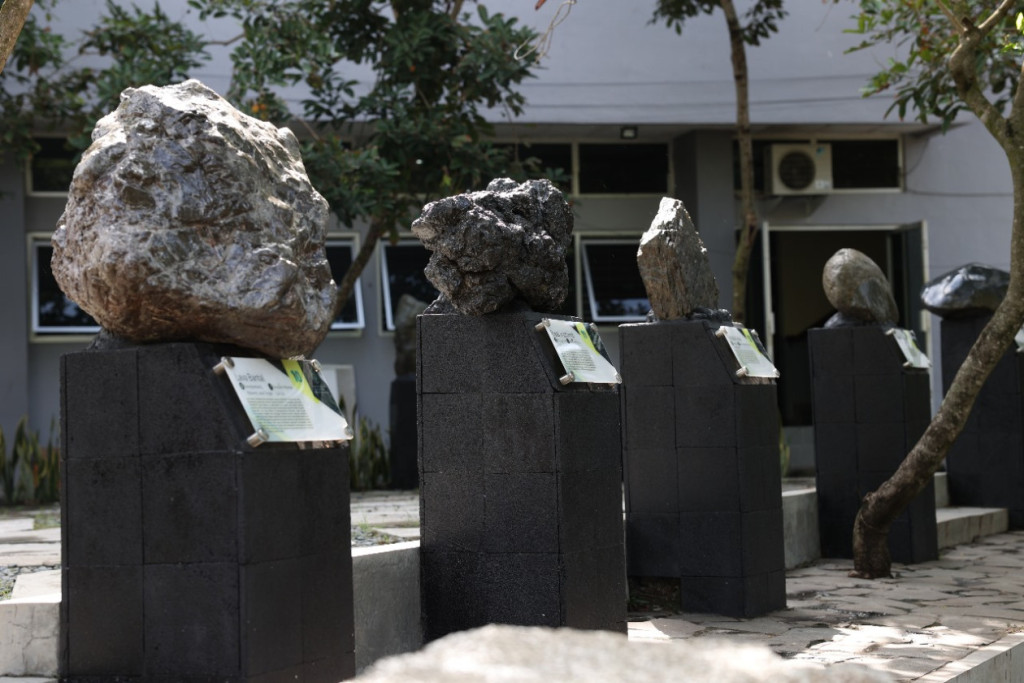
Echoing this, Professor Nuryono, Coordinator of the Master’s Program in Chemistry at FMIPA UGM, emphasized that graduates with expertise in metallurgy are in high demand in the current job market, especially in sectors advancing equitable and sustainable new energy initiatives.
These sectors require professionals with integrated skills in both engineering and chemistry.
“There’s a significant need for metallurgy experts. At present, most of the talent in this area comes from abroad, so we need to strengthen our domestic human resources,” he explained.
Regarding financial support and scholarships, Professor Nuryono noted several options, including the Master’s to Doctorate Program for Outstanding Bachelor’s Graduates (PMDSU) offered by the Ministry of Higher Education, Science, and Technology.
This scholarship supports fast-tracked education from the master’s to the doctoral level.
Additionally, the Indonesia Endowment Fund for Education (LPDP) also offers numerous domestic scholarship schemes for graduate students.
The metallurgy specialization is open to prospective students who hold undergraduate or applied science degrees in engineering or chemistry.
The program will commence in the new academic year following the fourth intake period of UGM’s graduate school admissions.
All information regarding the registration process and schedule is available at https://um.ugm.ac.id.
Author: Tasya
Editor: Gusti Grehenson
Post-editor: Lintang Andwyna
Photographer: Firsto Adi