


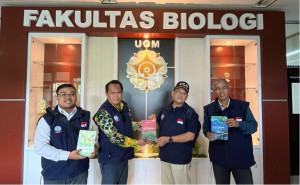
The Faculty of Biology, Universitas Gadjah Mada (Biology UGM), is collaborating with the Center for Biomaritime Studies in Border Area and 3T Region (CBM-B3T) to strengthen biomarine research in border areas and disadvantaged, frontier, and outermost (3T) regions. This research collaboration aims to explore potential solutions to address the needs of communities living in border areas.
The Dean of Biology UGM, Professor Budi S. Daryono, expressed full support for CBM-B3T’s initiative to establish a biomaritime research center. He emphasized that being an initiator is not easy, but initiatives grounded in good intentions for the public will hold strategic value in the future.
He explained that Biology’s support is based on broader national interests. Professor Budi noted that Indonesia is a country where two-thirds of its territory consists of oceans, yet research and policy attention remain largely land-oriented.
“Indonesia’s future will be determined by the nation’s ability to understand and sustainably manage its marine potential,” said Professor Budi on Monday (Mar. 2).
Furthermore, Professor Budi highlighted the dangers of uncontrolled exploitation of marine resources, including sand mining. According to him, marine management must not be solely oriented toward short-term economic gains. Ecosystem damage, he warned, will have far-reaching consequences for future generations.
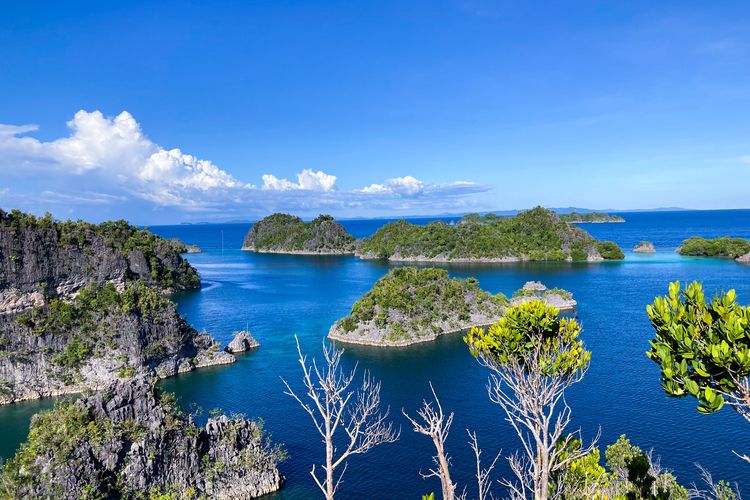
The research to be developed includes the identification and characterization of marine biodiversity, covering invertebrates such as mollusks and crustaceans, as well as vertebrates, including fish, marine reptiles, and marine mammals.
“To date, our marine biological resource data may still only cover around 20–25 percent, leaving major question marks, particularly in mid-ocean and deep-sea areas,” he said.
In addition to exploration and inventory, research will also focus on bioprospecting and aquaculture development. Professor Budi stressed that exploitation without the capability to cultivate will ultimately lead to overfishing and resource extinction. He cited examples such as shrimp and milkfish, which can already be farmed, while bluefin tuna still largely depends on capture fisheries.
“If exploitation exceeds sustainable limits, the resources could be depleted before we develop the ability to cultivate them. That is why research on aquaculture must be pursued before these resources are exhausted,” he said.
This collaborative research approach also includes empowering fishers and strengthening local wisdom. Professor Budi recalled how traditional fishers used to harvest marine products only as needed and would release undersized or spawning fish. Such ecosystem balance principles, he noted, remain relevant and should be revitalized amid modern extractive exploitation practices.
In its implementation, CBM-B3T will involve cross-sector collaboration, including universities, research institutions, government agencies, and coastal communities. Professor Budi mentioned that a research center in the Riau Islands partners with Universitas Maritim Raja Ali Haji.
“The Faculty of Biology serves as a supporting partner because we have a biomarine specialization program. We also operate the Pantai Porok Biomarine Research Station in Gunungkidul,” he said.
Professor Budi affirmed that strengthening the maritime sector must become a national priority, whether in research, funding, or technological development.
“In Northern European countries, all have access to the sea, and they have leveraged it to become advanced and prosperous nations,” he remarked.
Meanwhile, the Chair of CBM-B3T, Professor Agus Salim, underscored the importance of integrating science into daily life. He believes that simple, locally grounded approaches are key strengths in managing biological resources in border regions.
He also shared that the team has reviewed the development of local fish aquaculture, such as wader, as well as orchid conservation, which is one of Biology’s focuses.
“Here, we see that small things around us can become sites for research and scientific development,” he explained.
Furthermore, both institutions are working on drafting a collaborative research proposal covering aquatic biodiversity development, endemic flora conservation, and research-based socio-economic empowerment models for coastal communities. The proposal is planned for submission to both national and international funding schemes.
Author: Hanifah
Editor: Gusti Grehenson
Post-editor: Jasmine Ferdian
Photo: Faculty of Biology Public Relations and Kompas.com