


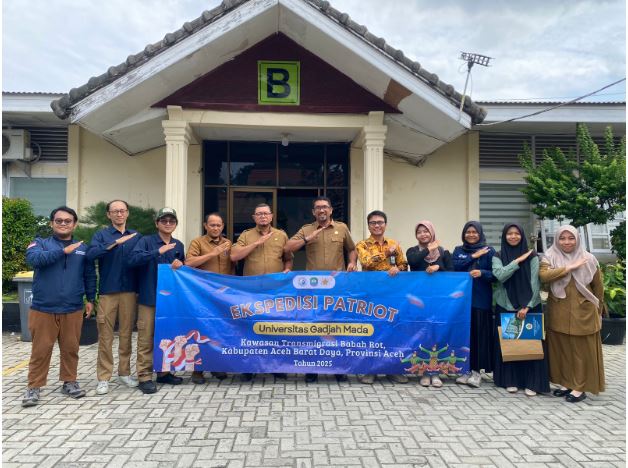
The Universitas Gadjah Mada Patriot Expedition Team (TEP UGM), which is carrying out community service activities in the Babahrot-Kuala Batee Transmigration Area, Southwest Aceh Regency, has presented several strategic findings related to the area’s potential and the management challenges that must be addressed to realize productive and sustainable transmigration development.
A study conducted since August 2025 by TEP UGM found that the Babahrot area has extensive land potential for agricultural development.
The distribution of land with high suitability (S1) and the presence of large paddy fields make this area vital to Southwest Aceh’s food supply.
However, this potential is constrained by significant ecological vulnerability, as various reports show the dominance of potentially critical land, the presence of peat, and clusters of fire hotspots near oil palm plantations.
“The disconnection of watershed ecosystems between the upstream, midstream, and downstream zones increases the risks of flooding, river sedimentation, and drought,” said M. Chrisna Satriagasa, Head of Output 1 Team, on Wednesday (Nov. 26).
From a socio-economic perspective, the team noted that a productive-age population dominates Babahrot. Yet educational attainment remains low, and several social issues persist, including crop theft, opposition to mining activities, and social trauma stemming from past conflicts.
These dynamics affect public acceptance of local transmigration programs, particularly in villages previously affected by boundary disputes and unclear land status.
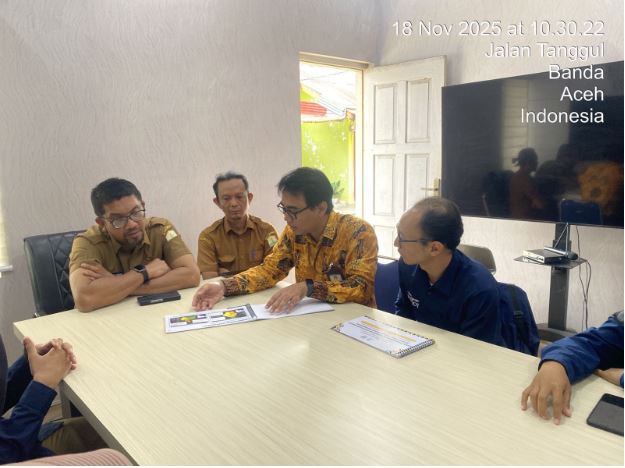
Sharing additional findings, Satriagasa emphasized concerns regarding productive infrastructure.
While basic facilities such as schools, bridges, and health services remain functional, infrastructure that directly supports the economy is in alarming condition.
“Many village roads are severely damaged, irrigation systems are not functioning optimally, and electricity networks have not yet reached all areas. Several Pamsimas facilities also require repairs before they can properly serve the community,” he explained.
Meanwhile, Output 2 Team identified two leading commodities capable of driving regional economic growth: rice and vannamei shrimp.
Rice is the primary commodity with a substantial contribution to food production in the Southwest Aceh Regency.
Economic analysis shows that rice farming in Babahrot is highly feasible for further development.
“Vannamei shrimp serves as the leading commodity in the coastal area of Lama Tuha Village, with stable productivity and strong market potential,” said Dr. Rhomi Ardiansyah.
Through a SWOT analysis involving stakeholders from the regency government, village administrations, and local communities, TEP UGM concluded that the Babahrot Transmigration Area holds substantial development potential. However, structural weaknesses continue to overshadow progress.
Therefore, the team recommends several strategies, including irrigation improvements, upgrading production roads, strengthening village economic institutions, providing assistance for farmer and shrimp-farming groups, and developing downstream processing of rice and shrimp as priority steps.
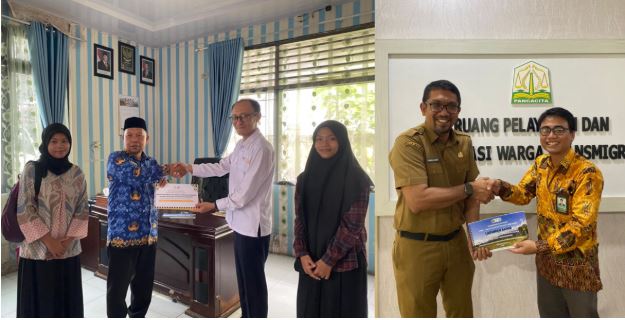
“The submission of this interim report marks the conclusion of TEP UGM’s field phase, but the team stresses that mentoring and the preparation of the final recommendations will continue in collaboration with the local government. TEP UGM hopes that the findings of this study can serve as a data-driven basis for policymaking and help Babahrot advance as an independent, productive, and sustainable transmigration area,” added Dr. Ardiansyah.
Chrisna Satriagasa of Output 1 delivered these findings together with Dr. Rhomi Ardiansyah, leader of Output 2, alongside the Office of Investment and Integrated Services for Manpower and Transmigration (DPMPTSP Nakertrans) of Southwest Aceh and the Aceh Provincial Office for Manpower and Population Mobilization on Tuesday (Nov. 18).
The event also included the submission of an interim report and the team’s withdrawal from the field location.
Author: Satriagasa
Editor: Agung Nugroho
Post-editor: Lintang Andwyna