


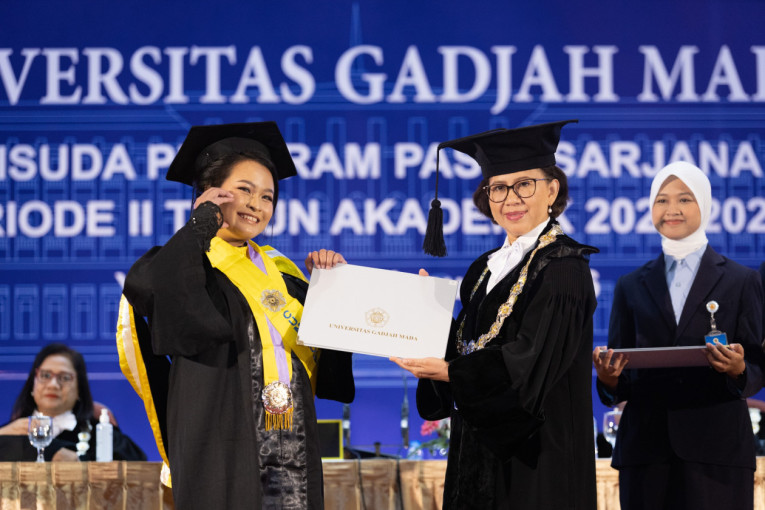
Universitas Gadjah Mada (UGM) conferred degrees on 1,061 postgraduate students, comprising 825 master’s graduates, 118 medical specialty graduates, 14 medical subspecialty graduates, 104 doctoral graduates, as well as 13 graduates from previous periods.
Of the total, 55.33 percent were female graduates and 44.67 percent were male graduates. The average study period for the master’s program was recorded at 2 years and 2 months, with an average GPA of 3.71.
Meanwhile, the average study duration for the medical specialty program in this period was 4 years, with an average GPA of 3.80. In the doctoral program, the average GPA was 3.84, with 20 graduates earning a perfect 4.00. These achievements reflect the consistent academic quality of UGM’s postgraduate students.
UGM Rector, Professor Ova Emilia, in her welcoming address, emphasized that higher education plays a strategic role as a center for research and innovation. She stated that national development challenges require mastery of science and technology grounded in academic integrity.
According to Professor Emilia, universities bear the responsibility of preparing future talents who are both principled and adaptive. UGM is directed to continuously develop knowledge that delivers tangible benefits to society at large.
“As a higher education institution, UGM is mandated to develop knowledge that has a real impact on society while preparing excellent future talents,” the rector said on Wednesday (Jan. 21) at Grha Sabha Pramana.
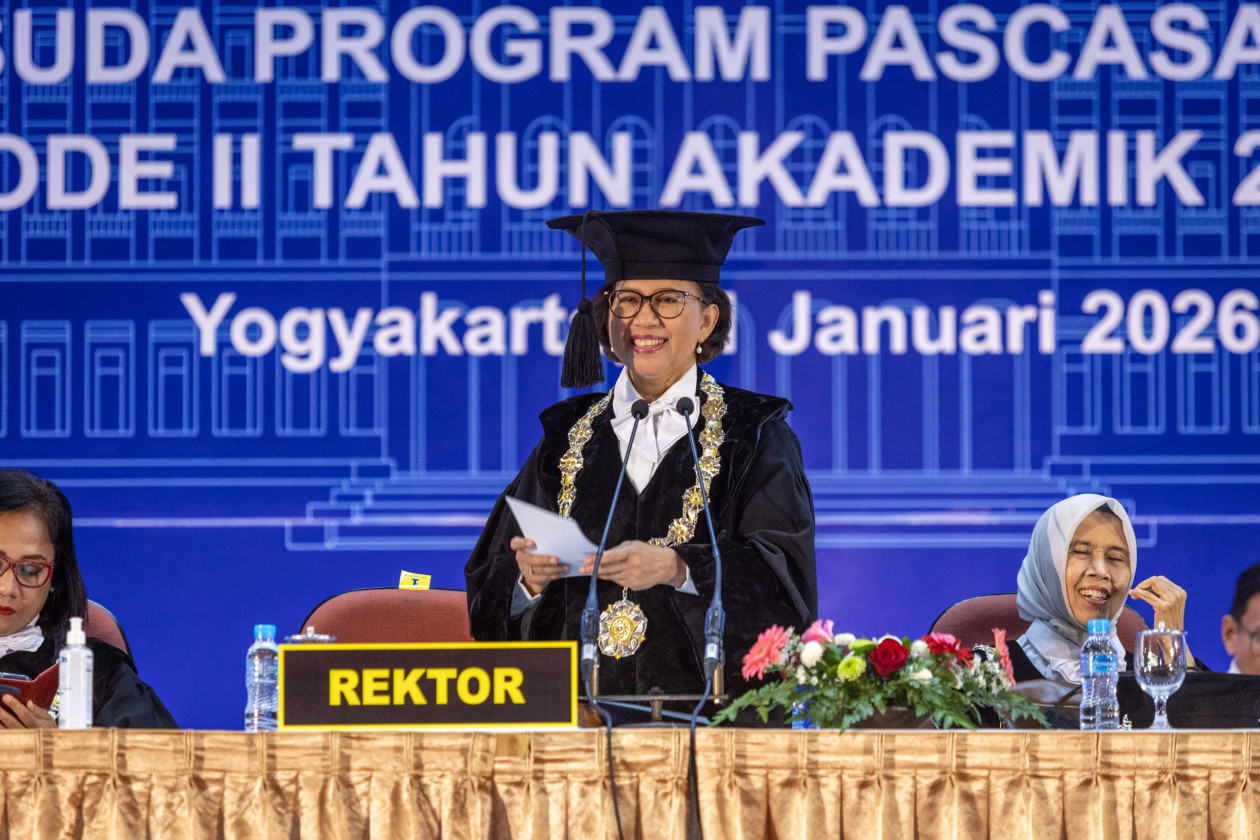
The rector also highlighted UGM’s contributions in research, humanitarian action, and community service. Various applied research initiatives that have received national recognition were cited as evidence of the university’s commitment to producing knowledge that can be utilized by society.
In the humanitarian sector, UGM has been actively involved in disaster response efforts in Sumatra through the construction of temporary shelters, the provision of health services, and the supply of clean water and electricity.
Community Service Programs (KKN) involving students and international alumni have also expanded the university’s service networks.
“Impactful knowledge must be able to deliver real benefits to society and strengthen national self-reliance,” she stressed.
The representative of UGM Alumni Family in Timor-Leste (Kagama Timor Leste), Manuel Vong, expressed his appreciation for UGM’s consistent commitment to character- and leadership-based education. He viewed UGM as a space for shaping values, policies, and science-based entrepreneurship.
For the alumnus who currently serves as Director of the Doctoral-DBA Program at Dili Institute of Technology, Timor-Leste, academic relations with UGM hold strategic significance for human resource development. Cross-national collaboration is regarded as an essential foundation for addressing regional challenges.
“UGM once again affirms its role as a center of academic excellence as well as a laboratory for character and leadership education,” he said.
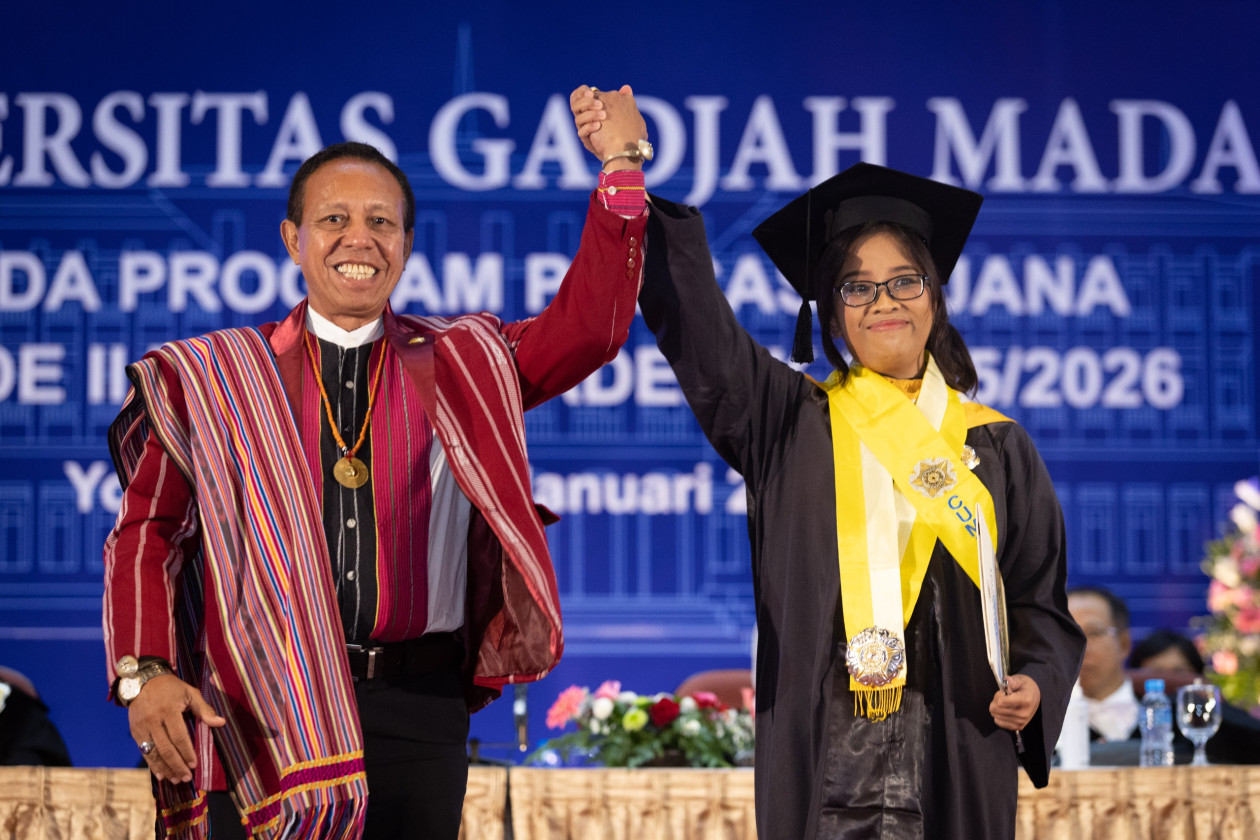
Manuel Vong also emphasized the importance of alumni as policy actors and agents of change. He encouraged UGM alumni to translate knowledge into innovations, business models, and impactful public policies.
In the context of Timor-Leste, educational collaboration is positioned as a means to strengthen sustainable development. Vong affirmed that Kagama Timor-Leste is committed to expanding synergies with UGM and various stakeholders.
“We believe that educational diplomacy and academic collaboration can serve as a strong foundation for shared development between Indonesia, Timor-Leste, ASEAN, and the global community,” he stated.
Meanwhile, the graduates’ representative, Anto Maryadi, stated that academic achievements result from a long journey filled with challenges. The diverse backgrounds of the graduates demonstrate that higher education remains relevant across different phases of professional life.
The learning process was seen as shaping responsibility, integrity, and the courage to uphold values. The graduates recognized that academic degrees carry a social mandate.
“An academic degree is not merely a symbol of achievement, but a commitment to carrying out one’s profession with greater responsibility,” he said.
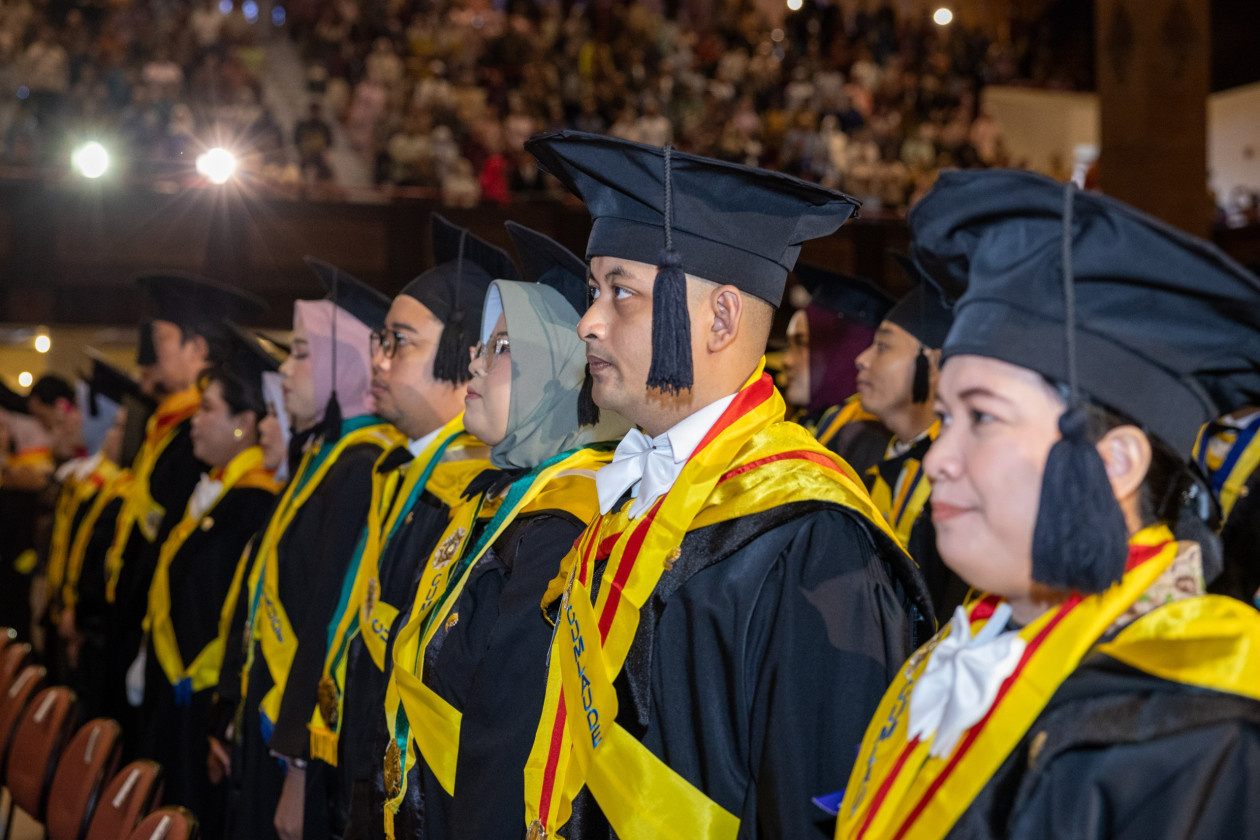
The representative of graduates from the Applied Master’s Program in Occupational Safety and Health at the Vocational College also reaffirmed the graduates’ commitment to bridging academia and practice.
Knowledge is expected to be manifested through tangible contributions to society, organizations, and the nation. Maryadi cited support from University leaders, lecturers, and families as a crucial factor throughout the academic journey.
“We are ready to carry the values of scholarship, ethics, and social concern in every role we undertake,” he concluded.
Author: Triya Andriyani
Post-editor: Rajendra Arya
Photographer: Donnie Trisfian