


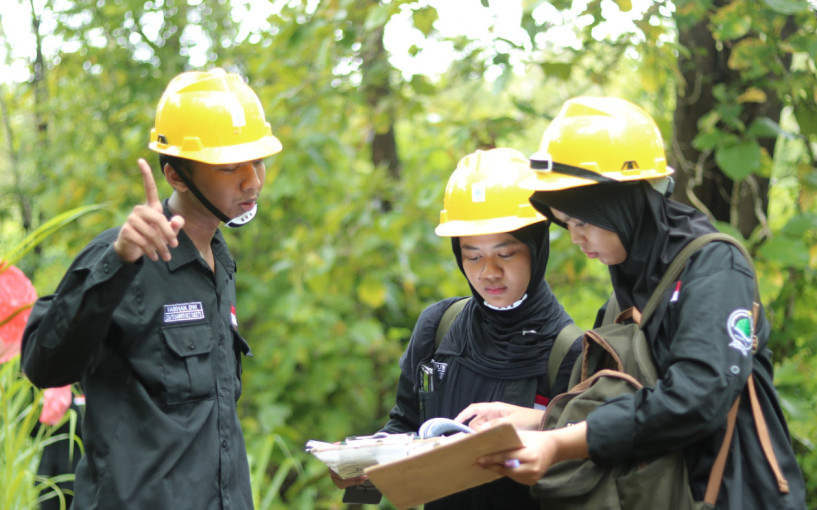
Universitas Gadjah Mada (UGM) has once again recorded a positive achievement in the QS World University Rankings (WUR) by Subject 2026. One of the subjects maintaining this performance is Agriculture and Forestry, which has remained in the global 151–200 range for three consecutive years.
In 2023, UGM was ranked in the 201–250 range for this subject, placing 212th. However, from 2024 through this year, Agriculture and Forestry has been in the 151–200 range, ranking 171st out of 476 universities worldwide. Regionally, this achievement places UGM at 35th in Asia, 6th in ASEAN, and 2nd nationally.
Professor Jaka Widada, Dean of the Faculty of Agriculture Universitas Gadjah Mada (Agriculture UGM), expressed gratitude for this accomplishment, noting that the faculty has successfully maintained its ranking.
“We, the entire academic community of the Agriculture UGM, are very grateful and delighted with this ranking, which places us in the 151–200 range globally,” Professor Jaka said on Thursday (Apr. 2).
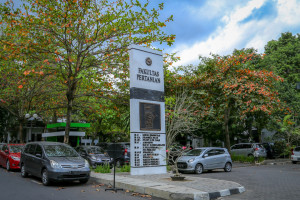
According to Professor Jaka, this international recognition is the result of dedication, synergy, and hard work from lecturers, researchers, education staff, students, as well as support from alumni.
“The support from the academic community, students, and alumni deserves our appreciation,” he said.
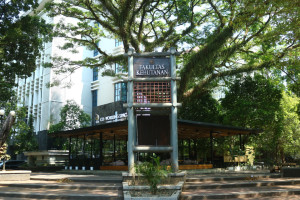
A similar sentiment was conveyed by the Dean of the Faculty of Forestry, Ir. Sigit Sunarta, S.Hut., M.P., M.Sc., Ph.D., IPU., through the Vice Dean for Academic and Student Affairs, Ir. Dwiko Budi Permadi, S.Hut., M.Sc., Ph.D., IPU., also expressed gratitude for this achievement.
“This improvement reflects the strengthening of UGM’s position in the global academic landscape, particularly in the agro and forestry cluster,” Dwiko said.
According to the QS World University Rankings website, since 2023, there has been an increase in the indicators of citations per paper and international research papers. In the citations per paper indicator, UGM achieved a score of 67.5 in 2026, an increase of one percent from 66.5 in 2023. A similar rise is seen in the international research paper indicator, which increased significantly from 25.7 in 2023 to 40.5 in 2026.
Widada explained that achieving the current position involved several efforts, including improving the quality and quantity of international publications.
“We actively encourage and facilitate lecturers and researchers to publish their research in high-impact international journals,” he said.
In addition, the faculty provides research grant schemes, journal-writing clinics, and publication incentives to increase citations from scholars worldwide.
He also emphasized the importance of strengthening international academic and research networks, with a focus on academic reputation and international collaboration.
“We continue to expand collaborations with leading universities and research institutions worldwide,” he added.
These efforts are implemented through faculty and student exchange programs, the invitation of visiting professors (adjunct professors) from abroad, the organization of international conferences, and joint research.
“These networks significantly enhance our academic reputation among international scholars,” he explained.
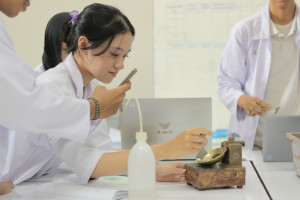
He added that updating research focus on global strategic issues, improving graduate quality, and strengthening synergy with industry are also essential.
“We align our faculty research agenda with critical global issues such as global food security, climate-smart agriculture, and agrotechnology innovation. Research that addresses future challenges enhances the faculty’s international recognition and contributes to the SDGs,” he said.
Meanwhile, Dwiko explained that addressing future challenges requires developing a strategic roadmap at the cluster level, particularly in agriculture, forestry, animal science, and food technology. “
To break into the top 100, UGM must first reach the 101–150 global range by outperforming key regional competitors. With a consistent upward trend and targeted strategies, UGM can continue improving its global standing,” he concluded.
Author: Jelita Agustine
Editor: Gusti Grehenson
Post-editor: Zabrina Kumara
Photo: Donnie and Forestry Public Relations Documentation