



Known as the land of kings, Tual City holds unique natural, cultural, and tourism potential. With these assets, Tual City can create warm, memorable travel experiences, especially as they harmoniously blend with the renowned hospitality of the Kei people.
As one of Indonesia’s frontier regions, Tual City is home to 66 islands, making it a true archipelagic tourism destination. If properly managed, this natural and cultural wealth could become a strong magnet for special interest tourism.
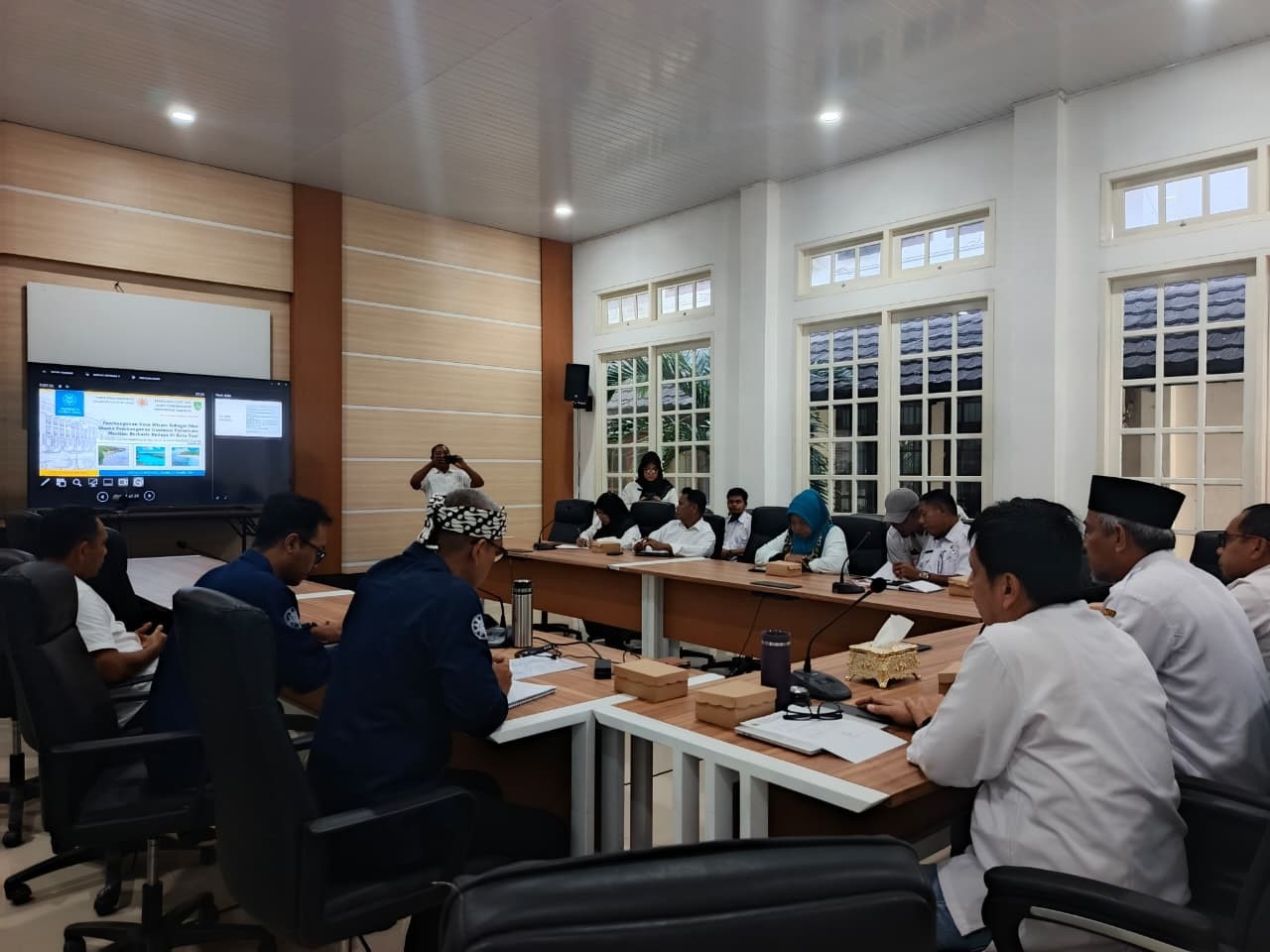
This issue emerged during a Focus Group Discussion (FGD) themed “Developing Tourism Villages as the Main Pillar of Culture-Based Maritime Tourism Destination Development in Tual City”, held at the Meeting Hall of the Tual City Office of Community and Village Empowerment.
The discussion was organized by the UGM’s Center for Tourism Studies (Puspar UGM) as part of its data collection methodology to support Puspar UGM’s 2026 flagship study under the EQUITY scheme. The discussion and research activities were also attended by the Head of the Tual City Regional Development Planning Agency (Bappeda), Dr. Muhamad Subhan Labetubun.
Dr. Mohamad Yusuf, Coordinator of the Puspar UGM research team, explained that the discussion focused on two main areas. First, explore tourism product potential to optimize utilization and maximize benefits for the region and local communities. Second, examining tourism management aspects, particularly the current governance conditions in Tual City.
“Through this discussion, it is expected that appropriate and applicable strategies can be formulated to enhance the quality of tourism in Tual City so that it can compete with other destinations in the Maluku region,” Dr. Yusuf said in a statement released on Tuesday (Feb. 3).
Dr. Destha Titi Raharjana, a member of the Puspar UGM research team, emphasized the importance of strengthening tourism competitiveness in the Kei region, particularly in Tual City.
According to Dr. Raharjana, improving competitiveness requires strong commitment from all stakeholders.
Although Tual City already has Regional Regulation No. 02 of 2024 on the Regional Tourism Development Master Plan (RIPPARDA), the regulation requires follow-up through technical cross-sector collaboration among Regional Apparatus Organizations (OPDs). In addition, active community participation is essential, especially since tourism has been designated as one of Tual City’s leading sectors.
“The archipelagic potential and the richness of Kei culture do not yet appear to have been seriously developed, resulting in suboptimal contributions to the regional economy and community welfare,” she explained.
Assistant I for Government and Community Welfare Affairs of the Tual City Government, Usman Borut, stated that special interest tourism needs to be developed, given the large number of tourists (particularly marine tourism enthusiasts) who are interested in enjoying underwater beauty, beach tourism, and island-hopping activities.
The distinctive stretches of white sand across the Kei Islands, he added, further enhance Tual City’s appeal, offering attractions that are difficult to find elsewhere.
“If developed seriously and sustainably, based on its vast natural and cultural potential, I am optimistic that this archipelagic tourism can become a strong magnet for special interest tourists,” he said.
Meanwhile, Khusnul Bayu Aji, another member of the Puspar UGM research team, highlighted the strong cultural foundations that continue to thrive and be practiced by the people of Tual City, particularly Larvul Ngabal, as a customary legal system.
Larvul Ngabal consists of seven articles and serves as the primary guideline for social life in the Kei Islands. Aji also noted that Tual City upholds the cultural value of Maren, which has been designated as an Intangible Cultural Heritage.
“This cultural value represents a spirit of synergy, both among community members and between the community and the local government,” he said.
Aji further explained that the Tual City Government actively promotes the strengthening of these cultural values by organizing the Maren Festival, which showcases local cultural richness. Each ohoi (village) in Tual City is considered to have its own distinctive character and uniqueness, which, if creatively and integratively packaged, has the potential to become a tourism attraction.
However, collaboration among ohoi, including in tourist distribution and the development of rural tourism packages, still needs to be strengthened alongside the designation of ten ohoi as tourism villages.
“The Tual City Government, through the Tourism Office in collaboration with other OPDs, including the Office of Community and Village Empowerment, is expected to facilitate institutional strengthening through the Tourism Village Communication Forum (Forkom) as a platform for inter-village communication and as a strategic partner in developing community-based tourism,” he added.
Author: Agung Nugroho
Post-editor: Rajendra Arya
Photograph: Media Tual News