


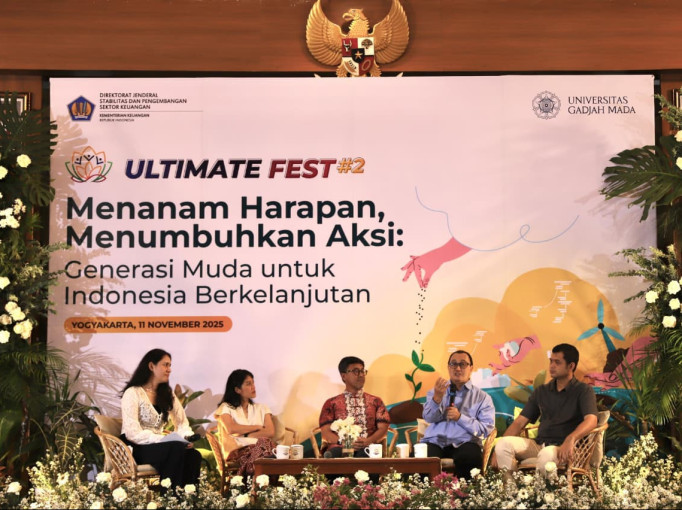
As of 30 June 2025, Indonesia’s population reached 286.6 million, with 69.51 percent of the population in the productive age group (15-64 years). This demographic bonus represents a major asset for advancing economic, social, and environmental sustainability. However, sustainable development cannot rely solely on economic growth. The social and environmental dimensions must progress in balance to prevent ecological degradation that ultimately harms society.
Lecturer at the Department of Social Development and Welfare and Director of Student Affairs at Universitas Gadjah Mada (UGM), Dr. Hempri Suyatna, stated that Indonesia has significant potential to promote sustainable development, as 38% of its population is young.
Nevertheless, education and effort are needed to encourage the youth to shift from consumptive to productive behavior.
“We need to change the stigma that young people are merely consumers. In fact, they have transformational ability, a digital mindset, and futuristic energy that can be combined to address social and environmental issues,” said Dr. Suyatna during the Ultimate Fest Talkshow titled “Planting Hope, Growing Action: Young Generation for a Sustainable Indonesia”, held on Tuesday, Nov. 12, 2025, at the UGM University Club.
Dr. Suyatna emphasized the importance of habituation, continuous education, and cross-sector collaboration in shaping a productive, visionary, and sustainability-oriented young generation.
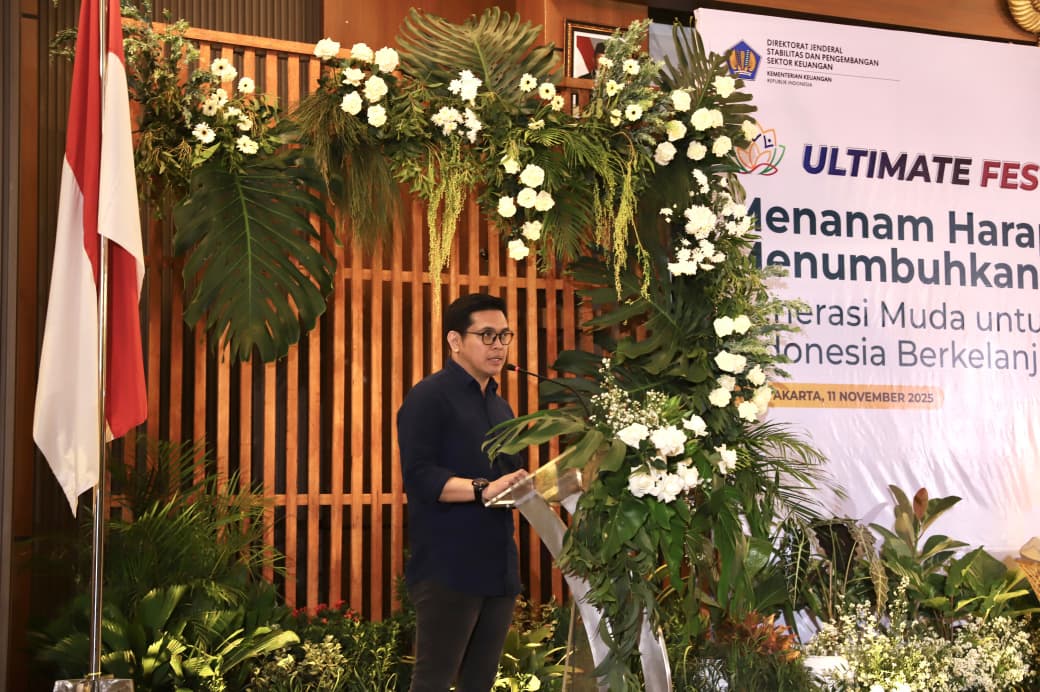
Representative from the Directorate General of Financial Sector Stability and Development, Ministry of Finance of the Republic of Indonesia, Enrico David Tarigan, highlighted the real challenges faced by the young generation today: global complexity, skills gaps, and changing job markets.
According to him, the transition toward a green economy presents both opportunities and demands for new capabilities.
“There is often a gap between idealism and practice due to limited experience and resources, including access to financing. However, we believe that young people are the driving force behind the green economic transition,” he remarked.
He further explained various initiatives by the Ministry of Finance to promote a low-carbon economic transformation, including the development of a green taxonomy, research collaboration projects, and the provision of literacy platforms and networks through Ultimate Fest.
“We need youthful energy, the courage of Gen Z to express ideas and get involved,” he concluded.
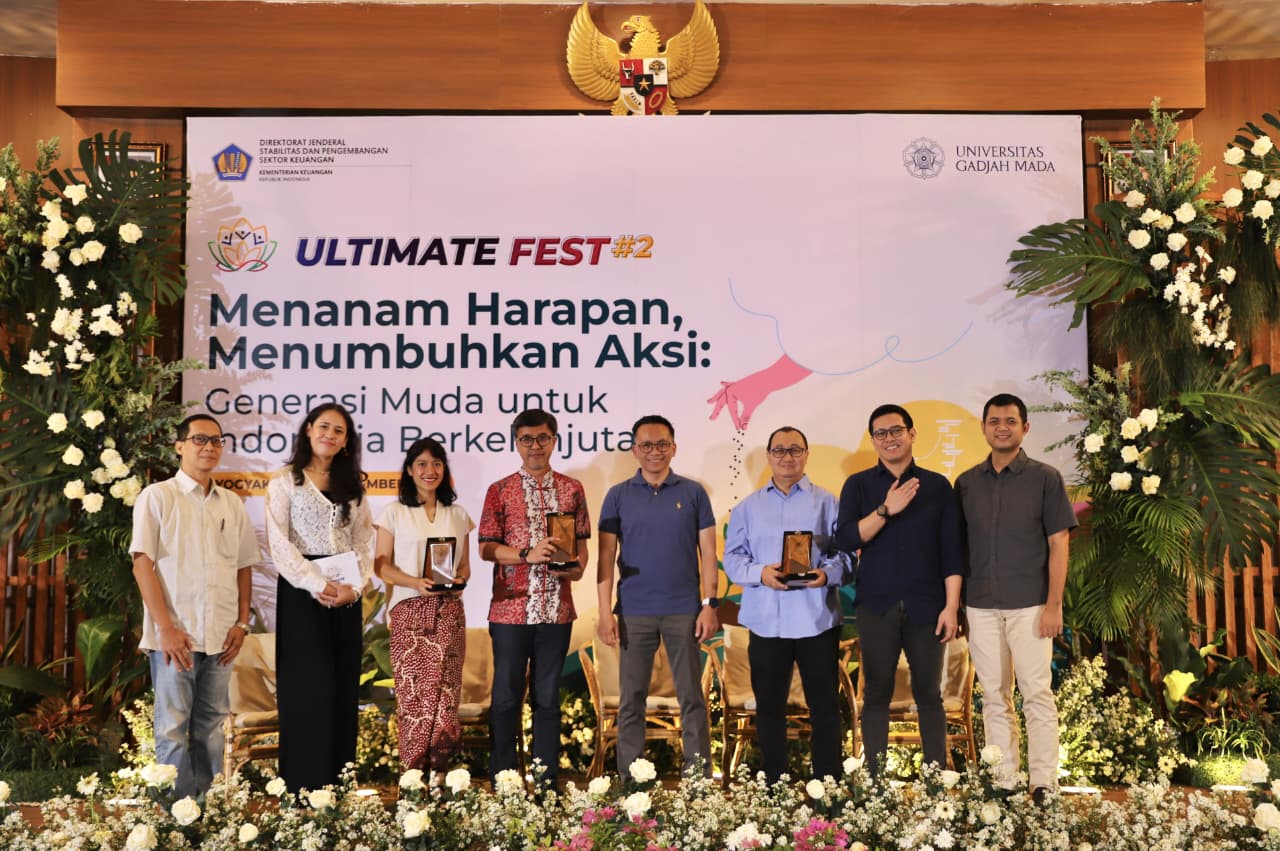
The Talkshow discussion, a collaboration between the Ministry of Finance and the UGM Secretariat, presented several speakers, including Dr. Eko Agus Suyono, lecturer at the UGM Department of Biology; Diyanto Imam, Program Director of New Energy Nexus Indonesia; Siti Soraya Cassandra, CEO of Kebun Kumara; and Prama Wiratama, Policy Analyst at the Ministry of Finance of the Republic of Indonesia.
From an academic perspective, Dr. Eko Agus Suyono introduced the potential of microalgae as a biotechnology-based environmental solution.
He explained that more than 50,000 species of microalgae thrive in Indonesia’s aquatic ecosystems.
“Microalgae can serve as both economic and ecological solutions through the biorefinery process, which enables a single biomass to produce various high-value products, ranging from food, feed, and energy to chemical materials,” he said.
In addition to producing economically valuable products, microalgae can also absorb CO₂, though further research is needed to scale up their application.
Diyanto Imam added an entrepreneurial perspective to the discussion on clean energy.
He noted that prior to 2019, the role of entrepreneurship in this field was rarely discussed, even though creativity and innovation are the essence of business.
Through Kinetik Next, a community he initiated, Imam encourages young people to develop creative business ideas and solutions for Indonesia’s future.
“We want to inspire young people to think boldly and take action,” he emphasized.
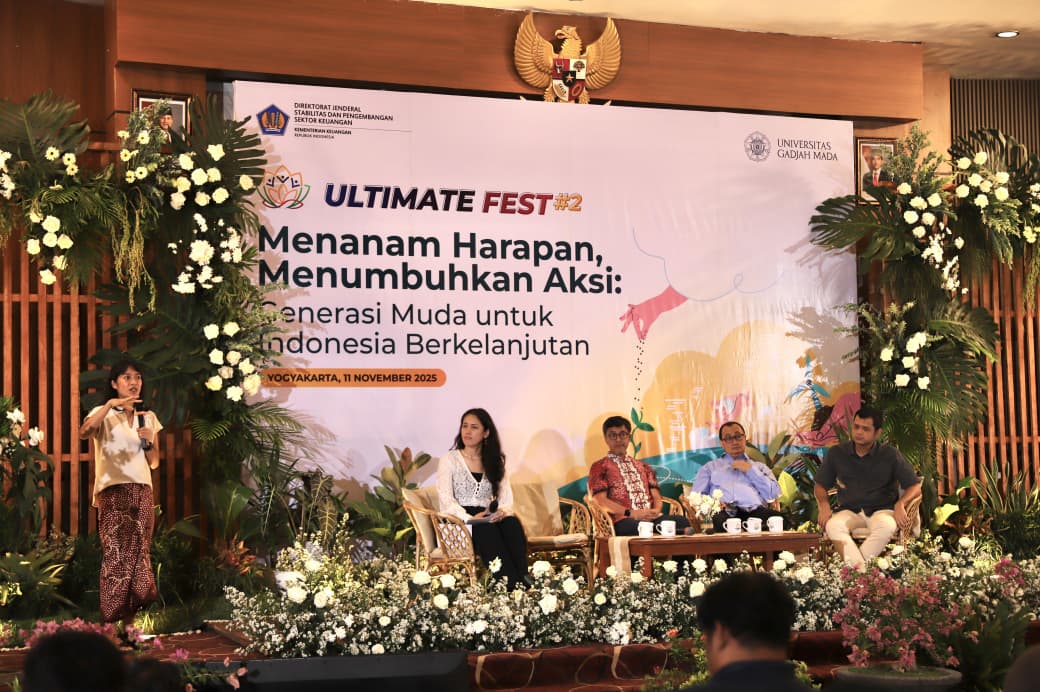
Meanwhile, Siti Soraya Cassandra underscored the importance of reconnecting urban communities with nature.
She explained that environmental education must be grounded in everyday practice, including simple activities such as gardening, identifying plants, and harvesting.
“Sustainability must be embedded in daily life. Nusantara traditions are inherently close to nature, and we need to revive those values,” she said.
She invited students to learn from nature, communities, and real-life experiences so that reflective thinking, empathy, and environmental awareness can grow organically.
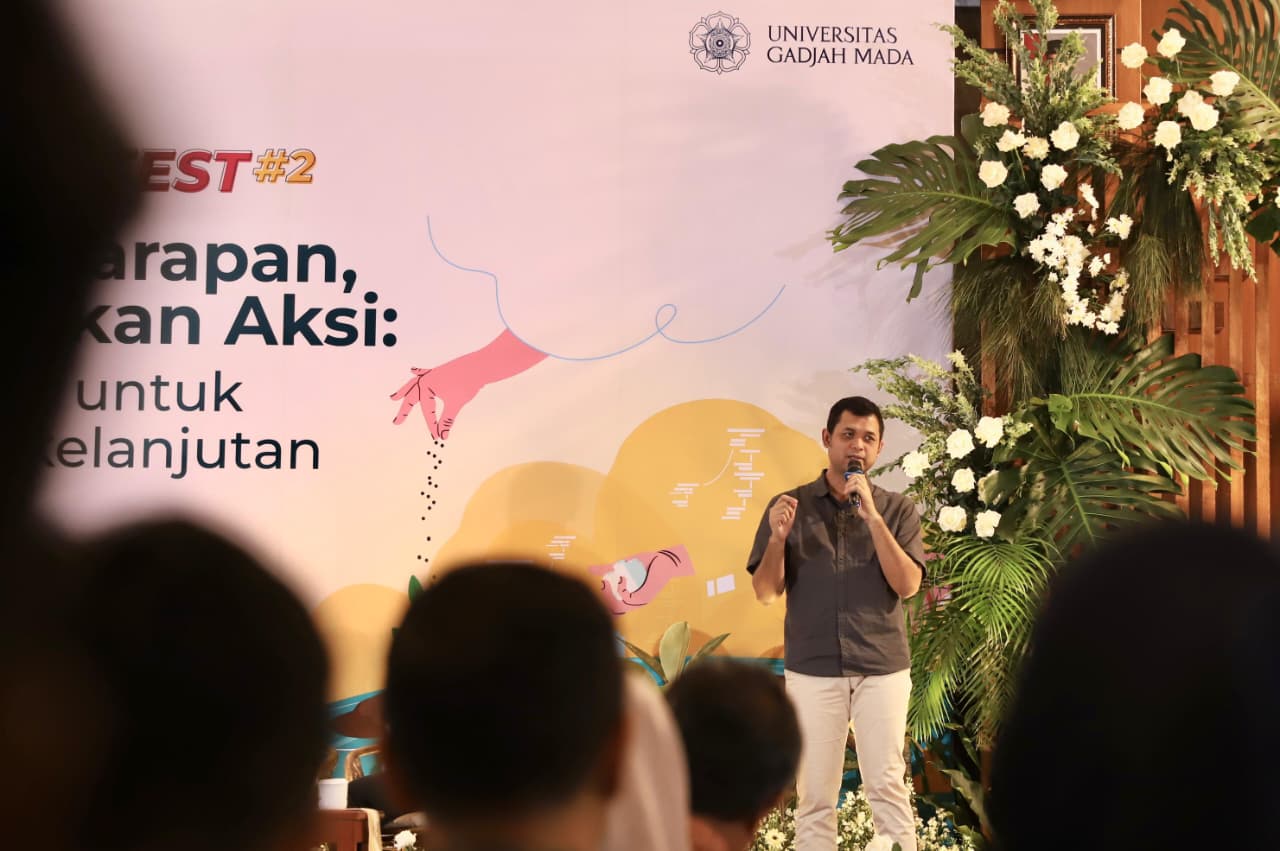
Prama Wiratama provided an overview of Indonesia’s investment needs to achieve the Golden Indonesia 2045 vision. He stated that implementing emission-reduction programs would require approximately IDR 400 trillion per year, while the national budget could cover only about 13 percent of that.
Authors: Kezia and Hanifah
Editor: Gusti Grehenson
Post-editor: Lintang Andwyna
Photographer: Aldi