


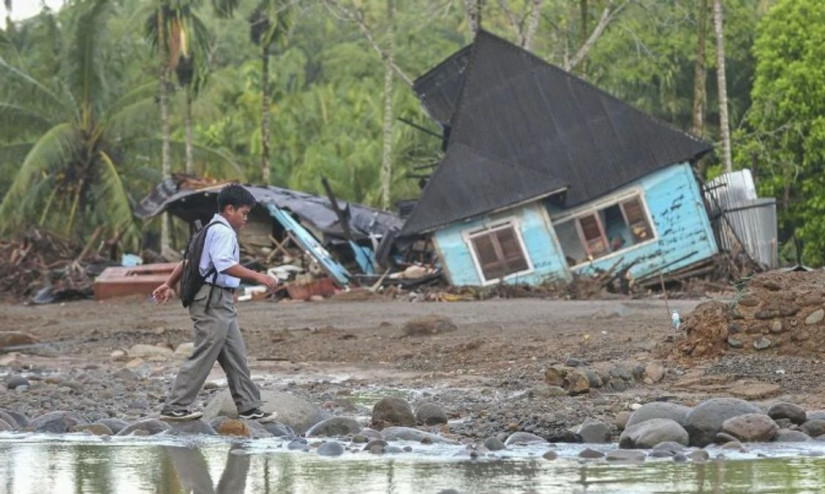
At present, waves of tragic news continue to emerge from various regions across Indonesia. Even as the eruption of Mount Semeru, which has affected parts of East Java and Central Java, has yet to fully subside, major floods in Aceh, North Sumatra, and West Sumatra have caused profound loss and hardship among communities. Various sectors of daily life have come to a complete halt, including education. In response to these disasters, the Ministry of Primary and Secondary Education of the Republic of Indonesia has taken emergency measures to ensure that education in affected areas can continue.
Professor of the Faculty of Economics and Business, Universitas Gadjah Mada (FEB UGM) and former Deputy Coordinating Minister for Human Development and Culture (2014–2021), Professor R. Agus Sartono, explained that the most fundamental step that both central and regional governments must take in handling disasters of this scale is to deliver assistance as quickly as possible to minimize casualties.
The immediate provision of large-scale evacuation tents and emergency kitchens is crucial, as are basic necessities such as clean water, electricity, and food.
“Placing victims in evacuation tents will facilitate the distribution of healthcare services, clothing, and food. At this stage, support for school-aged children can begin. Volunteers can start trauma-healing activities for children to address emotional and traumatic impacts, reduce anxiety and fear, and help children return to normal,” he said on Thursday (Dec. 11).
Professor Sartono also emphasized that volunteers are indispensable, especially given that many teachers are themselves affected by the disaster. Through small-group activities in evacuation tents, children can be encouraged to sing and play together to foster a sense of togetherness and ease tension. At the same time, health services for children can be provided.
However, Professor Sartono stressed that educational achievement in the field cannot be standardized, particularly given the uneven quality and availability of educational infrastructure across Indonesia.
He argued that online learning is not feasible under such conditions, not only because of disrupted electricity and communication networks but also because of inadequate facilities and infrastructure.
“It would be wiser not to impose the same educational performance standards in disaster-affected areas as in other regions,” he explained.
Challenges in Restoring Education
According to Professor Sartono, the greatest challenge in restoring education in affected areas is the lengthy process of rebuilding adequate educational infrastructure. Such reconstruction, based on his experience, could take at least six months or even longer. Therefore, ensuring sufficient regional budget capacity is essential.
“It is possible that regencies, cities, and provinces do not have adequate funds. Even repairing severely damaged school infrastructure is beyond the capacity of many local governments, let alone rebuilding after a disaster. This is where strong affirmation from the central government is urgently needed,” he emphasized.
Equally important, he reminded stakeholders of the need for direct educational financial assistance for affected students. Parents urgently require cash assistance to meet basic needs.
“School students need support for clothing and school supplies. It would be even better if cash assistance were provided to students for the next six months. This cannot be addressed solely through the Indonesia Smart Program (KIP Sekolah),” he added.
Attention must also be given to teachers. School teachers affected by disasters require counseling to recover from trauma. According to Professor Sartono, it is equally important to ensure that teachers’ basic needs are met so that they can resume their teaching duties.
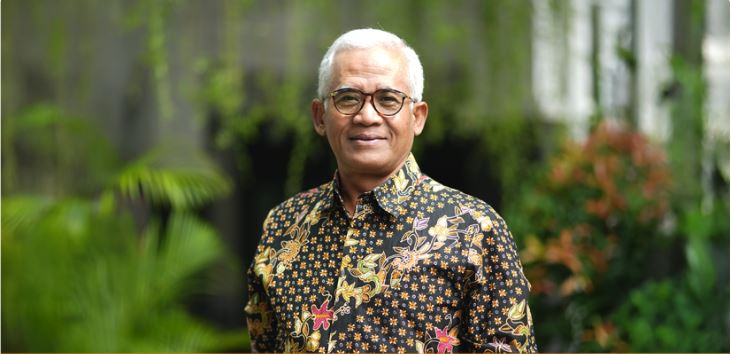
Furthermore, Professor Sartono underscored that substantial funding is required for post-disaster recovery efforts. He argued that it would be prudent to prioritize MBG funds for disaster-affected regions.
Currently, the absorption capacity of MBG funds for 2025 stands at approximately IDR 60 trillion, while the MBG budget for 2026 is projected to reach IDR 375 trillion, sourced from the 20 percent education function allocation of the national and regional budgets (APBN/APBD).
“In my view, it would be far wiser if part of these funds were reallocated to first restore educational infrastructure,” he stated.
He believes that such a policy would not only help reduce educational disparities between regions but also represent a concrete implementation of the mandate of the 1945 Constitution.
This is particularly relevant given Constitutional Court Decision No. 3/PUU-XXII/2024, which obliges the government to provide free basic education at the elementary and junior secondary levels, in both public and private schools.
Finally, Professor Sartono emphasized that the government must use lessons from these disasters to educate the public about the importance of disaster preparedness.
This is especially critical as the Meteorology, Climatology, and Geophysics Agency (BMKG) has predicted that rainfall will remain very high in the coming months. In addition, the government must take firm action to halt deforestation.
“If this fails to be done, we will only mourn one disaster after another. May we all become more aware of the importance of sustainable development. Short-term interests should never come at the expense of future generations,” Professor Sartono concluded.
Author: Leony
Editor: Gusti Grehenson
Post-editor: Salma
Photograph: Antara