


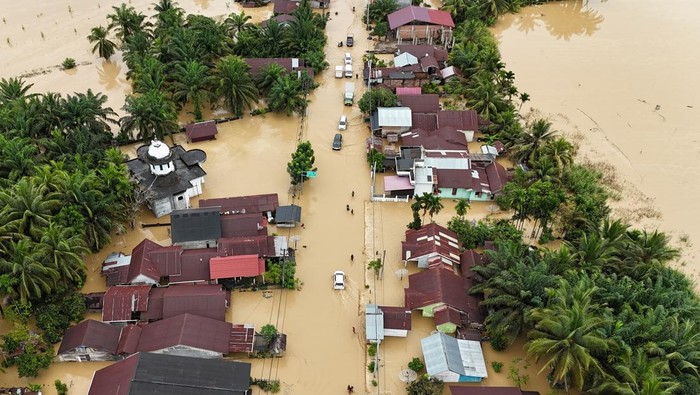
Disasters that have struck North Sumatra, West Sumatra, and Aceh continue to claim lives. Data from the National Disaster Management Agency (BNPB) as of December 3, 2025, recorded 753 fatalities, while thousands of residents have been injured, displaced, or left with limited access to basic services. Damage to infrastructure, limited health facilities, and rising medical needs have made emergency response efforts increasingly urgent. This crisis demands rapid mobilization of health personnel and cross-sector support to ensure survivors receive optimal care.
In response to the disasters in Sumatra, the Faculty of Medicine, Public Health, and Nursing at Universitas Gadjah Mada (FK-KMK UGM) has initiated the deployment of medical personnel to support emergency response and assist post-disaster recovery.
Through a structured approach, the team aims to ensure aid is well-targeted and to strengthen health service capacity in the most affected areas.
Vice Dean for Collaboration, Alumni, and Community Service, Dr. Sudadi, stated that the FK-KMK UGM community service team was systematically organized through collaboration within the Academic Health System (AHS) network, which involves 15 hospitals in Yogyakarta.
“At FK-KMK UGM, we have a disaster team that has long been established, and it is organized in a structured manner,” Dr. Sudadi explained in an interview on Thursday (Dec. 4).
As part of its response, Dr. Sudadi noted that the FK-KMK UGM team is implementing a phased approach, beginning with the deployment of a disaster management team. This initial step aims to conduct an on-site needs assessment.
He added that since Tuesday (Dec. 2), the FK-KMK UGM team has deployed two medical personnel (a surgeon and a disaster management physician) to Aceh.
“They will be followed by 13 additional medical personnel according to their respective disciplines,” he said.
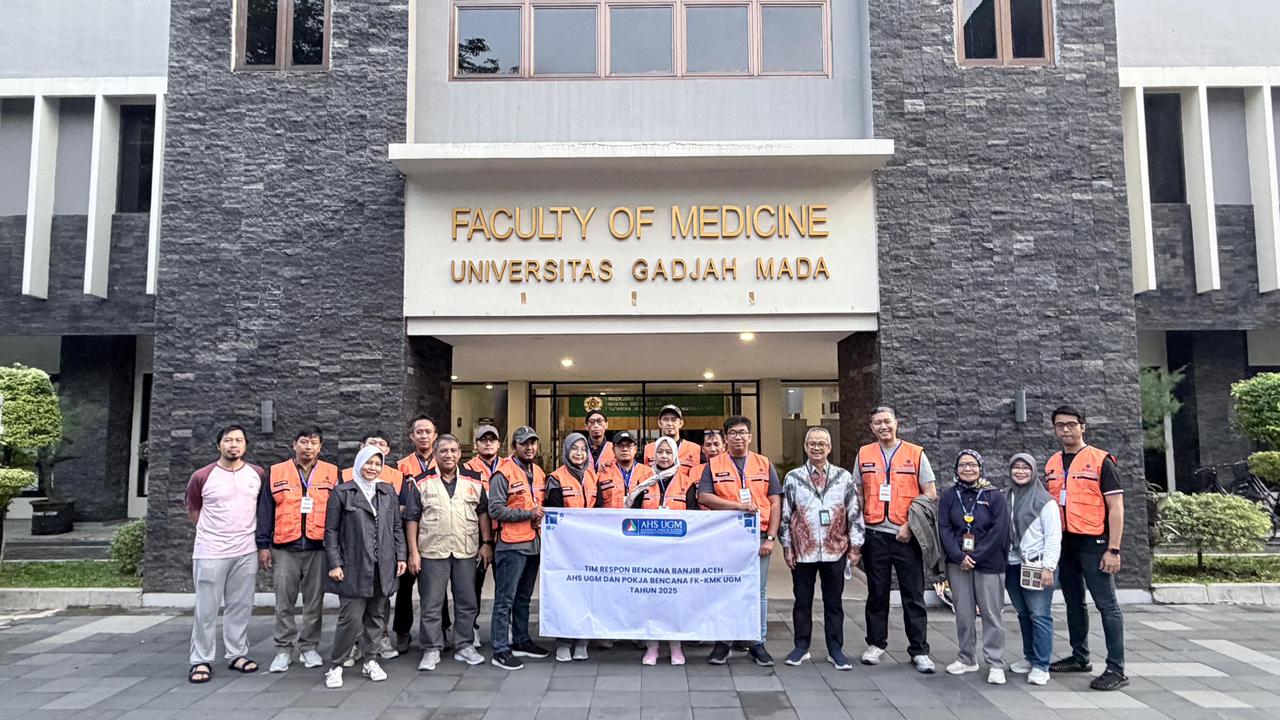
Dr. Sudadi explained that North Aceh has been designated a priority location due to the severity of the disaster’s impact. The prioritization was determined following coordination with local government authorities.
In addition, the team has submitted a community service proposal under the Design Tech scheme and established collaboration with Teuku Umar University in Meulaboh.
“If this scheme is approved, we will deploy the second team to West Aceh in collaboration with the core team at Teuku Umar University, with West Aceh as the target area,” he said.
Furthermore, Dr. Sudadi shared that the upcoming community service missions will involve multidisciplinary personnel. The team composition includes surgeons, internists, pediatricians, nurses, anesthesia nurses, nutritionists, and technical staff responsible for preparing essential utilities such as water and electricity.
A logistics team is also being prepared to ensure smooth operations on the ground. He stated that this mission will also involve students, including specialist trainees, to collaborate in this humanitarian effort.
Beyond the initial response, the team plans to design a series of missions involving four to five deployments until the affected regions enter the recovery phase. Dr. Sudadi noted that with support from various UGM faculties and hospitals in Yogyakarta, the team plans to establish an FK-KMK UGM emergency team as part of long-term disaster mitigation efforts.
“We have trained hospitals around Yogyakarta as reserve personnel. So when a disaster occurs, we coordinate to identify who can be deployed, and these individuals are already trained,” he said.
One of the FK-KMK UGM community service team members, Agung Widianto, shared his impressions and described the situation upon arrival at the disaster site. He noted that UGM once again demonstrated a swift response to national disasters by deploying an early assessment team to ensure effective intervention.
Together with Gde Yogadhita, the two were assigned to map field conditions, prepare for the next team deployment, assess hospital needs, and ensure logistical readiness.
“With the deployment of the assessment team, as disaster management and epidemiology specialists, we complement each other in planning, operational preparation for team deployment, and logistical and hospital readiness,” he explained.
Upon arriving in Banda Aceh, the assessment team observed that although the area itself was not directly affected by flooding, it faced challenges, including shortages of fuel and gas and periodic power outages.
Agung Widianto noted that conditions remained relatively manageable, although the team’s primary destination, North Aceh, was difficult to reach due to limited transportation and obstructed access routes.
Consequently, the team initiated communication with on-site personnel through the Starlink internet network at the Aceh Health Office’s HEOC to identify the areas most in need of assistance.
He explained that the characteristics of this disaster resembled a post-tsunami situation, where logistical challenges outweigh emergency medical cases.
“The main challenges we and the community face are no longer acute medical emergencies, but logistical issues like transportation, electricity, and internet access. Most emerging health concerns are post-disaster illnesses,” Widianto concluded.
Author: Cyntia Noviana
Editor: Gusti Grehenson
Post-editor: Rajendra Arya
Photographs: FK-KMK UGM Community Service Team and Antara