


The 30th Conference of the Parties (COP30), the United Nations’ annual climate conference, was held on November 10 to 21, 2025, in Belém, Brazil. The outcome of the conference was widely considered disappointing, as it concluded without a clear roadmap for reducing fossil fuel use, halting deforestation, or scaling up climate finance. Amid these unsatisfactory conclusions, a crucial issue in the climate crisis was largely overlooked.
International media outlet Forbes published an article titled “Why Investors Should Pay Attention To Soil At COP30”, based on the report Secure Soil Save Life.
The report, which explores perspectives on soil security, was led by the Aurora Soil Security Think Tank at the University of Sydney in collaboration with Save Soil and the IUCN World Commission on Soil Law.
Compiled in a comprehensive manner, the Soil Security Panel Series draws on the voices and experiences of credible experts.
A lecturer in Remote Sensing for Geomorphology and Soils at the Faculty of Geography, Universitas Gadjah Mada, Dr. Wirastuti Widyatmanti, was among the contributors to the report.
Commonly known as Wiwid, she explained that soil management issues are highly complex, encompassing fertility degradation due to intensive agricultural practices, deforestation, land-use change, and pollution.
These challenges threaten the soil’s vital functions as a foundation for food production, water filtration, carbon storage, microbial habitats, and ecosystem stability.
Soil management resilience, Dr. Wiwid explained, is the assurance that soils can sustainably provide essential resources and ecosystem services for present and future generations by integrating biophysical, economic, social, and policy factors.
“Soil resilience is a strategic concept that recognizes soil as a vital natural capital. It is essential for human well-being and is closely linked to food, water, and national security, requiring holistic management beyond agricultural productivity alone to address degradation,” Dr. Wiwid said on Thursday (Dec. 11).
However, soil security has not yet received full attention from the Indonesian government, making it necessary to implement soil security across all dimensions to ensure the soil’s continued capacity to support human needs.
One aspect highlighted by Dr. Wiwid in the report, and also cited by the Forbes article, is the social dimension.
According to her, one of the main gaps in implementing soil resilience is the lack of recognition of the social dimension.
Promoting this perspective is crucial because soil must be understood not only from ecological or economic viewpoints but also from a social one. Enhancing awareness among communities, policymakers, and the private sector of the need for proper, sustainable soil management is essential.
“Going forward, soil management and conservation policies and their implementation should be integrated with these aspects to safeguard soil resilience across multiple dimensions,” explained Dr. Wiwid in the Secure Soil Save Life report.
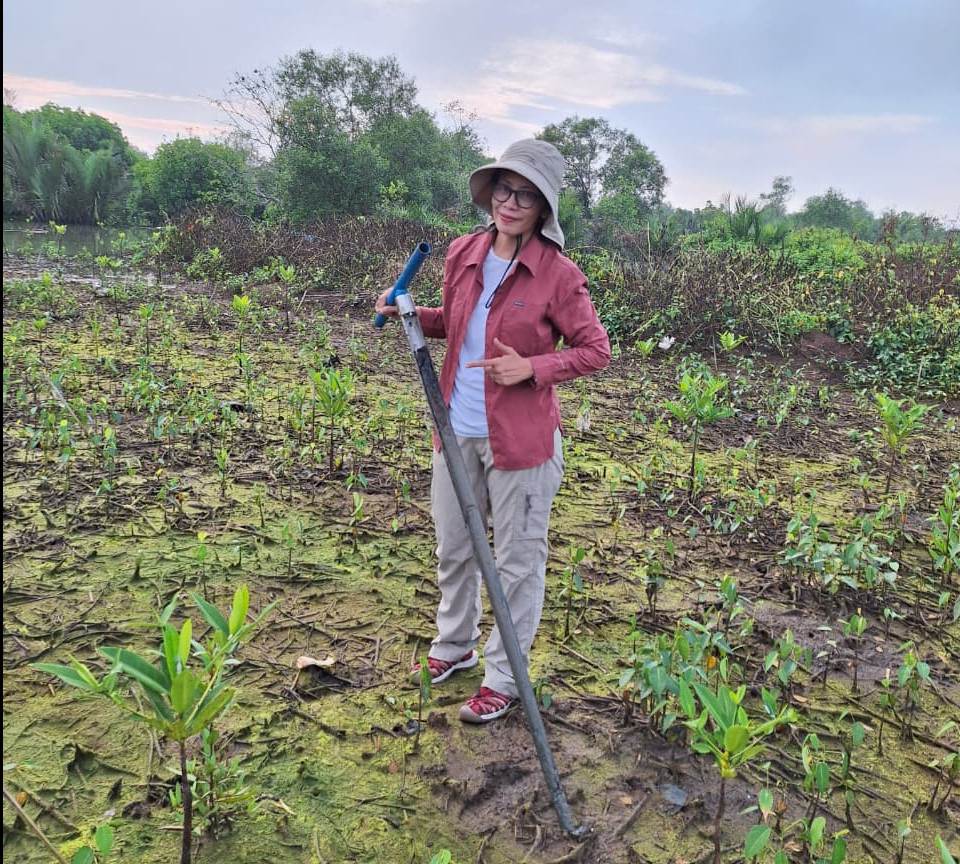
She added that the concept of soil resilience is largely excluded from conservation processes and environmental policymaking, resulting in limited funding for related initiatives. As a result, global soil protection and restoration rarely emerge and are often neglected in climate policies and discourse; however, they should be key pillars.
Key solutions for effectively utilizing soil to reduce degradation and climate change include adopting sustainable agriculture, implementing soil and water conservation, and implementing land protection policies integrated with climate mitigation.
Nevertheless, these efforts must be supported by high-quality soil health and quality mapping data that provide accurate spatial information for planning, monitoring, and decision-making.
“Strengthening the role of communities in land monitoring and conservation is also crucial,” she emphasized.
She further noted that sustained research support and investment can help design more targeted soil management policies, maintain a balance between economic interests and conservation, and strengthen ecosystem resilience across regions, including peatlands and coastal areas that are highly vulnerable to climate change impacts.
“Through synergy among communities, policies, technology, and the economy, soil can function optimally as the foundation of food security, a carbon sink, and a protector of nature for future generations,” she concluded.
Author: Alena Damaris
Editor: Gusti Grehenson
Post-editor: Rajendra Arya
Illustration: Freepik