


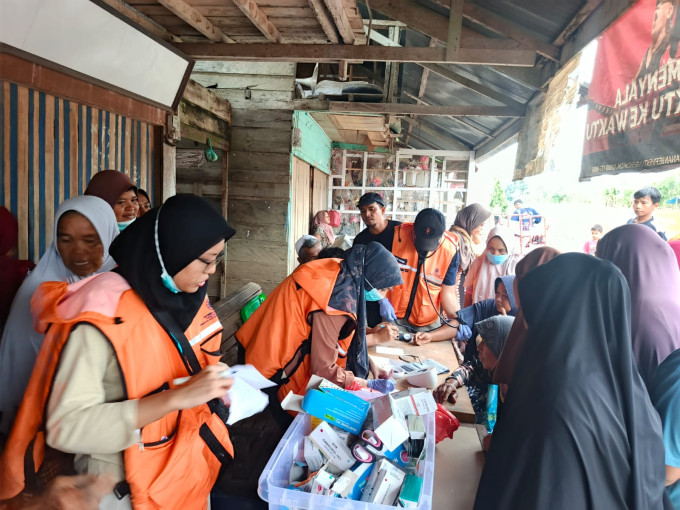
A total of 600 medical personnel, including general practitioners, specialist doctors, and nurses, will be deployed to hospitals and community health centers (puskesmas) across disaster-affected areas in Sumatra. This was announced by Minister of Health Budi Gunadi Sadikin on Monday (Dec. 15) at the Presidential Palace in Jakarta. The program involves medical personnel from various universities across Indonesia, coordinated with the Ministry of Health. Universitas Gadjah Mada (UGM) is among the universities contributing to this deployment, having previously sent health teams to disaster-affected areas through its Academic Health System (AHS) network since late November.
Chair of the UGM AHS Team, Dr. Sudadi, stated that seven teams have been deployed in rotation to Aceh Province, covering Lhoksukon in North Aceh Regency and Bener Meriah Regency. To date, seven teams have been dispatched, with one team departing each week.
“Each medical team is stationed on site for one week,” he said on Wednesday (Dec. 24).
He explained that the volunteer teams consist of multidisciplinary specialist doctors, nurses, pharmacists, nutritionists, and sanitarians from the Faculty of Medicine, Public Health, and Nursing (FK-KMK UGM) and Academic Hospital (RSA UGM), as well as several partner hospitals.
“Each week, around 11 to 15 team members are deployed,” he added.
A member of the FK-KMK UGM Disaster Working Group, Dr. Maryami Yuliana Kosim, stated that UGM’s involvement stems from FK-KMK UGM’s longstanding commitment to advancing disaster-related practices.
She explained that UGM has been involved from the outset in optimizing and developing the Health Emergency Operations Center (HEOC), which must be activated as a command, control, and coordination center for responding to emergencies within the health cluster under the authority of the National Disaster Management Agency (BNPB).
Similar to other clusters under BNPB coordination, the health cluster’s HEOC system also applies the Incident Command System, coordinating several sub-clusters, including health promotion, health services, disease prevention and environmental health, nutrition, Disaster Victim Identification (DVI), and mental health.
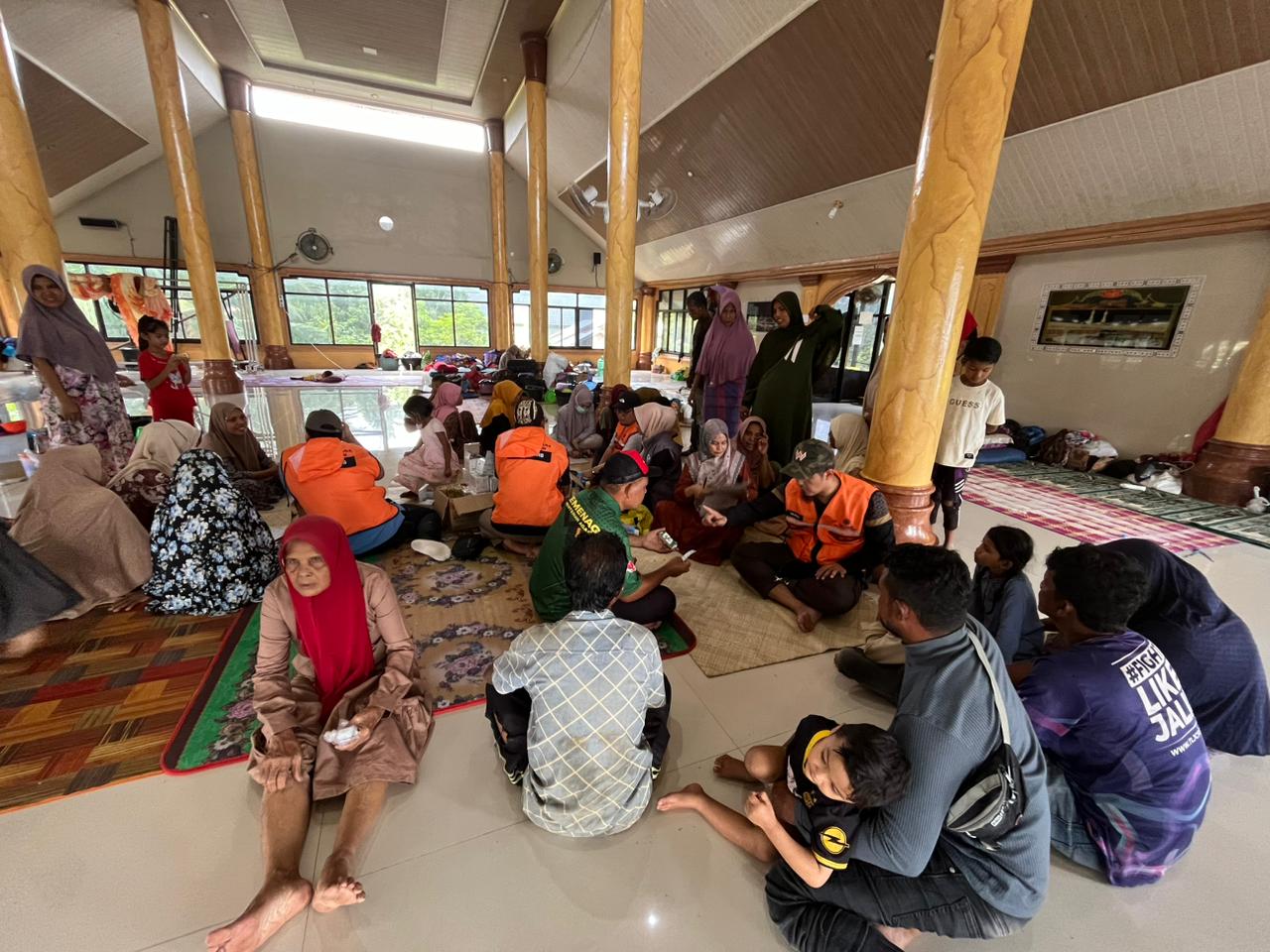
She noted that the UGM AHS team is ready to support the government’s plan to deploy 600 health workers to manage the impacts of disasters in Aceh and other regions of Sumatra. Currently, UGM is responding to recruitment through professional and specialty collegiums.
This mechanism enables the involvement of health professionals from diverse backgrounds, including those still undergoing advanced training as well as those who have completed their residencies.
She further explained that the deployment of FK-KMK UGM teams aims to strengthen the HEOC system in affected areas and to conduct assessments of the medical personnel required on the ground.
This deployment involves lecturers, AHS UGM staff, and students. The presence of students has been particularly helpful in developing infographics, collecting documentation, preparing reports, and participating directly in disaster areas.
Assistance is provided on an ongoing basis through a team-rotation system every 7 to 8 days. Beyond medical personnel, she noted that basic needs such as clean water, electricity, and road access remain major challenges in restoring health services in affected areas.
Therefore, the focus of assistance extends beyond medical care to ensuring that health facilities can function optimally through the rehabilitation phase.
“Our main goal is not merely to assist during disasters, but to empower local health facilities to become more resilient so that communities can continue accessing health services after aid teams return,” she said.
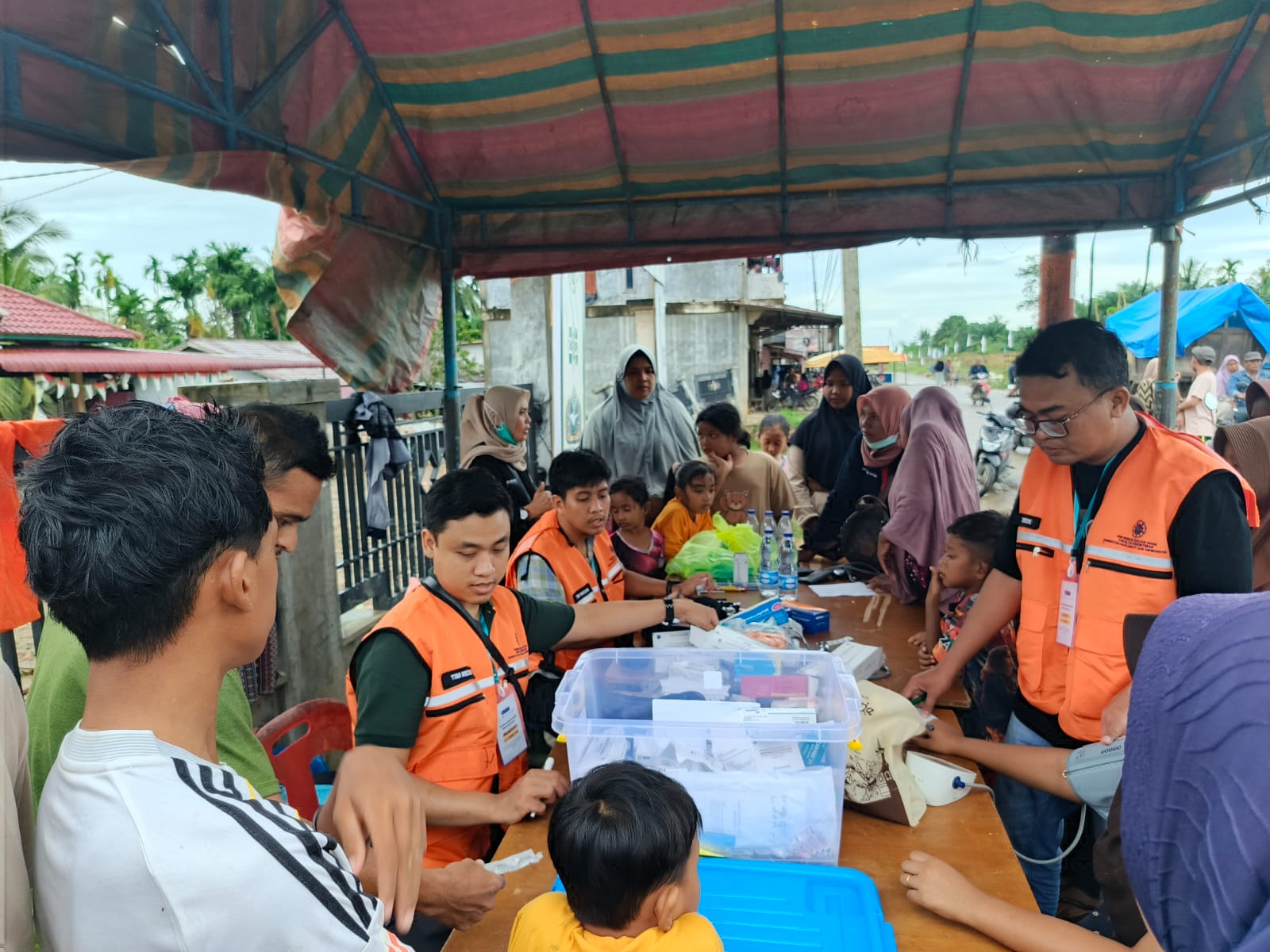
She expressed hope that synergy among the government, health facilities, and universities can continue to be strengthened to ensure effective and sustainable health services for disaster-affected communities.
The involvement of doctors and health workers from various universities is expected to enhance hospital capacity in affected regions and prevent service gaps caused by limited local resources.
“We are ready to continue coordinating with the deployment program for the 600 reserve health personnel. We hope our program can be integrated and sustained in synergy with the Ministry of Health’s initiative,” she concluded.
She added that the UGM AHS medical teams come from Ministry of Health hospitals such as Dr. Sardjito General Hospital and Dr. Soeradji Tirtonegoro General Hospital, as well as non–Ministry of Health hospitals, including RSA UGM and Dr. Yap Eye Hospital.
Author: Ika Agustine
Editor: Gusti Grehenson
Post-editor: Salma
Photographs: UGM AHS Team