


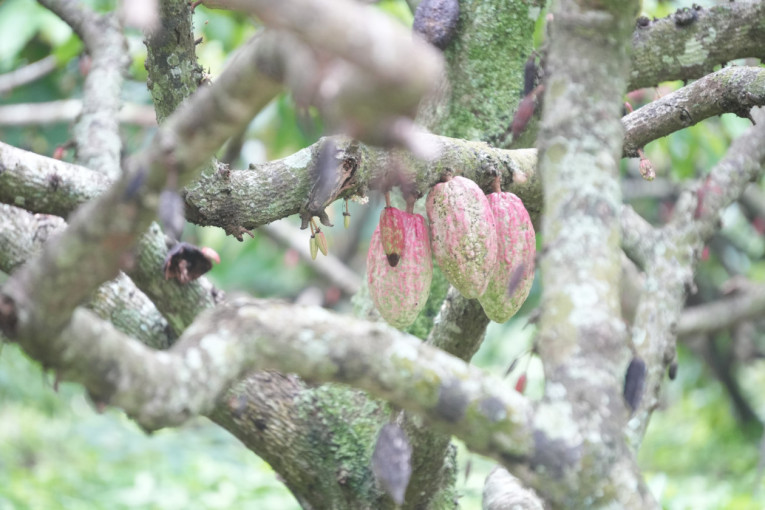
Indonesia’s cocoa plantations have faced mounting challenges over the past decade. Reports from the Ministry of Agriculture and Statistics Indonesia (BPS) indicate that while Indonesia’s cocoa plantation area remains relatively extensive, a significant portion of plantations has suffered declining productivity due to aging trees and the lack of systematic replanting programs.
Data from the Directorate General of Estates show a downward trend in national cocoa production since 2015, with average productivity ranging from 500 to 700 kilograms per hectare per year. This figure remains well below that of major producer countries such as Ghana, which achieves productivity levels of 800 to 1,000 kilograms per hectare.
The situation has drawn attention from Dr. Nur Akbar Arofatullah, a researcher and academic at the UGM Faculty of Agriculture. He assessed that Indonesia’s cocoa challenges are far more complex than land area alone would suggest.
“Data from the Directorate General of Estates show that national cocoa productivity averages only around 700 kilograms per hectare per year. This indicates that the biggest constraint in the field is low productivity, largely driven by pest and disease pressure,” he said on Friday (Jan. 2).
Dr. Arofatullah explained that pests and diseases such as cocoa pod borer (CPB) and vascular streak dieback (VSD) are the main factors behind declining yields. CPB directly damages cocoa pods, while VSD causes gradual stem and leaf dieback.
“These two problems significantly suppress production,” he explained.
At present, various control approaches, including biological fungicides and insecticides, are being tested to reduce crop damage more sustainably.
However, Dr. Arofatullah stressed that pest and disease control will not be effective without the use of superior cocoa seedlings.
According to him, one of the root causes of low national cocoa productivity is the widespread use of non-standard seedlings with uncertain yield potential and limited disease resistance.
“Superior seedlings are the foundation. If the planting material is weak from the start, even the best fertilization and pest control will not deliver optimal results,” Dr. Arofatullah said.
He explained that high-quality cocoa seedlings not only increase productivity but also determine crop uniformity, the age at which trees begin bearing fruit, and long-term yield stability.
In addition, superior varieties with better tolerance to CPB and VSD can reduce the risk of crop failure while lowering farmers’ dependence on chemical pesticides.
“With the right seedlings, disease pressure can be reduced from the outset, and farmers’ production costs become more efficient,” he added.

Dr. Arofatullah also emphasized that seed quality is closely linked to post-harvest quality and cocoa bean characteristics. Different varieties exhibit distinct bean traits, including bean size, fat content, and potential for flavor development after fermentation.
Therefore, selecting superior seedlings is a crucial part of efforts to enhance Indonesian cocoa’s competitiveness in the global market.
These challenges are not limited to smallholder plantations but are also found in large-scale estates where management and replanting programs have not been implemented optimally. Many aging plantations have yet to be replanted with superior seedlings, resulting in persistently low productivity despite professional management.
As a result, Indonesia has fallen behind major producer countries such as Ghana and Côte d’Ivoire, which can maintain quality and supply consistency at scale.
“Many international processing industries prefer raw materials from Africa because the quality is more stable and prices are more competitive,” Dr. Arofatullah said.
According to him, the biggest challenge lies in maintaining consistent quality in large volumes.
“Exporting one or two tons is relatively easy. But when it comes to hundreds of tons, it becomes very difficult to keep quality consistent from start to finish,” Dr. Arofatullah noted.
Another challenge is that most Indonesian cocoa is still marketed in an unfermented form. This practice results in highly variable bean quality, particularly in terms of acidity, flavor, and aroma precursor profiles, which often fail to meet industrial specifications.
Consequently, cocoa quality in the market is frequently inconsistent across regions and among farmers, making it difficult to maintain uniform quality on a large and sustainable scale.
At UGM, Dr. Arofatullah said, researchers are currently conducting collaborative research with Fuji Oil Japan, a global company in the cocoa and chocolate ingredient industry.
The collaboration focuses on using Indonesian cocoa as a raw material for cocoa powder, with quality profiles tailored to industrial needs that cover the entire chain from variety selection and cultivation to fermentation.
“Indonesian cocoa generally has relatively high acidity levels, resulting in a more acidic taste. That is why we are studying varieties and fermentation conditions that can produce cocoa beans with lower acidity,” he explained.
The research is being carried out in collaboration with the Indonesian Coffee and Cocoa Research Institute (Puslitkoka) and farmer groups in Cilacap through the development of a pilot plantation spanning several dozen hectares, which is scheduled to begin operations in 2026.
The area is considered to have strong potential for cocoa development, given its favorable agroclimatic conditions and proximity to research facilities and supply chains.
Looking ahead, Dr. Arofatullah hopes that Indonesia’s cocoa industry can improve through a more comprehensive approach that encompasses replanting with superior seedlings, sustainable pest and disease control, and enhanced post-harvest quality.
“Price stability is key if we want to be competitive globally. But the foundation remains in the field: good seedlings, proper cultivation, and consistently maintained quality,” he concluded.
Author: Hanifah
Editor: Gusti Grehenson
Post-editor: Rajendra Arya
Photographs: Dr. Nur Akbar Arofatullah