


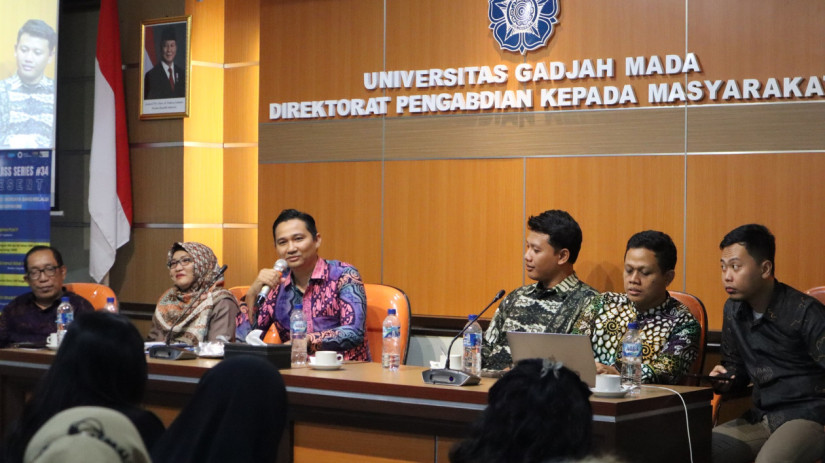
The Indonesian National Standard (SNI) is a national benchmark that ensures the quality, safety, efficiency, and consistency of products and systems. For micro, small, and medium enterprises (MSMEs), adopting SNI represents a strategic step toward building consumer trust, expanding market reach, and meeting sales requirements across many formal distribution networks. The challenges of globalization demand that business actors, even at the most minor scale, adopt higher-quality practices.
In response to these challenges, the Directorate of Community Service of Universitas Gadjah Mada (DPKM UGM), in collaboration with the National Standardization Agency (BSN), organized MSME Class Series #34 under the theme “Enhancing Competitiveness through the Implementation of SNI.”
This educational and empowerment programme was held at Meeting Room 1 of DPKM UGM and involved dozens of assisted MSME actors from various sectors, both food and non-food. The theme underscored the importance of standardisation and quality assurance as the foundation for strengthening the competitiveness of national products.
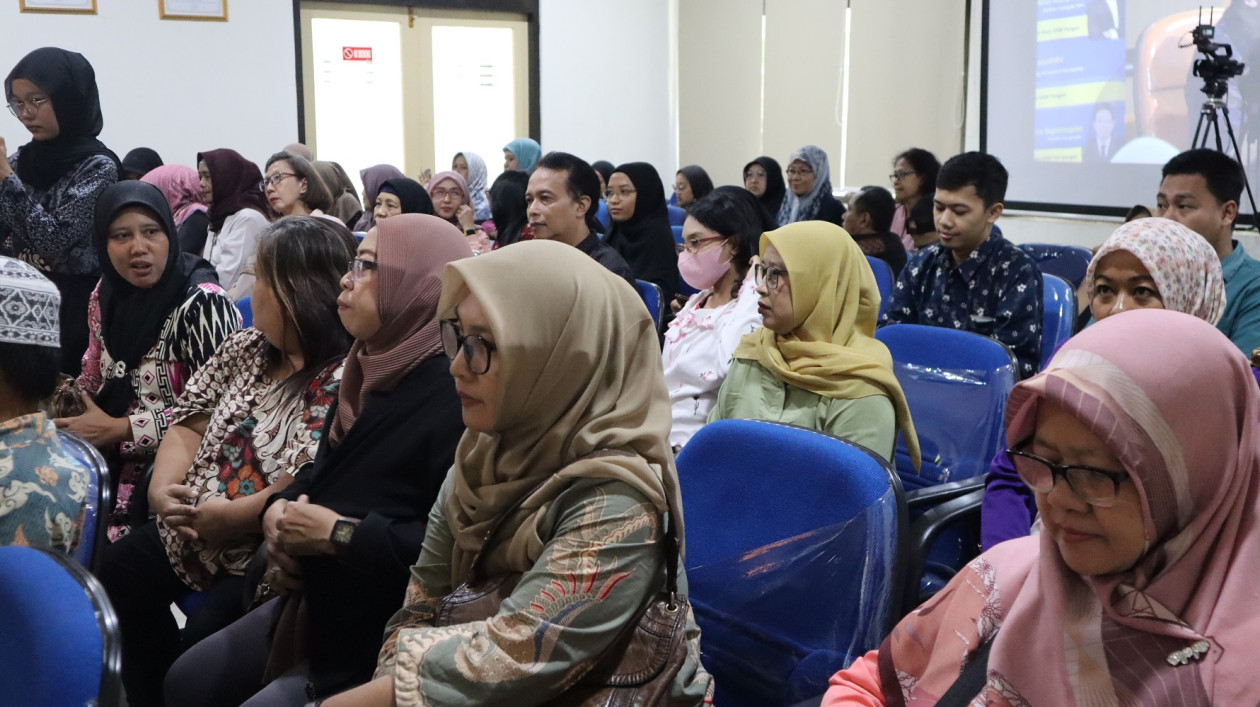
Professor Nanung Agus Fitriyanto, Head of the KKN Management Division at DPKM UGM, emphasised the importance of cross-sector collaboration in strengthening the MSME ecosystem. Through this initiative, he said, BSN and UGM remain committed to encouraging MSMEs to understand, implement, and utilise SNI as a crucial instrument towards resilient and sustainable business growth.
“You, the MSME actors, are the drivers of the national economy. Without MSMEs, our economy would not move optimally,” he said on Tuesday (Dec. 16).
Professor Fitriyanto stated that UGM has a strong mission to support community empowerment. The implementation of the MSME class, now entering its 34th series, stands as tangible evidence of UGM’s commitment.
“UGM does not build factories or provide direct capital, but we serve as a bridge. We transfer knowledge, connect networks, and invite experts to help enhance the capacity and role of MSMEs,” he explained.
Angietha Putri Prameswari from the BSN Yogyakarta Technical Service Office, in her presentation titled “SNI Program and SNI Bina UMK for MSME Competitiveness,” outlined the strategic role of SNI in addressing global competition.
She explained that SNI is not merely about technical requirements but also a tool for building consumer trust. She also elaborated on the mentoring and certification processes, including how MSMEs can access assistance programs through the SNI Bina UMK scheme.
Before the MSME participants, Prameswari provided a practical overview of the technical steps required, covering quality management systems, process control, and laboratory requirements.
“This is important to convey, as it forms a crucial foundation for MSME actors to understand that standardization is a long-term investment for business sustainability,” she explained.
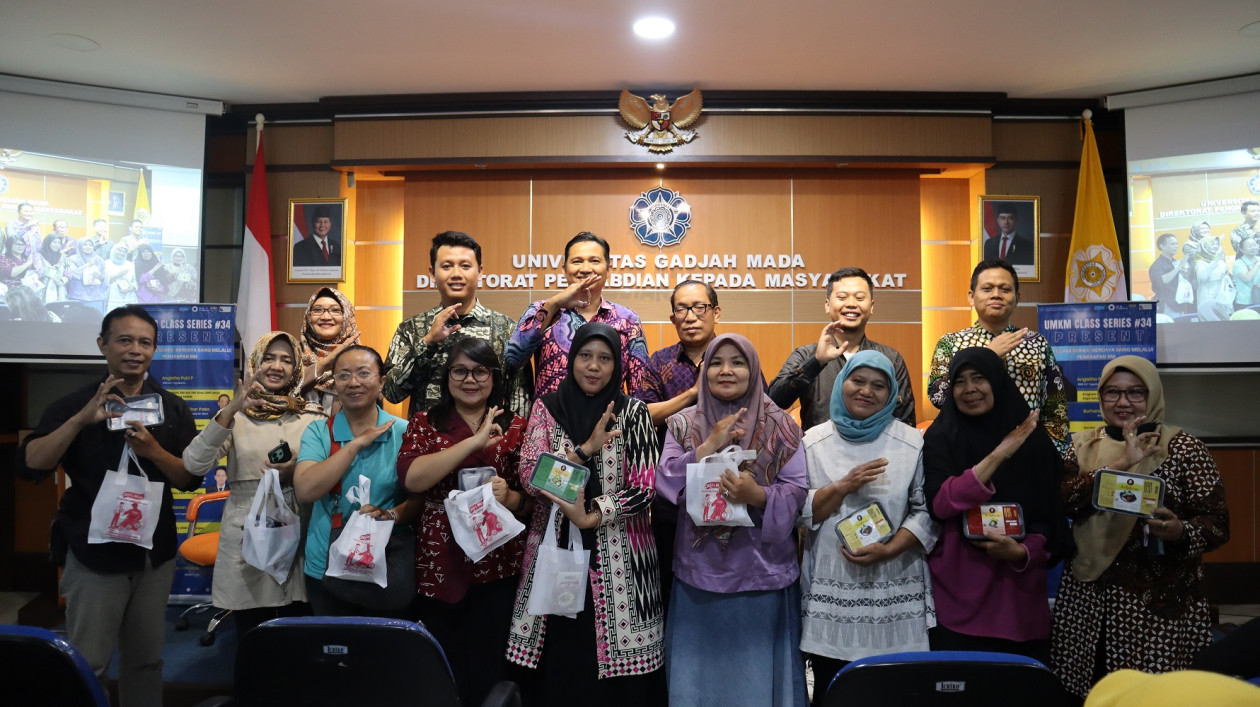
The MSME Class Series #34 discussion, which ran until the afternoon, also featured success stories from several MSMEs that have successfully implemented SNI.
Four speakers from the food and non-food sectors were invited to share their first-hand experiences in the SNI implementation process. They were Burhanul Akbar Pasa, Director of Gudeg Bu Tjitro; Risal Eza Lazuardhi, Production Manager of PT Serelia Prima Nutrisia; Nova Suparmanto, Founder of CV Astoetik; and Efendi Setiawan, Business Development Supervisor of CV Rumah Mesin.
The success stories shared by the four speakers clearly illustrated that implementing SNI can help MSMEs grow more professionally and competitively. During the discussion, participants showed great enthusiasm by raising questions on various aspects, ranging from audit preparation and costs to the technical challenges MSMEs face when initiating the standardization process.
Author: Agung Nugroho
Post-editor: Rajendra Arya