


The history of health policy implementation in Indonesia offers a compelling subject of study. According to trends in national health policy development, external influences such as politics, governance systems, and pandemics have consistently shaped decision-making processes. Nevertheless, regardless of whether policies emerge in the past, present, or future, equity and equality in healthcare services must remain a core principle.
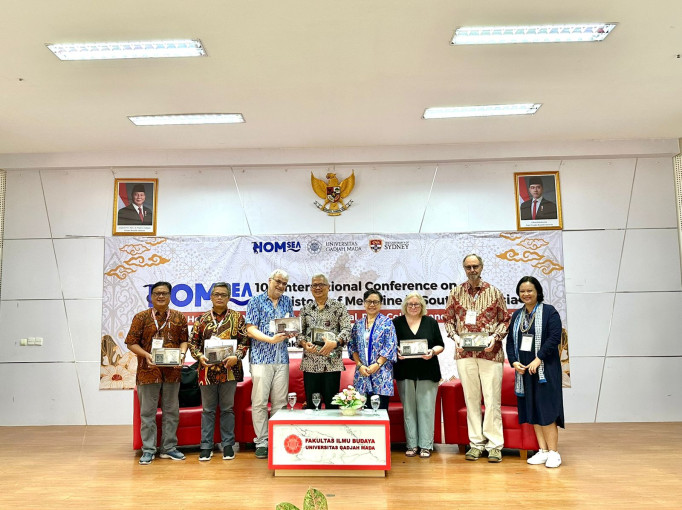
These insights emerged during the 10th International Conference on the History of Medicine in Southeast Asia, held at the Soegondo Auditorium, Faculty of Cultural Sciences, Universitas Gadjah Mada (FIB UGM), on Wednesday, Jun. 25, 2025.
Dr. Abdul Wahid, a lecturer from the Department of History at FIB UGM, outlined four distinct periods that demonstrate changes in health policy under various administrations.
Between 1999 and 2009, in an effort to promote democratization, the government delegated authority for regional management, including health services, to local governments.
“The challenge at that time was that financial and fiscal capabilities were still inadequate,” said Dr. Wahid.
He noted that in many underdeveloped regions, access to healthcare remained a major issue.
While decentralization aimed to deliver public services more equitably, its implementation faced numerous obstacles, particularly the limited understanding among local leaders regarding public health issues.
From 2009 to 2019, a new phase began with the establishment of the government health insurance (BPJS).
This marked a shift in the national health paradigm, where BPJS played a role in providing preventive healthcare in an equitable and non-discriminatory manner.
Although the decentralization system continued, larger challenges emerged.
BPJS procedures and administrative systems often hindered public health services, and inconsistencies in implementation across regions became apparent.
“The most interesting development came during our efforts to manage the COVID-19 pandemic. Technological interventions began to be employed to control the spread of the virus, with considerable success,” explained Dr. Wahid.
He further stated that Indonesia was among the countries that had effectively mitigated the economic and health impacts of COVID-19.
Rapid and responsive measures were taken to curb infection spikes.
“The vaccination campaign was also successfully implemented through international collaboration,” he added.
Professor Laksono Trisnantoro from the UGM Department of Health Policy and Management, Faculty of Medicine, Public Health, and Nursing (FK-KMK UGM), emphasized that external factors such as politics, governance, and pandemics have continually influenced national health policy.
However, he stressed that the study of history should serve as a tool for evaluation, learning, and future policy formulation.
“It is essential to ensure that these external factors do not obstruct the government’s commitment to equity and equality in healthcare services,” said Professor Trisnantoro.
Author: Tasya
Editor: Gusti Grehenson
Post-editor: Lintang Andwyna