


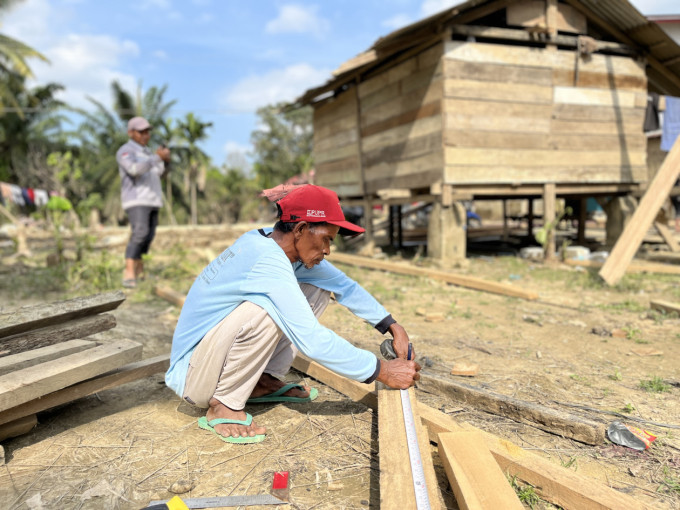
Universitas Gadjah Mada (UGM) continues to expand the construction of temporary shelters (hunian sementara/huntara) for flood survivors in Aceh in response to the urgent need for residents to move out of emergency tents. Building on its initial experience constructing 100 shelter units, UGM has launched a follow-up initiative to develop up to 550 temporary housing units using driftwood.
The program is designed to address the extensive and widespread damage to residents’ homes across several affected areas. The use of locally available materials was chosen to enable faster construction while remaining adaptive to field conditions.
This initiative forms part of UGM’s ongoing commitment to supporting the recovery of decent, healthy, and safe housing for affected families.
One member of the UGM team, Dr. Ashar Saputra, explained that the plan to build 550 temporary shelters is based on the actual scale of housing damage in Aceh. In Geudumbak Village alone, approximately 430 houses were recorded as severely damaged or destroyed by the floods.
Of these, 330 temporary housing units are planned to be built with support for timber supply and processing from the National Disaster Management Agency (BNPB). Meanwhile, another 120 units are scheduled for Aceh Tamiang, with backing from BNPB and the Ministry of Forestry.
“This initiative aims to relocate survivors from inadequate tents into homes that are healthy, safe, and capable of functioning as proper family residences,” Dr. Saputra said on Thursday (Jan. 15).

In implementing the program, UGM has partnered with Rumah Zakat, which serves as both a donor and a direct partner in providing training and placing local construction workers.
The work scheme is designed to actively involve affected residents in the construction process alongside homeowners and surrounding community members.
Through this approach, the local economy has begun to recover through compensation schemes for construction workers.
“Rumah Zakat supports the formation of construction teams that work together with residents, while UGM contributes housing technology that is safe, healthy, quick to build, and easy to construct,” Dr. Saputra explained.
According to him, the roles of BNPB and the Ministry of Forestry are crucial in supplying the primary construction material, driftwood. Timber available after the disaster is utilized to prevent waste and deterioration in quality.
The faster the wood is processed, the better the quality of material that can be used for housing. Even damaged timber can still be utilized by selecting sections that remain suitable.
“We hope the use of timber can be accelerated, because if it is left too long, it risks further deterioration even though some parts can still be salvaged,” he said.
In terms of design, the driftwood-based temporary shelters are built to a 6 x 6 meter footprint. The design accommodates two private bedrooms, one multifunctional space that can serve as a kitchen or family room, and a terrace.
Dr. Saputra explained that the required volume of timber is approximately 4 cubic meters for houses without elevated floors and 5 cubic meters for houses with raised floors. Materials that need to be supplied from outside the site include galvalume roofing as well as nails, bolts, and nuts.
“As much as possible, timber materials are sourced from nearby locations, while supporting materials are supplied from outside,” Dr. Saputra noted.
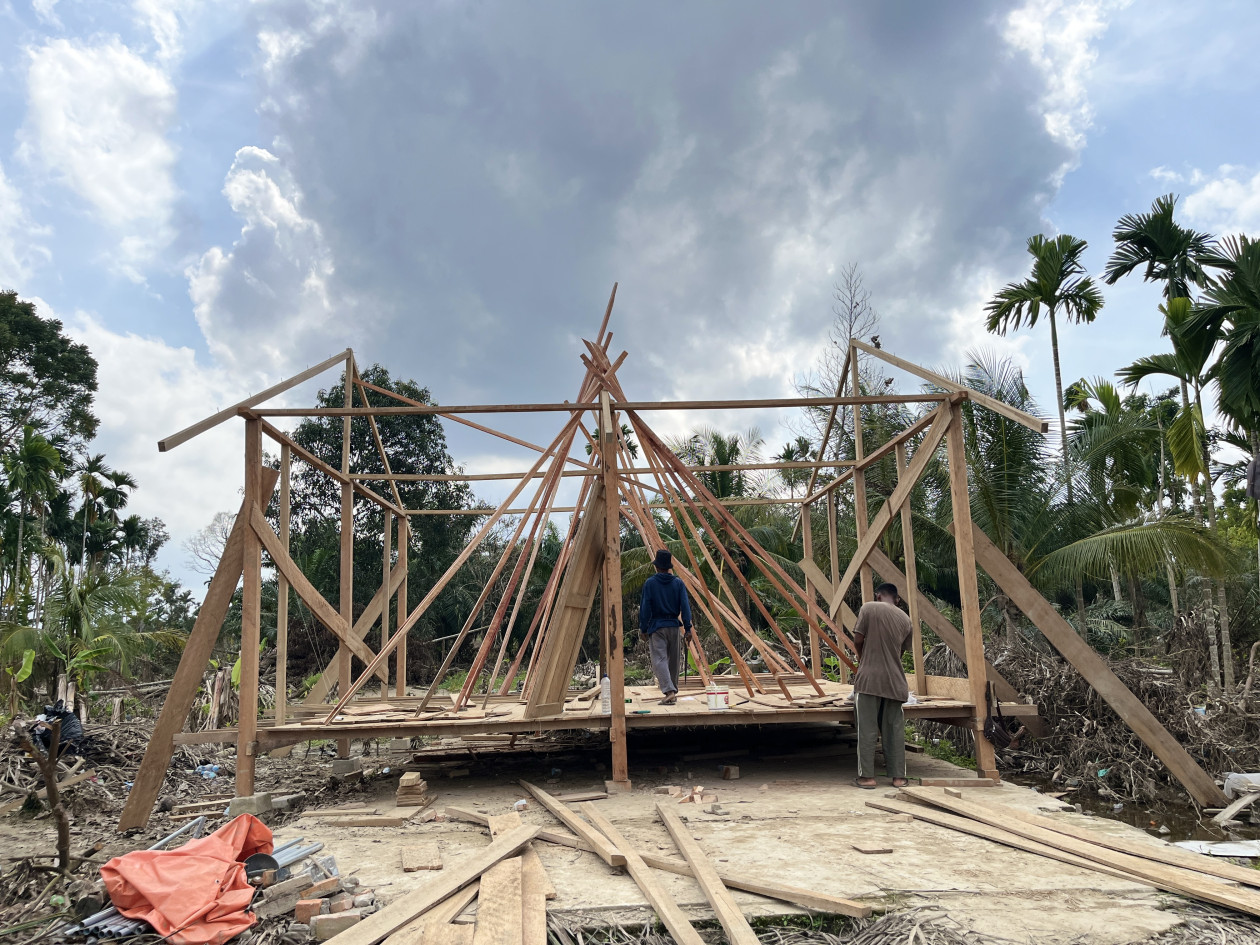
The construction of one temporary housing unit is designed to be carried out efficiently by involving local labor. Ideally, one house is built by six people, consisting of two skilled carpenters and four residents serving as assistants.
In the initial plan, construction was targeted to be completed within four days. However, during the early implementation stage, construction time remained around 6 days due to field adaptation processes.
“With continued training and experience, we are optimistic that the four-day target per unit can be achieved,” Dr. Saputra said.
To accelerate construction, a parallel work scheme has been implemented by forming 15 construction teams. Under this scheme, 15 houses can be built simultaneously. Other residents contribute by cutting, processing, and distributing timber according to the needs of each housing unit.
“The workforce and supply flow have been prepared so that the construction process can run more smoothly,” Dr. Saputra explained.
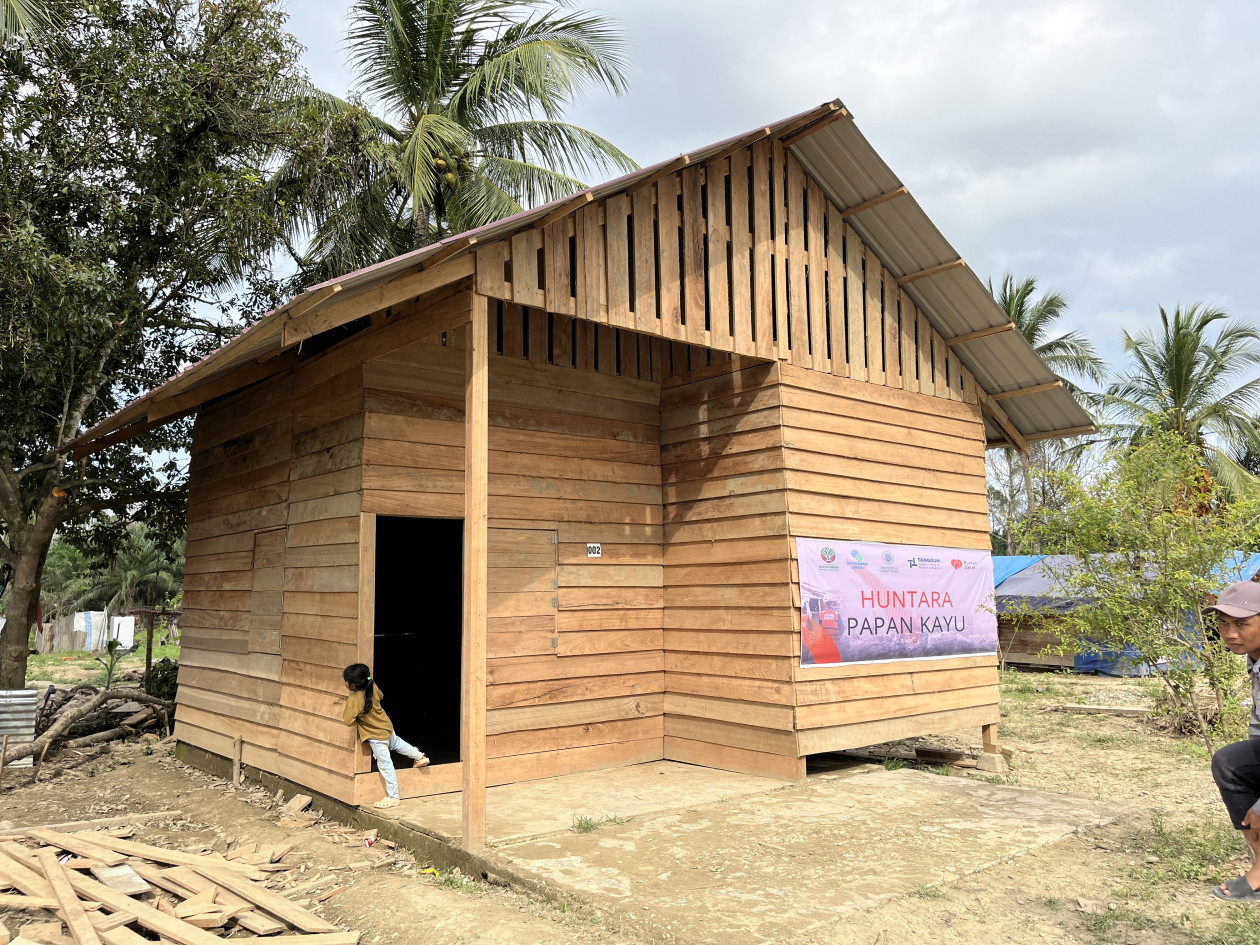
He noted that the enthusiasm of affected residents has been a key factor in the program’s success. After nearly 50 days living in uncomfortable and unhygienic tents, residents warmly welcomed the opportunity to have more decent housing.
During the initial phase of construction, many residents came to observe, ask questions, and express hopes of soon receiving similar homes.
The prioritization of housing recipients is determined through community deliberations, taking into account the conditions of the elderly, pregnant women, children, and orphaned families.
“The order of construction is determined through village consultations to ensure the assistance is well targeted and fair,” he said.
Looking ahead, Dr. Saputra emphasized the importance of strengthening cross-sector collaboration in post-disaster recovery. Community needs do not end with housing, but also include access to clean water, sanitation, health facilities, and education.
The restoration of basic infrastructure must proceed in parallel to safeguard public health and welfare. UGM encourages all parties involved to contribute in line with on-the-ground needs.
“Housing is the entry point, but supporting facilities such as schools and health services also need to be prepared immediately,” Dr. Saputra concluded.
Behind the figures and technical designs, the temporary housing construction program also carries deeply human stories. One of them is experienced by the family of Misran, consisting of five family members, with his wife heavily pregnant when the floods struck.
In emergency conditions, they survived for three days and three nights on top of a palm tree until the water receded. Today, Misran’s house has been completed and is already occupied, while 18 other houses at the exact location are still under construction.
“At that time, we were just trying to survive, and now we can once again live together as a family in a safer home,” Misran said.
Author: Triya Andriyani
Post-editor: Rajendra Arya
Photographs: Rumah Zakat