



The shadow economy refers to the entire range of economic activities that generate added value but are not reported to official authorities, placing them beyond the reach of taxation and government regulation. For some observers, this phenomenon not only results in the loss of potential state revenue but is also closely linked to money laundering practices that may undermine the stability of the financial system.
In addition to causing tax leakages that significantly reduce state income, the shadow economy leads to biased GDP data, as recorded economic growth does not reflect real potential, and creates unfair competition when formal businesses must compete with actors who do not pay taxes.
Dr. Rijadh Djatu Winardi, a lecturer at the Department of Accounting, Faculty of Economics and Business, Universitas Gadjah Mada (FEB UGM), explained that the shadow economy encompasses all economic activities, both legal and illegal, conducted without formal business registration.
These include micro, small, and medium enterprises (MSMEs) operating without permits or registration, informal workers, large-value transactions that go unreported, as well as illegal activities such as drug trafficking and the production of illicit substances.
“These shadow economic activities are carried out to evade taxes, regulations, and administrative procedures,” he said at FEB UGM on Friday (Feb. 6).
As a forensic accounting expert, Dr. Winardi described illegal activities that include funneling funds from illicit sources into the financial system to make them appear legitimate.
According to him, this process typically occurs in several stages, starting with placing funds into the financial system, layering transactions to make them difficult to trace, and finally integrating them back into the formal economy in the form of seemingly legal assets or investments.
He reaffirmed that unrecorded economic activities have the potential to reduce state revenue by narrowing the tax base.
“This condition inevitably limits the government’s capacity to finance infrastructure development, education, and social programs,” he explained.
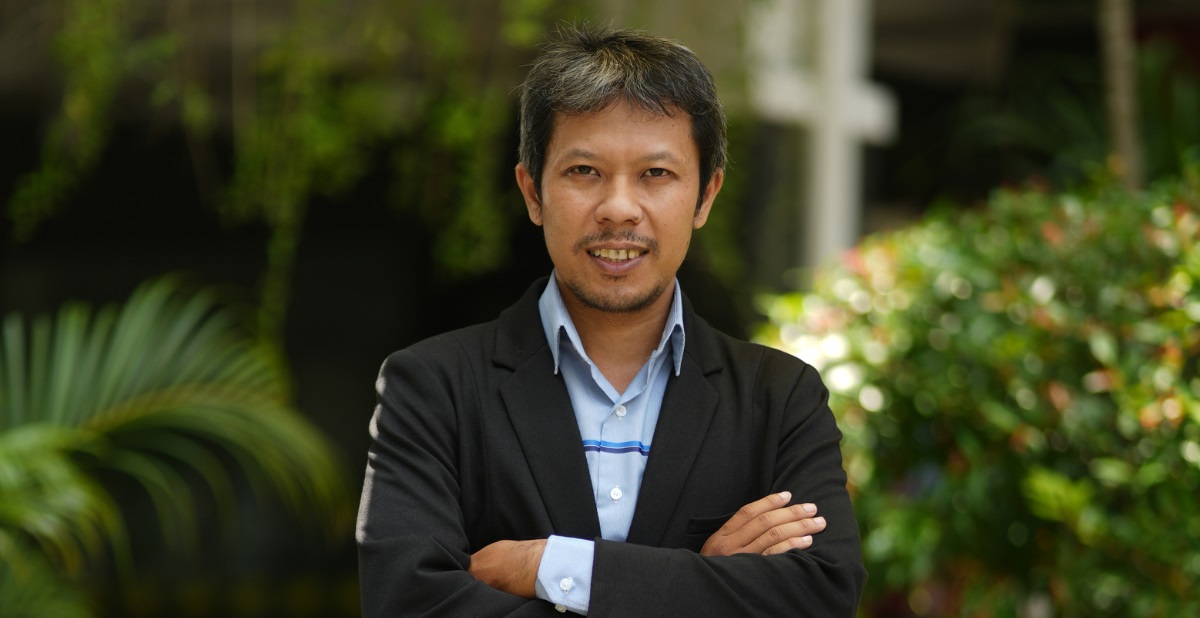
“The main problem arises when these activities are not observed by the state and therefore are not reflected in GDP. This weakens the state’s capacity to finance development. Moreover, it distorts business competition and may hinder long-term economic growth,” he added.
Comparing Indonesia with developed countries, Dr. Winardi noted that high-income countries tend to have smaller shadow economies than middle- and low-income countries, which face greater challenges in suppressing such activities.
Data from the Global Shadow Economy EY Report 2025 shows that Indonesia’s shadow economy is valued at USD 326 billion (approximately IDR 5,304 trillion). In light of this condition, he emphasized the importance of strengthening governance to curb the shadow economy, enhance the country’s fiscal capacity, and support sustainable economic growth.
According to Dr. Winardi, countries with good governance tend to have a smaller proportion of shadow economic activity. Meanwhile, financial development plays a critical role as a structural deterrent by formalizing transactions, increasing transparency, and integrating economic agents into the official financial system.
In the Indonesian context, strategies should focus on strengthening tax compliance through the Compliance Improvement Program (CIP), integrating National Identification Numbers (NIK) with Taxpayer Identification Numbers (NPWP), digital data matching, strengthening digital tax administration systems, and increasing oversight of priority sectors with high shadow economy activity, such as retail trade, food and beverages, gold, and fisheries.
However, he cautioned that implementing these strategies also faces various challenges. Informal economic data are difficult to track in real time, many MSME actors tend to avoid formalization, and cross-border transactions often escape oversight.
Data integration among financial institutions, along with the use of big data and artificial intelligence, is required to detect interaction patterns and strengthen supervision.
“I believe it is also necessary to simplify processes, promote digital financial inclusion for MSMEs, and enhance international cooperation to strengthen cybersecurity and financial oversight,” he concluded.
Reporter: FEB UGM/Kurnia Ekaptiningrum
Author: Agung Nugroho
Post-editor: Zabrina Kumara Putri