


The governments of Indonesia and the United Kingdom have agreed to strategic maritime cooperation through a plan to build 1,582 fishing vessels under the £4 billion Maritime Partnership Programme (MPP). Led by the UK defense company Babcock International, the program is projected to become a new driver of national maritime economic growth, particularly through strengthening the fishing fleet and revitalizing coastal villages.
The Ministry of Marine Affairs and Fisheries (KKP) stated that implementation will begin in stages in 2026, with around 1,000 vessels of 30 Gross Tons (GT) planned for construction in the initial phase as part of the cooperation package.
Responding to the plan, Suadi, Professor of Fisheries and Marine Socioeconomics at Universitas Gadjah Mada (UGM), emphasized that any fleet expansion must adhere to the precautionary principle to avoid overfishing and excess vessel capacity.
He explained that fisheries management always begins by determining reference points that indicate the sustainable harvest levels of fish stocks. These figures serve as the basis for deciding the number of vessels that may operate in a given fishing area.
“These reference points guide how many additional vessels can be deployed to harvest the fish available in nature,” he said on Thursday (Feb. 12).
He noted that the government has divided Indonesian waters into 11 Fisheries Management Areas (WPP), each with varying stock status, ranging from underexploited to fully exploited and overexploited. The construction of 1,582 fishing vessels through the MPP could be directed toward optimizing fish stocks in WPPs that remain underutilized, such as eastern Indonesia and the North Natuna Sea.
Nevertheless, he cautioned that the majority of Indonesia’s fish stocks are currently fully exploited or overexploited, meaning that any increase in vessel numbers must strictly adhere to precautionary measures.

The Indonesia–UK fishing vessel development cooperation is not new in national fisheries management. The government previously implemented a program to provide 1,000 vessels of 30 GT during a past administration. However, he pointed out that the initiative left several important lessons.
“This is not entirely a new program. A 1,000-vessel assistance program was launched during the SBY administration. However, there were many issues, such as vessel suitability for fishing grounds, fishers’ operational capacity, and infrastructure support,” he said.
The program initiated by Indonesia and the United Kingdom has the potential to transform the structure of the national fishing fleet, which has long been dominated by small-scale vessels.
However, to ensure meaningful impact, he stressed that vessel design and management models must be adaptive to regional characteristics, marine ecology, and the social conditions of coastal communities. Fisheries activities should not be viewed solely as fish harvesting.
“This program is strategic in driving structural change in the national fishing fleet, but it must be adaptive to location, marine ecology, and social conditions to avoid creating new inequalities or intensifying competition over fish resources,” he said.
In practice, he outlined several fisheries management models that can serve as reference points to maintain sustainable fish availability. Maximum Sustainable Yield (MSY) aims to ensure that fish stocks are utilized in an ecologically sustainable manner. Maximum Economic Yield (MEY) emphasizes optimal economic returns from fishing activities.
Meanwhile, Maximum Social Yield (MScY) considers social benefits, such as job creation and fishers’ welfare.
“The MSY, MEY, and MScY approaches must be considered together so that fisheries policies not only safeguard fish stocks but also remain economically viable and socially beneficial to support sustainable fisher welfare,” he said.
He added that the policy is projected to benefit both countries, including opportunities for technology transfer to strengthen national fisheries industry capacity and management, as well as job creation estimated at 600,000 positions in Indonesia and the creation of around 1,000 skilled jobs in the United Kingdom.
In this context, he stressed that social approaches and capacity development must be integral to program implementation.
“Small-scale fishers must be empowered to operate the technology so they can move up the value chain. Social engineering and stakeholder synergy are essential, including the involvement of young graduates from secondary and higher education in the marine and fisheries fields,” he said.
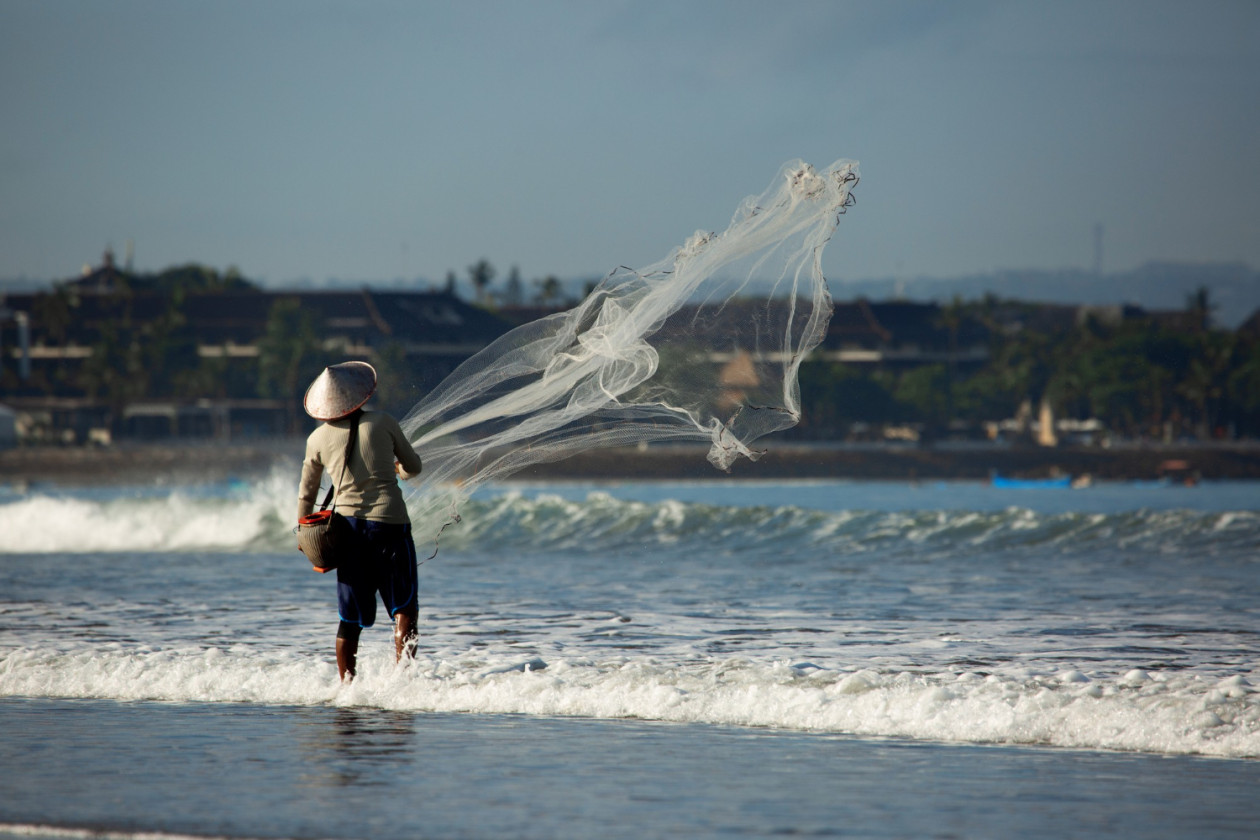
According to him, the success of the fishing vessel development program under the Indonesia–UK strategic partnership will depend heavily on supporting policies and governance prepared from the outset, given the program’s scale.
He urged the government to learn from similar past initiatives by adopting best practices and avoiding previous shortcomings. Aligning vessel numbers with available fish stocks is crucial, as miscalculations of fleet capacity can have serious consequences.
“The sustainability of capture fisheries depends greatly on fish stock levels in the sea. Therefore, carefully determining vessel numbers in line with available stocks is the first step. Miscalculations will undermine fisheries businesses and risk accelerating marine ecosystem degradation,” he said.
Furthermore, he underscored the need to improve governance of assisted vessels, particularly by ensuring transparency regarding beneficiaries and the institutional readiness of fisheries enterprises. At the same time, supporting infrastructure such as cold chain systems and vessel maintenance facilities must be developed in parallel.
Cross-sector collaboration, he emphasized, is key to ensuring the program does not remain merely a physical project. Ultimately, the initiative should genuinely serve fishers’ interests and national food security.
“I hope this program does not become a ‘free-for-all,’ but is truly directed toward optimizing fish resource utilization for the welfare of coastal communities and supporting food security, even food sovereignty,” Professor Suadi concluded.
Author: Cyntia Noviana
Editor: Gusti Grehenson
Post-editor: Jasmine Ferdian
Photographs: Presidential Secretariat, Mongabay, and Freepik