


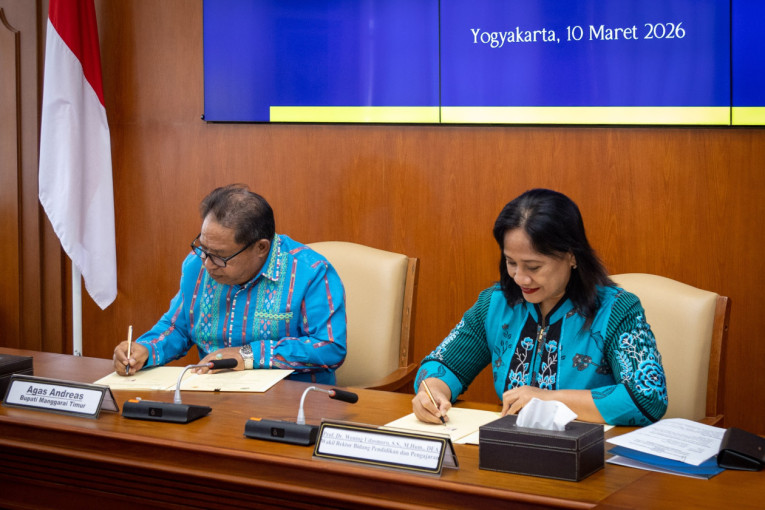
Universitas Gadjah Mada (UGM) has established a partnership with the East Manggarai Regency Government in East Nusa Tenggara through the signing of a memorandum of understanding held at the UGM campus on Tuesday (Mar. 10). The agreement provides a foundation for strengthening collaboration in education, research, and community service as part of the implementation of the Tri Dharma of Higher Education. The partnership aims to support regional development by improving the quality of human resources and programs to reduce stunting.
As part of implementing the partnership, various community service programs will serve as collaborative platforms to be developed jointly. UGM Vice Rector for Education and Teaching, Professor Wening Udasmoro, explained that the UGM’s Community Service Program (KKN-PPM UGM) has long served as a means for students to directly understand community issues. Through this program, students learn to identify both the potential and the challenges faced by communities in different regions.
“Our students are encouraged to understand conditions in the field, observe local potential, and then work with communities to find ways for that potential to grow and provide economic and social benefits,” she said.
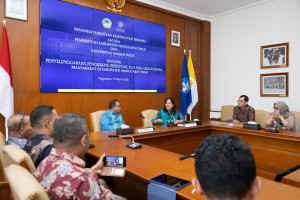
According to Professor Wening, collaboration with local governments is important so that students’ academic activities can address communities’ real needs. Local governments have a strong understanding of the social, economic, and health conditions of their regions. With such synergy, student community service activities can be directed toward strategic issues that directly impact community welfare, including efforts to accelerate the reduction of stunting.
“We hope this partnership will enable students and local governments to identify shared problems and develop programs that contribute to improving education quality and community welfare,” she explained.
In addition to community service, the partnership also opens opportunities to strengthen human resource capacity through access to higher education. Professor Wening explained that UGM is currently encouraging an increase in the number of master’s and doctoral students from various regions across Indonesia. This effort is part of a strategy to promote equitable access to higher education, so that talent from different regions has the opportunity to develop their academic capacities.
“We are very open to accepting master’s and doctoral students from East Manggarai because equal access to higher education is important to ensure that knowledge development is not concentrated in only certain regions,” she said.
Meanwhile, East Manggarai Regent Agas Andreas welcomed the partnership and noted that UGM’s contributions have already been felt by communities in the region. He explained that several UGM students had previously conducted thematic KKN-PPM programs in East Manggarai, focusing on stunting prevention. These programs were implemented in areas that still face relatively high stunting rates and, therefore, require collaborative approaches from various stakeholders.
“We have seen firsthand how UGM students work in the field, including through thematic KKN programs related to addressing stunting in East Manggarai,” said Agas.
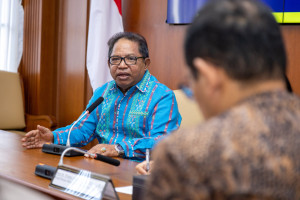
According to Agas, improving educational access for younger generations is also an important priority in regional development. The East Manggarai Regency Government has supported education through various assistance programs for students who pursue higher education. He hopes that collaboration with UGM will create broader opportunities for young people from East Manggarai to pursue quality higher education.
“My hope is that in the future, more young people from East Manggarai will be able to stand and study on this campus,” he said.
In addition to education, Andreas noted that strengthening the health sector should also receive attention in regional development. He said that improving the capacity of health workers and implementing community-based approaches are important for enhancing the quality of health services. Collaboration with universities is considered capable of fostering research-based innovations to address public health challenges.
“We are grateful for UGM’s contributions so far and hope this partnership will continue to support development in East Manggarai,” he said.
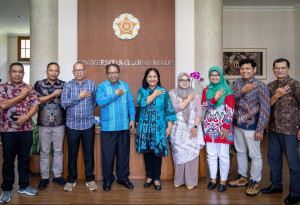
The collaboration between UGM and the East Manggarai Regency Government is expected to serve as a starting point for developing future collaborative programs. The integration of education, research, and community service enables universities to contribute meaningfully to addressing regional development challenges.
Through academic activities that are directly connected to community needs, various innovations can emerge from collaboration between universities and local governments. With this spirit, UGM remains committed to delivering tangible contributions to Indonesia’s progress.
Author: Triya Andriyani
Post-editor: Zabrina Kumara
Photo: Donnie