


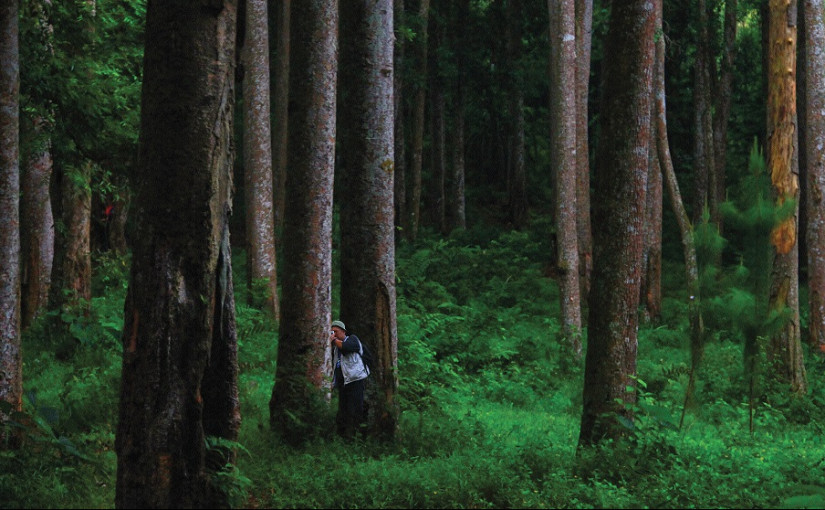
National Forester Day, observed on March 16, 2026, marks a crucial moment for the direction of Indonesia’s forestry policy. Amid the country’s success in reducing deforestation by 11% in 2025, the forestry profession is being called to transform from conventional “forest guardians” into science- and technology-based environmental managers.
A lecturer at the UGM Faculty of Forestry (Forestry UGM), Fiqri Ardiansyah, emphasized that the essence of foresters in the modern era cannot be limited to manual management of environmental conditions; it must be supported by advances in science and technology.
“Technological progress in systematizing forest ecosystem monitoring and evaluation is essential to be developed at present. We do not merely manage environmental conditions; rather, we manage pressures on forests and monitor affected forest conditions based on science and technology,” he stated on Tuesday (Mar. 16).
Responding to last year’s impressive achievement in reducing deforestation, Ardiansyah stressed that the outcome was not solely the result of technical policies on paper. According to him, the success reflects a synergy between sound policies and immersive on-the-ground assistance.
“The success in reducing deforestation is not only the result of policy, but also of social dynamics in the field that have received proper assistance. Policies without appropriate support will not run optimally,” he explained.
Furthermore, he highlighted the current bargaining position of the forestry profession, which must remain steadfast in its role as an assessor of forest areas in accordance with its designated functions. He emphasized that forest allocation and utilization must be grounded in forest health conditions. If negotiations are driven solely by interests while ignoring ecological aspects, they will inevitably expand degraded land and directly increase vulnerability to forest and land fires.
“Forest allocation and utilization must align with forest health conditions and ecosystem carrying capacity. Inappropriate bargaining will instead increase degraded land,” he said.
On the other hand, the government’s plan to open up to 70,000 Forest Ranger (Polhut) positions has sparked debate regarding the effectiveness of forest monitoring. Ardiansyah argued that while increasing personnel is important for strengthening territorial coverage, investment in Internet of Things (IoT)-based technology is far more urgent to monitor Indonesia’s 125 million hectares of forest in real time.
“Optimizing current personnel who are technologically literate is essential as a foundation. The development of IoT can support the monitoring of vast forest areas. Additional personnel may strengthen capacity, but should not be limited to patrol functions alone,” he asserted.
Meanwhile, natural disasters such as landslides and floods, which have occurred frequently in recent months, indicate serious challenges in vegetative intervention. According to him, time and energy remain the main constraints for foresters in restoring the hydrological functions of forests within watershed areas.
In addition to hydrometeorological disasters, the shrinking of natural habitats continues to trigger human-wildlife conflicts. Ardiansyah suggested that strengthening studies on Essential Ecosystem Areas (KEE) is the most effective strategy for managing buffer zones.
“Studies on Essential Ecosystem Areas are currently crucial as a strategy to address human-wildlife conflict,” he concluded.
Author: Aldi Firmansyah
Editor: Gusti Grehenson
Post-editor: Zabrina Kumara
Photo: Forestdigest