


Public anxiety is rising amid the weakening rupiah, which has driven up the prices of necessities, reduced purchasing power, and raised concerns that several government policies have yet to fully address economic challenges. At the same time, the gap between the government’s optimistic narrative and the realities citizens experience in their daily lives is widening. Therefore, the government is urged to be more open to criticism and to introduce policies that directly respond to people’s real needs.
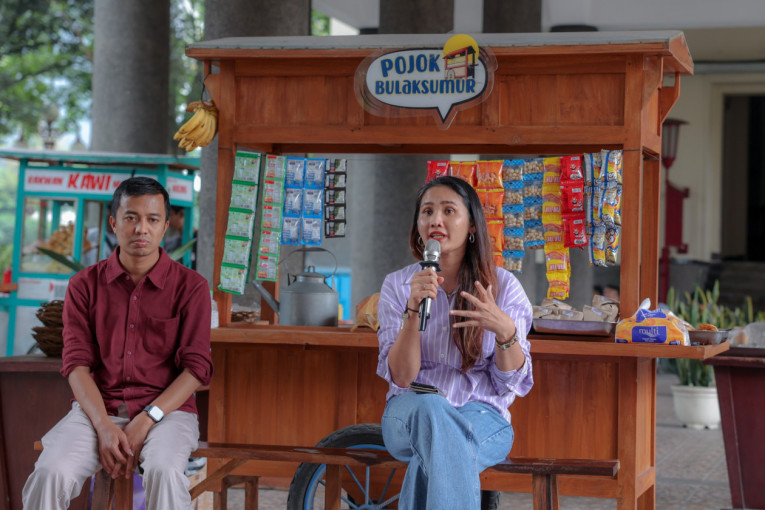
These concerns were raised during the Pojok Bulaksumur Discussion titled “Menguji Narasi Optimisme Negara di Balik Gejolak Ekonomi Nasional” (Testing the State’s Optimism Narrative Behind National Economic Turbulence), held on Tuesday (May. 19) at the west corridor of the Central Building of Universitas Gadjah Mada (UGM).
The discussion featured two academics from the UGM Faculty of Social and Political Sciences (Fisipol UGM): Media Wahyudi Askar, Ph.D., a lecturer in the Department of Public Policy and Management, and Gilang Desti Parahita, Ph.D., a lecturer in Communication Science.
Media assessed that the government is currently more focused on maintaining the stability of its economic narrative than on understanding the real conditions people on the ground face. According to him, the public is now more critical and has far better access to information than in the past.
He explained that people directly feel economic pressures through difficulty finding jobs, rising layoffs, and declining purchasing power. Under these conditions, the public begins to question the alignment between the government’s economic growth data and their lived experiences.
“The biggest problem today is the wide gap between the figures narrated by the government and the reality in the field. What the government presents is not truly felt by the public,” he said.
According to Media, the economic growth continuously claimed by the government does not necessarily reflect the overall quality of public welfare. He argued that current economic growth is perceived to benefit mostly elite groups with access to capital, assets, and strategic state projects.
Meanwhile, the middle class and vulnerable groups face increasing economic pressure in their daily lives. He believes this inequality makes it increasingly difficult for the public to trust the government’s optimistic economic narrative.
“The economy is indeed growing, but that growth is enjoyed only by the upper class, by the super-rich,” he said.
Media also criticized the direction of government policies, which he believes are not sufficiently grounded in research and the real needs of society. He cited programs such as Free Nutritious Meals (MBG) and the Red and White Village Cooperatives as initiatives that, in his view, require reevaluation because of their potential fiscal burden.
He argued that public policy should be formulated based on academic studies, field data, and careful risk mitigation, rather than short-term political considerations. Media suggested that the government be more open to input from academics and stop communication patterns that create uncertainty in the public sphere.
“There are actually only two solutions. First, stop MBG and the Red and White Village Cooperatives, impose a moratorium, and redesign the programs. Second, for the next one to three months, keep the president away from the microphone,” he stated.
Meanwhile, Gilang observed that the main issue in current government communication is the lack of empathy for the public’s condition. According to her, public communication tends to be filled with optimistic jargon without acknowledging the real concerns people feel.
She explained that the public needs leaders who can demonstrate empathy and understand the socioeconomic challenges they are facing. In times of crisis, she said, it is not enough to merely present a narrative that the country is doing fine.
“What is missing from many of the President’s speeches is the acknowledgment of what people are actually feeling. For example, admitting that the country is not in very good condition and that the prices of basic goods are rising must be recognized first. That shows empathy for what people are going through,” she said.
Gilang noted that an optimistic narrative repeated without empathy risks widening the distance between the government and society. She argued that many public officials’ statements sound normative and fail to touch people’s everyday experiences. Based on research she conducted in several regions, economic pressure is also felt by rural communities and marginalized groups. She said people are facing rising prices of basic goods, declining purchasing power, and reduced social programs at the village level due to budget constraints.
“First, it will sound delusional; second, it will feel instructional, because both lack empathy and acknowledgment of what the public is experiencing. People feel that their experiences are not truly being heard,” she said.
Furthermore, Gilang emphasized that criticism from academics and civil society should be seen as an essential part of democracy. She explained that universities have a role in maintaining critical reasoning and offering alternative perspectives on state policies.
According to Gilang, criticism from academics is not a form of pessimism toward the nation but an effort to ensure that public policies remain oriented toward the broader public interest. She also reminded the government to open healthier spaces for dialogue so that public narratives are not dominated solely by the state and elite groups.
“We cannot allow the narrative to be controlled by only one party, namely the state. If critical voices are seen as threats, democracy loses its space for dialogue,” she concluded.
Author: Triya Andriyani
Post-editor: Rajendra Arya
Photo: Firsto