


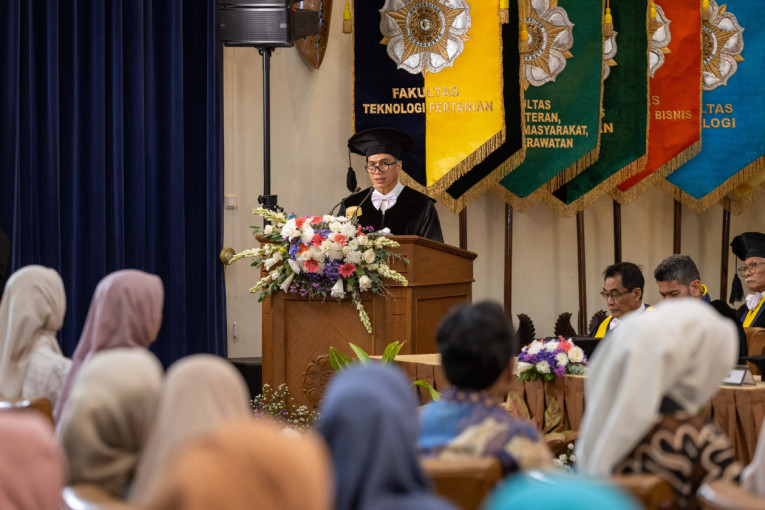
Mohammad Affan Fajar Falah, a faculty member of the UGM Faculty of Agricultural Technology (Agriculture UGM), was inaugurated as a Professor of Quality Systems in Agroindustry at Universitas Gadjah Mada on Tuesday (Jun. 3) at the UGM Senate Hall. During the inauguration ceremony, he delivered a speech titled “Pengembangan Kualitas Produk Segar dan Bahan Sisa dalam Mendukung Sistem Agroindustri yang Berkelanjutan” (Quality Development of Fresh Products and Residual Materials in Supporting Sustainable Agroindustrial Systems).
In his address, Professor Affan highlighted the challenges facing global food systems, driven by population growth, climate change, technological advancement, and the increasing demand for sustainable agricultural and agroindustrial systems. These conditions underscore the need to transform agricultural and agroindustrial systems to ensure sustainable food provision. He emphasized that innovation is key to maintaining product quality while strengthening future food security.
Professor Affan explained that agroindustry plays a vital role in connecting agricultural production processes with consumers. The system encompasses cultivation, processing, storage, distribution, and the creation of added value from agricultural products.
Therefore, agroindustrial development must balance economic, social, and environmental considerations. He stressed that sustainability should serve as the foundation at every stage of the food production chain.
“Sustainable agroindustrial systems are an essential component of strengthening food security while addressing future development challenges,” he said.
In response to these challenges, Professor Affan underscored the importance of transforming agricultural production systems by adopting modern technologies. According to him, conventional agriculture is increasingly constrained by climate change, land availability, and growing global food demand. As a result, controlled-environment agriculture has emerged as a promising alternative. This technology enables more efficient cultivation while maintaining higher product quality.
“We need production systems capable of delivering high-quality agricultural products in sufficient quantities and ensuring their sustainable availability despite weather and climate changes,” he stated.
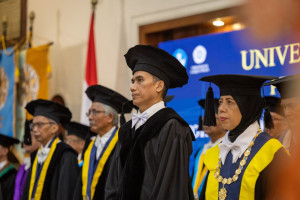
He further explained the concept of controlled-environment agriculture, which utilizes greenhouses and plant factories as components of modern production systems. Through these technologies, growing conditions can be regulated according to crop requirements, minimizing risks associated with weather variability and seasonal changes. This approach also improves the efficiency of water, energy, and land use.
In addition, crop productivity can exceed that of conventional open-field cultivation systems.
“Controlled-environment technologies provide opportunities to harvest agricultural products more consistently and with better quality throughout the year,” said Professor Affan.
Professor Affan also noted that agricultural technologies are becoming increasingly integrated with artificial intelligence, sensors, and digital systems. One example is the Speaking Plant Approach, which enables real-time monitoring of plant physiological conditions.
The information gathered is then used to automatically regulate the growing environment to optimize plant development. This approach has laid the foundation for the development of smart greenhouses, which are now widely adopted in many countries.
“Through sensors and digital systems, plants can essentially communicate their needs, making cultivation management more precise, efficient, and responsive to the plants’ actual conditions,” he explained.
In addition to discussing fresh products, Professor Affan highlighted the use of agroindustrial residues, which are often regarded as waste. He explained that many agricultural and food-processing residues still hold significant potential for value-added applications.
With proper management, these residual materials can be transformed into environmentally friendly packaging, organic fertilizers, animal feed, and alternative energy sources. This approach also helps reduce the environmental impact of production waste.
“Materials traditionally viewed as production waste actually offer substantial opportunities to be converted into useful and economically valuable products,” he remarked.
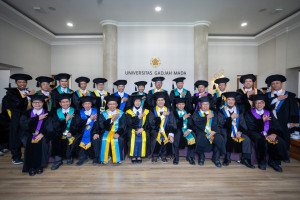
According to Professor Affan, the use of agroindustrial byproducts is an important step toward achieving a sustainable circular economy. Numerous studies have demonstrated that residues from coffee, cocoa, sago, and empty oil palm fruit bunches can be used to develop more environmentally friendly packaging materials.
Such innovations help reduce dependence on synthetic plastics while increasing the added value of agricultural products. These efforts create new opportunities for more efficient and environmentally conscious industrial development.
“Transforming residual materials into higher-value products is part of the strategy for building increasingly sustainable agroindustrial systems,” he said.
Concluding his speech, Professor Affan emphasized that the future of agroindustry depends on integrating technological innovation with sustainability principles. The advancement of modern agriculture, the adoption of smart technologies, and the utilization of residual materials must progress together to maximize their benefits. These efforts can enhance productivity, preserve environmental quality, and strengthen national food security.
He expressed hope that current innovations will become part of the solution to future global food challenges.
“The development of fresh product quality and the utilization of residual materials must continue to be promoted to strengthen the resilience and sustainability of Indonesia’s agroindustrial system,” he concluded.
Author: Triya Andriyani
Post-editor: Zabrina Kumara
Photo: Donnie