


Stroke is the world’s second leading cause of disability and is responsible for 6.5 million deaths globally. Uncertainty in care remains one of the major challenges faced by stroke patients. This becomes even greater when patients or their families have limited knowledge about stroke, receive insufficient care support, poor communication with healthcare providers, or are unprepared to care for patients after they return home.
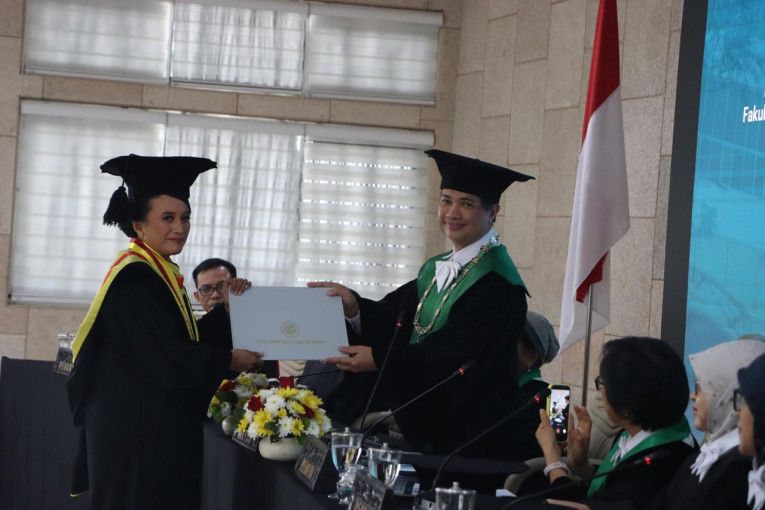
Through her research, Margareta Hesti Rahayu, a doctoral student at UGM’s Faculty of Medicine, Public Health, and Nursing (FK-KMK UGM), developed an Advance Care Planning (ACP) intervention to ensure that patients receive care aligned with their preferences. ACP provides positive benefits not only for patients but also for their families.
“ACP can help reduce uncertainty, stress, anxiety, and depression among patients, strengthen patient involvement in decision-making, reduce family conflicts, and improve the quality of end-of-life care,” said Margareta during her doctoral dissertation defense at FK-KMK UGM on Tuesday (Jun. 9).
In her dissertation, Margareta employed a mixed-methods design with an exploratory sequential approach comprising two research phases. The first phase was a qualitative study using a descriptive approach to explore the need for advanced care planning among patients, families, and healthcare professionals. The second phase involved implementing the stroke ACP program by providing ACP interventions to stroke patients while involving their families.
The study was conducted at Dr. Sardjito General Hospital, the National Brain Center Hospital Professor Mahar Mardjono, and Panti Rapih Hospital during 2024-2025, involving 33 participants consisting of patients, family members, and healthcare professionals.
Margareta explained that the findings from interviews and focus group discussions (FGDs) identified four themes. Three themes described the experiences of stroke patients and their families, namely challenges faced by stroke patients, patients’ and families’ information and educational needs, and the importance of emotional support. The fourth theme highlighted the need for advanced care planning among patients, families, and healthcare professionals. Based on expert consensus using the Delphi method, the study identified 48 valid statements grouped into 19 domains and three categories.
The development process resulted in two stroke ACP modules. The first module, designed for healthcare professionals, covers ACP concepts, ACP communication strategies, and guidelines for implementing ACP in stroke patients. The second module, intended for patients and families, includes ACP concepts, information on stroke, home-based stroke care, dietary recommendations, exercise for stroke patients, and medication management.
“All of these topics are based on input and recommendations gathered from patients, families, and healthcare professionals,” she said.
Furthermore, Margareta explained that the results of the second phase demonstrated that the ACP intervention successfully reduced patients’ uncertainty regarding their illness, increased family knowledge about stroke care, improved family self-efficacy in decision-making, and enhanced family readiness to provide care at home.
She noted that ACP helps individuals clarify their care preferences and priorities when facing future uncertainties. The involvement of multidisciplinary healthcare professionals created opportunities for more comprehensive and interactive discussions between patients and their families.
“This intervention also serves as a strategy for reducing uncertainty,” she emphasized.
The doctoral defense marked an important milestone in Margareta’s journey toward earning her doctoral degree. She successfully completed her doctoral studies with a cum laude distinction. Serving on her supervisory team were Professor Sri Sutarni, the primary supervisor, and Dr. Heny Suseani Pangastuti, the co-supervisor.
Author/Photographer: Fatihah Salwa Rasyid
Editor: Gusti Grehenson
Post-editor: Jasmine Ferdian