


Taxes are the primary pillar of state revenue and a constitutional mandate. Over the past five years, more than 80 percent of Indonesia’s State Budget (APBN) has been financed by tax revenue. This link binds citizens’ obligations to the state’s duty to govern transparently.
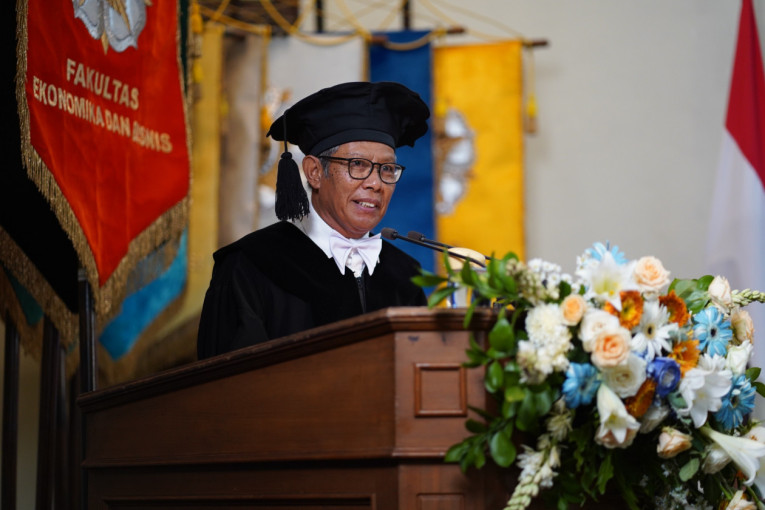
“Taxation is not merely about meeting revenue targets but also about governance,” said Professor Eko Suwardi, Professor of Accounting at the Faculty of Economics and Business, Universitas Gadjah Mada (FEB UGM), during his inaugural professorial lecture at the UGM Senate Hall on Thursday (July 16).
In his lecture, titled “Peran Akuntansi dalam Tata Kelola Wajib Pajak, Otoritas Pajak, dan Pengeluaran Publik” (The Role of Accounting in the Governance of Taxpayers, Tax Authorities, and Public Spending), Professor Eko described accounting as the information and accountability backbone of tax governance. Accounting, he said, is the foundation of modern governance: it turns economic activity into data that is visible, measurable, and verifiable. A sound accounting system enables transparency, accountability, effective public oversight, and the efficient use of public resources. Credible financial reporting by taxpayers, tax authorities, and the government strengthens both public trust and institutional capacity.
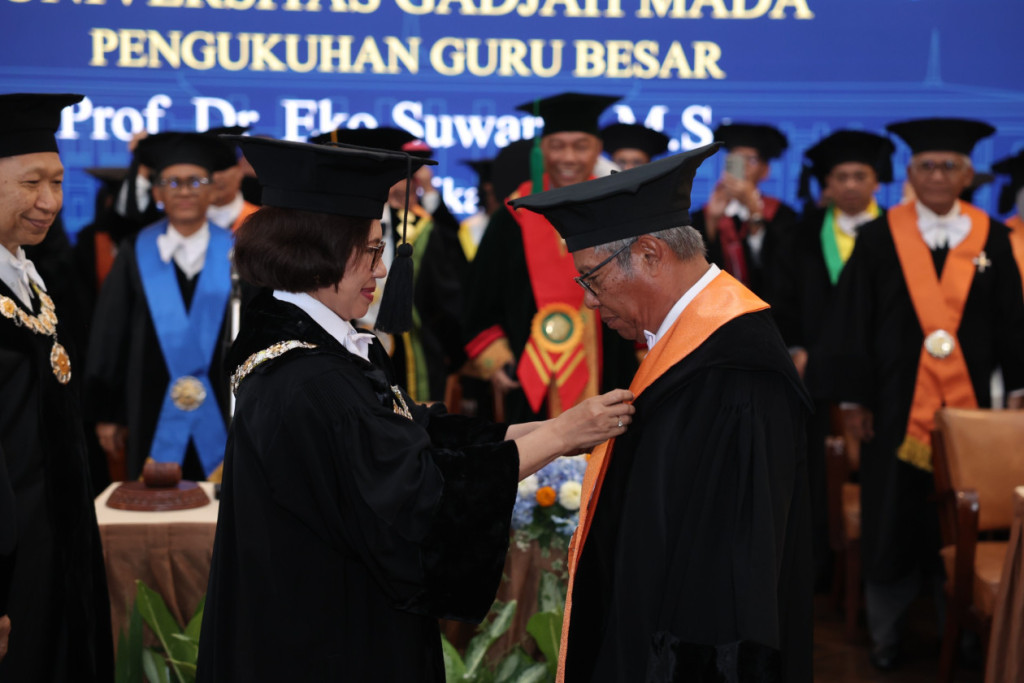
“In taxpayer governance, companies must be able to manage and integrate their data,” he said.
Modern tax systems depend on reliable information, which enables tax authorities to assess whether financial transactions are fair and to gauge taxpayers’ economic capacity. In practice, accounting information supports tax compliance and serves as a strategic tool for tax management, helping taxpayers plan their taxes. Globally, the shifting of profits across jurisdictions has encouraged companies to move earnings abroad, but overly aggressive tax-saving strategies can expose them to market, reputational, and legal risks.
“Tax efficiency must be pursued within the framework of good governance, measurable risk, and legal compliance,” Professor Eko emphasized.
Achieving tax compliance, he said, requires a combination of robust systems, effective oversight, and professional ethics, and the quality of governance is shaped by social norms, independence, and integrity.
“Quality and integrity must be upheld by boards of commissioners, board committees, independent auditors, and tax consultants,” he said.
In 2025, Indonesia’s tax authority began shifting from a traditional to a modern tax administration through the Coretax system, which brings tax administration onto a single digital platform. Its success depends heavily on the quality of its inputs, particularly the accounting data provided by businesses. Strong accounting can help authorities uncover hidden risks stemming from the information gap between taxpayers and tax officials. Reliable, well-integrated data provides a basis for risk-based supervision, enabling them to build taxpayer risk profiles, detect transaction anomalies and tax-avoidance practices, prioritize audits, and narrow the room for profit manipulation.
Professor Eko added that accounting is equally vital to the governance of public spending. The legitimacy of taxation rests on how tax revenue is used — on programs that benefit society and reinforce public trust. Public-sector accounting ensures that tax funds are spent transparently and remain measurable, accountable, and open to evaluation. As public funds grow, stronger accounting, auditing, and oversight become all the more important. Public-sector accounting must therefore be able to identify risks, prevent irregularities, and supply reliable information for public decision-making, reducing the risk of corruption.
“The future of tax and public finance governance depends on accounting systems that are transparent, integrated, technology-driven, and grounded in integrity,” Professor Eko concluded.

Author: Jesi
Editor: Gusti Grehenson
Post-Editor: Priyanandaningrat
Photo: Firsto