


Data Avicenna, a lecturer at the Department of Economics, Faculty of Economics and Business, Universitas Gadjah Mada (FEB UGM), contributed to the international book Accelerating Climate Action in Asia and the Pacific: Fiscal Policy Solutions, published by the Asian Development Bank Institute (ADBI) in collaboration with the School of Oriental and African Studies (SOAS), University of London.
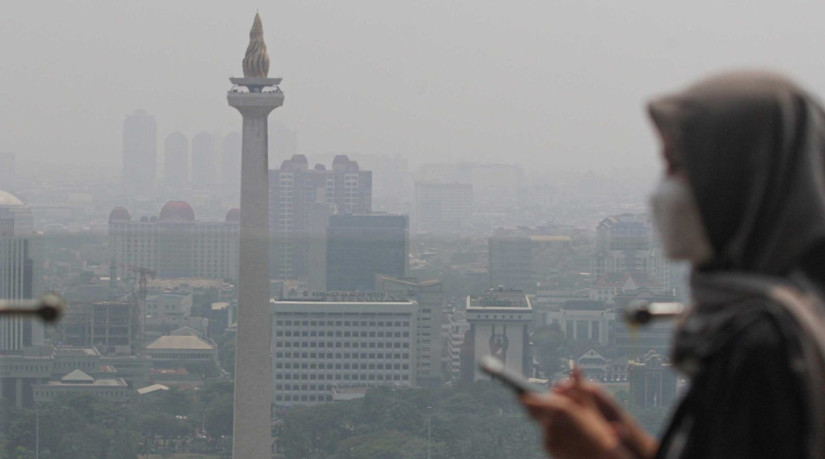
The team of authors examined the impact of local government environmental spending on air pollution in Indonesia, using satellite data to measure air quality. The study is among the first in Indonesia to systematically investigate the relationship between local environmental expenditures and pollution levels at the regency and municipality levels.
Using longitudinal data from 474 regencies and municipalities ranging from 2012 to 2019, the study found a significant negative relationship between increases in environmental spending and the growth rate of nitrogen dioxide (NO₂) pollution. Avicenna revealed the relationship was evident in pollution generated by fuel combustion.
“These findings indicate a link between increased local environmental spending and slower growth in NO₂ pollution, which is generally associated with fuel combustion, including those from the transportation sector,” said Avicenna on Tuesday (Jun. 24).
However, the study did not find a significant relationship between environmental spending and reductions in sulfur dioxide (SO₂) pollution. This suggests that the impact of environmental spending on air pollution may vary by pollutant type.
“This means that local environmental spending tends to be more effective in curbing pollution growth originating from transportation-related activities, while its impact on pollution from the industrial sector has not yet appeared significant,” he explained.

In addition to unveiling the effectiveness of environmental policies, the study also highlights the importance of satellite technology in public policy evaluation.
“I believe this is an approach well suited to developing countries such as Indonesia, which still face limitations in their ground-based air quality monitoring networks,” he said.
The book Accelerating Climate Action in Asia and the Pacific: Fiscal Policy Solutions presents a range of research findings on the role of fiscal policy in accelerating climate action across the region. Avicenna’s participation in the publication reflects FEB UGM academics’ scientific evidence to strengthen the formulation of more effective environmental policies while supporting Indonesia’s efforts to achieve its net-zero emissions target.
In the book, Avicenna authored Chapter 10, titled “Assessing Local Environmental Spending and Air Pollution Reduction in Indonesia: A Satellite Data Approach,” together with three other researchers: Ega Kurnia Yazid (a Research Fellow at the Decarbonization and Development Lab, CSIS Indonesia), Kelvin Ramadhan Hidayat (an independent researcher), and Muhammad Faiz Zaidan Alharkan (a master’s student in Mineral and Energy Economics at the Colorado School of Mines).
Reporter: Kurnia Ekaptiningrum/FEB Public Relations
Author: Cyntia Noviana
Post-editor: Jasmine Ferdian
Photo: Media Indonesia and FEB UGM Documentation