Seminar/Workshop
Amid fiscal tightening and rising disaster risks, national and regional leaders stress moral leadership, green development, and collaboration.
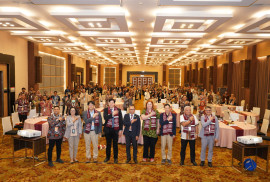
FKH UGM hosts a workshop on stem cells and modern imaging technologies to strengthen national veterinary research and promote non-invasive methods.
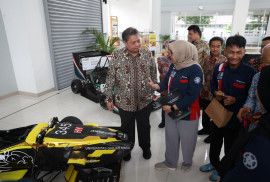
Coordinating Minister Airlangga Hartarto outlines Indonesia’s downstreaming agenda, the digital talent needs, and the roles of universities in accelerating economic growth.
UGM reviews a book on soil and water conservation, exploring legal frameworks, scientific insights, and community practices to strengthen sustainable governance.
Experts warn that the proposed revision to the TNI Law risks expanding military power into civilian sectors and undermining Indonesia’s democratic oversight.
Timor-Leste’s Ambassador to ASEAN shares her country’s long diplomatic journey toward joining ASEAN at an Ambassadorial Lecture at UGM.
ISTAP XI discusses sustainable livestock technologies, global collaboration, and innovations to boost productivity while reducing environmental impact.
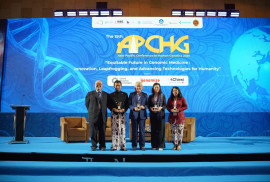
APCHG 2025 discusses innovations and global collaboration to ensure equitable, ethical, and human-centered access to genomic medicine.
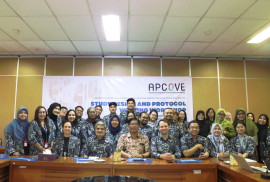
UGM and APCOVE host an epidemiology workshop to enhance the capacity of Asia-Pacific veterinarians in field research and zoonotic disease prevention.
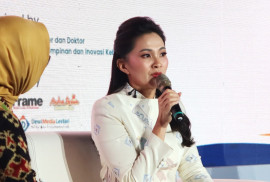
At UGM Leadership Day 2025, national leaders highlight integrity, empathy, and cross-disciplinary collaboration as key to future-ready leadership.
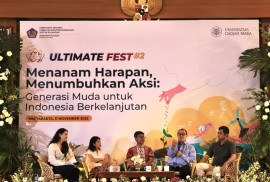
UGM experts and the Ministry of Finance encourage young Indonesians to lead green economy transformation through innovation, education, and collaboration.
UGM academics highlight Indonesia’s democratic decline, as elections increasingly legitimize a party-elite oligarchy over substantive democracy.
Experts at ICAVESS 2025 highlight that 75% of infectious diseases are zoonotic, urging stronger One Health collaboration across Asia.
Indonesia hosts IBS 2025 at UGM, highlighting the need for stronger biopharma resilience as 80% of drug raw materials remain imported.
Professor Eniya Listiani Dewi outlines four key government strategies to accelerate Indonesia’s energy transition toward the 2060 Net Zero Emission target.
Former BMKG Head Professor Dwikorita Karnawati warns of increased risks of flash floods and lightning amid Indonesia’s peak rainy season.
Global Environmental Crisis Spurs Scholars to Propose New Approaches to Strengthen Social Resilience
Scholars from multiple countries gather at UGM’s IGSSCI to discuss global environmental crises and propose ideas to strengthen social resilience.
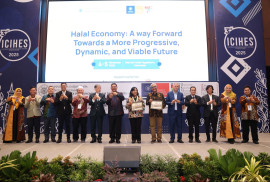
UGM opens the 3rd ICIHES 2025 in Yogyakarta, strengthening global collaboration in Islamic economics and the halal industry.
Experts urge the Indonesian Broadcasting Commission (KPI) to address the unequal regulations between conventional media and digital platforms.
Researchers have identified parasite species infecting orangutans, elephants, and Komodo dragons, highlighting the cross-species risks and self-medication behaviors associated with these inf...
UGM Rector emphasizes the need for universities to accelerate research downstreaming and innovation to achieve Indonesia Emas 2045.
At UGM’s 40th BPPM Balairung anniversary, experts highlight the vital role of student journalists in combating digital disinformation.
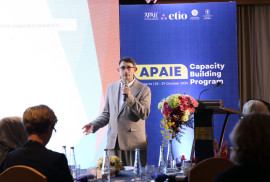
UGM strengthens international collaboration through APAIE 2025 to promote inclusive, adaptive education rooted in local wisdom.
UGM introduces Gamahumat, a humic acid-based soil conditioner developed to restore soil fertility and boost sustainable agriculture.
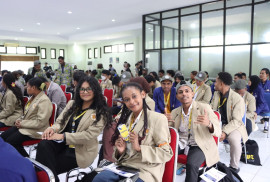
A total of 149 ADik scholarship students from seven universities in Yogyakarta participated in a program aimed at strengthening national values and character.
Experts highlight Indonesia’s vast potential for carbon trade and call for stronger governance to ensure transparency and accountability.
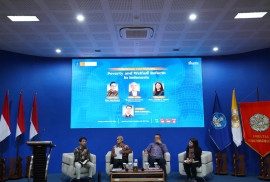
Experts emphasize the importance of evidence-based and inclusive data systems in strengthening Indonesia’s poverty alleviation and social protection policies.
UGM historian Dr. Nur Aini Setiawati highlights that throughout Indonesia’s industrial history, wealth has often benefited only a few.
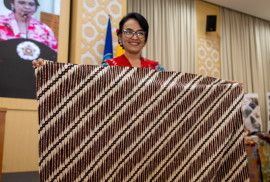
UGM encourages the preservation of classical batik through innovation, digital technology, and the empowerment of MSMEs to sustain cultural heritage.
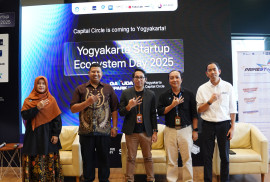
UGM fosters collaboration among inventors and partners as Indonesia ranks sixth globally in active startups, strengthening its digital innovation ecosystem.