



The Biology Study Program at Universitas Gadjah Mada (Biology UGM) has once again maintained its presence in the QS World University Rankings (WUR) by Subject 2026. The program recorded an improvement by securing a position in the 501-550 global range, up from 551-600 in 2025. Nationally, this achievement places UGM Biology as the top-ranked program in Indonesia, followed by Universitas Indonesia, Universitas Airlangga (551-600), and IPB (601-650).
Dean of the Faculty of Biology UGM, Professor Budi Setiadi Daryono, stated that this achievement is inseparable from the faculty’s commitment to implementing the tri dharma of higher education, encompassing its vision and mission, performance targets, and key performance indicators, all grounded in Pancasila and Indonesia’s rich tropical biodiversity.
Professor Daryono also noted that global rankings should be viewed proportionally. With thousands of similar biology programs worldwide, this position demonstrates that UGM Biology is part of a strong, competitive group. Moreover, within the 501-550 range, UGM stands alongside universities from developed countries such as Japan, the United States, Austria, and Denmark.
“We are certainly proud and grateful, although once again, this is a bonus. This ranking serves as motivation to pursue our main goal, working in the right way,” he said on Friday (Apr 10).
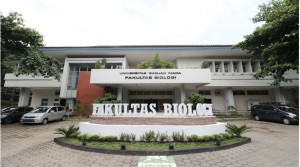
In an effort to maintain and enhance its academic reputation, Biology UGM continues to sustainably strengthen its academic ecosystem. Professor Daryono explained that there are three key elements being reinforced within the academic cycle. These elements are bound together by effective communication, which fosters collaboration and ultimately builds trust.
Various supporting programs, including research funding, community service, and collaboration between faculty members and students, continue to be developed to improve productivity and the quality of academic outputs.
“When trust is established, it leads to collaboration, and all of it is synergized through communication, collaboration, and synergy,” he said.
In addition, Professor Daryono highlighted the importance of evaluating academic productivity rationally rather than solely by the total number of publications. With approximately 60-70 faculty members, Biology UGM produces hundreds of international publications annually. Proportionally, the productivity per faculty member is considered relatively high.
“There are 68 faculty members in the Faculty of Biology UGM, and with 263 publications, each person produces nearly three works per year. Evaluation should not be based solely on total figures but also consider the ratio relative to human resources,” he explained.
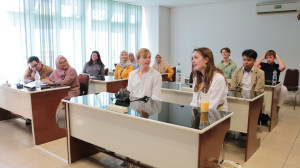
Equally important, he emphasized, is the consistent maintenance of integrity in every academic process. Achievements must be obtained through proper processes, without any form of misconduct. He stressed that within UGM, particularly in the Faculty of Biology, dishonest practices aimed at improving rankings are strictly avoided.
“These values of integrity are consistently applied in lectures, examinations, and laboratory practicums,” he said.
Furthermore, Professor Daryono emphasized that this international recognition is closely tied to the principle of continuous improvement. He likened the evaluation process in academia to the “recovery” mechanism in living organisms. In biology, recovery is not always instantaneous but occurs through stages of adaptation, including regeneration.
“Like plants shedding leaves before regrowing them, evaluation is part of the process toward better improvement,” he explained.
According to him, the Faculty of Biology also faces the significant responsibility of maintaining biodiversity. Indonesia holds a strategic position in global biological studies, ranking second in the world for biodiversity after Brazil.
However, he noted that Indonesia has a distinct advantage, as two-thirds of its territory consists of oceans, meaning its biodiversity extends beyond terrestrial ecosystems to marine environments.
“This achievement should serve as motivation to continue creating meaningful work and delivering tangible impacts for society, as universities are reservoirs of knowledge. Achievements are a bonus, but our main goal is to produce impactful and sustainable work, working, creating, and contributing,” he concluded.
Author: Hanifah
Editor: Gusti Grehenson
Post-editor: Jasmine Ferdian
Photo: UGM Public Relations