


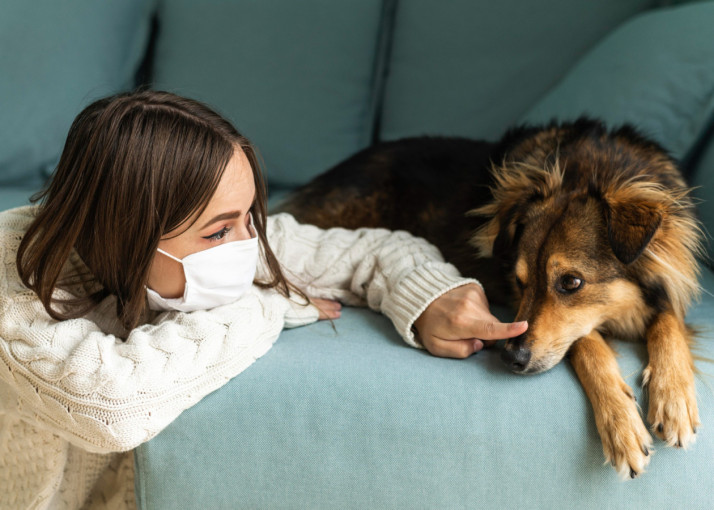
Amid government efforts to anticipate and curb the spread of the Nipah virus, a potential global threat, other zoonotic viruses suspected of transmitting from animals to humans are also drawing attention. One of them is Canine coronavirus (CCoV), or canine coronavirus. Although it shares a similar name, this virus is different from SARS-CoV-2, which caused the COVID-19 pandemic in 2019. However, this virus in dogs has not been considered zoonotic. Viral mutations that enable animal viruses to adapt to humans require years and often involve an intermediate host.
Professor of Microbiology at the Faculty of Veterinary Medicine, Universitas Gadjah Mada (FKH UGM), Professor Tri Untari, stated that zoonotic transmission from dogs to humans is very difficult. Moreover, coronaviruses in dogs use different receptors from the COVID-19 virus in humans.
Canine coronavirus primarily uses the Aminopeptidase N (APN) or CD13 receptor, targeting the digestive tract, although there is a respiratory type of canine coronavirus that attacks the respiratory tract but uses a different receptor. In contrast, the COVID-19 virus in humans uses the Angiotensin-converting enzyme 2 (ACE2) receptor, which is found in the respiratory tract.
According to Professor Untari, for an animal virus to become zoonotic is not simple, as it requires compatibility in receptors, cell tropism, and host protease enzymes for the virus to attach, enter, replicate, and then be excreted in sufficient quantities to infect humans.
“These differences in the molecular structure of the virus and its receptors make it difficult for canine viruses to infect human cells,” said Professor Untari on Thursday (Feb. 19).
Furthermore, Professor Untari explained that canine coronavirus is enteric in nature, meaning it attacks the digestive system and is transmitted via the fecal-oral route, not through respiration as with COVID-19 in humans.
“In principle, for a virus from dogs to become zoonotic in humans, adaptation is necessary and usually takes a long time,” she said.
Professor Untari added that if a dog tests serologically positive for COVID-19 and is linked to an owner who previously had COVID-19, this only indicates that the dog was exposed and developed an antibody response; it does not mean zoonotic transmission has occurred.
This is especially the case if the PCR test result is negative, proving that the virus did not replicate and cannot be transmitted.
“Therefore, canine coronavirus remains far from becoming zoonotic, as it would need to mutate or adapt to humans,” she explained.
The Department of Microbiology at FKH UGM also conducts research on various viruses and bacteria, currently supported by five active lecturers. Among the studies conducted are the development of polyclonal antibodies for the detection of Newcastle Disease (ND) and Avian Influenza (AI) viruses, Bovine Herpesvirus in cattle, Lumpy Skin Disease (LSD) in cattle, and Avian Infectious Bronchitis (a coronavirus in poultry).
Professor Untari emphasized that most of her research focuses on animal viruses that are not zoonotic, as research on zoonotic viruses requires specialized laboratories with strict requirements to prevent pathogens from contaminating the environment.
Finally, Professor Untari urged the public not to immediately believe or accept information about zoonotic viruses that appear capable of causing a pandemic like COVID-19. Viral mutations that allow animal viruses to adapt to humans take years and often require an intermediate host.
“People do not need to be afraid of keeping pets as long as they are managed properly, such as maintaining cage hygiene, providing proper nutrition, and ensuring vaccination,” she advised.
Writer: Leony
Editor: Gusti Grehenson
Post-editor: Jasmine Ferdian
Photographer: Freepik