


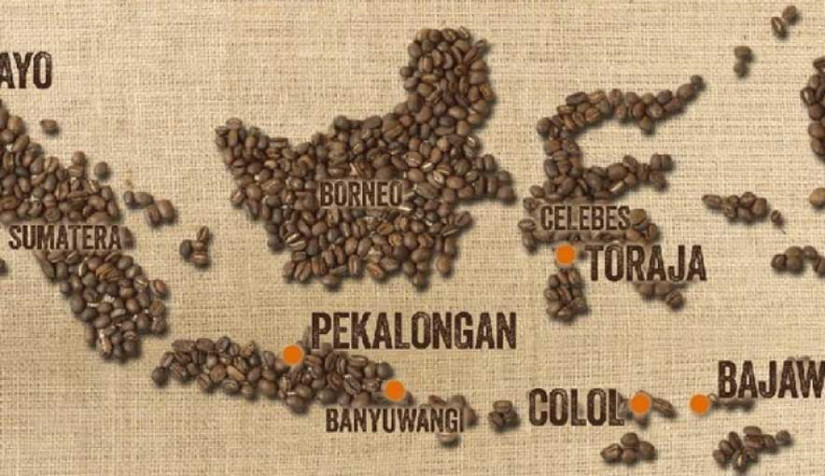
Indonesia is widely known as one of the world’s largest coffee-producing countries. Between 2021 and 2025, Indonesia’s Ministry of Agriculture recorded an average national coffee production of 782.30 thousand tons, with nearly all provinces experiencing production growth. Meanwhile, according to a report from Statistics Indonesia (BPS), Indonesia’s coffee exports reached US$1.87 billion in 2025, an increase of 81.08 percent compared to 2024.
Since 2024, several countries have consistently become major destinations for Indonesian coffee exports, including the United States, which accounts for 18.77 percent of total exports, followed by Egypt (8.70 percent), Malaysia (7.96 percent), and Belgium (7.06 percent).
March 11 is commemorated as National Coffee Day. The observance aims to appreciate local coffee farmers, promote the diversity of Indonesian coffee, and improve the welfare of the coffee industry. Despite Indonesia’s status as one of the world’s largest coffee producers, the welfare of coffee farmers has not improved significantly. This situation is partly due to low plantation productivity and the fact that harvests are often sold to middlemen, while the quality of coffee beans remains inconsistent.
Professor of Food Technology and Agricultural Product Technology at the Faculty of Agricultural Technology Universitas Gadjah Mada (FTP UGM), Professor Supriyadi, said that only around 75 percent of Indonesia’s coffee plantation areas can currently be directed toward increasing productivity, while the rest are either unproductive or damaged.
“About 10 percent of coffee plantation land in Indonesia remains damaged. In addition to quantity issues, the quality of coffee beans also tends to fluctuate,” said Professor Supriyadi on Thursday (Mar. 12) at the UGM campus.
According to Professor Supriyadi, stagnant productivity is partly due to farmers prioritizing faster harvesting, which ultimately affects coffee bean quality.
“That is the problem; the main challenge lies there,” he explained.
To address this challenge, Professor Supriyadi suggested that farmers collaborate with coffee entrepreneurs or with stakeholders in the plantation industry. To maintain the quality of Indonesian coffee, he emphasized the importance of proper fermentation processes. This fermentation can be implemented through consistent assistance and mentoring for farmers. In addition, he believes that maintaining coffee quality can also be achieved through innovation.
“For coffee that initially scores below 80, additional processing innovations can raise the score to around 82-84,” he explained.
One innovation that can help improve the quality of Indonesian coffee is blending, a method that mixes two or more types of coffee to create a unique flavor. Professor Supriyadi also mentioned a unique innovation he encountered called Kopi Tahlil. Originating from Pekalongan, this coffee blends coffee with eleven different spices. According to him, such innovations can offer alternative ways to enjoy distinctive coffee flavors.
“We continue to innovate to produce coffee with unique brewing characteristics,” he said.
He observed that over the past ten years, the coffee sector has expanded significantly in both cultivation and consumption. The growing coffee-drinking culture in major cities has also contributed to the emergence of thousands of coffee shops across Indonesia. “It is expected that within the next one to two years, the number of coffee shops could exceed 11,000. This represents a very significant potential,” he noted.
In closing, Professor Supriyadi expressed hope that coffee farmers’ welfare will improve in the future and that Indonesian coffee can be enjoyed by people from all backgrounds. He also encouraged Indonesian coffee producers to continue innovating and promoting their products.
“Let us work together to innovate and create distinctive coffee flavors,” he concluded.
Author: Fatihah Salwa Rasyid
Editor: Gusti Grehenson
Post-editor: Rajendra Arya
Photo: Hortus Magazine