


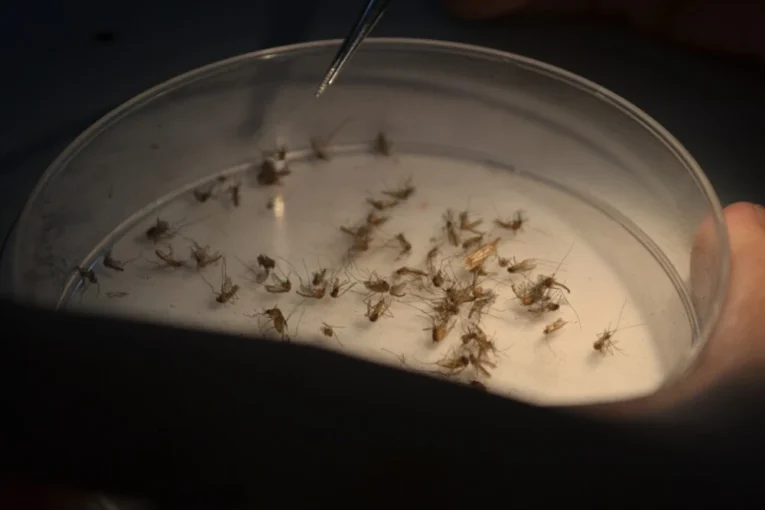
The Ministry of Health of the Republic of Indonesia reported that 488 of the country’s 514 regencies and cities continue to experience annual increases in dengue hemorrhagic fever (DHF) cases. As of October 2026, reached 98,946, with 265 deaths. Dengue transmission had been reported in 467 regencies and cities across 33 provinces. Suspected to be associated with ongoing climate change, compounded by the extreme El Niño phenomenon affecting Indonesia.
Dr. Riris Andono Ahmad, a researcher at the Department of Biostatistics, Epidemiology, and Population Health, Faculty of Medicine, Public Health, and Nursing (FK-KMK UGM), explained that differences in dengue cases across regions are closely related to local ecological conditions. Indonesia has varying rainy-season patterns, meaning that increases in mosquito populations and the risk of dengue transmission do not occur simultaneously.
“Not all regions have exactly the same conditions. It really depends on the local ecology. For example, not all parts of Indonesia experience the rainy season at the same time,” he explained on Tuesday (Nov. 17).
In addition to climatic conditions, community behavior in managing the environment also influences mosquito population growth.
“During the dry season, people actually tend to provide more water storage containers. If these are not properly managed, they can become mosquito breeding sites,” she said.
The coastal area of Pontang is an example, where limited access to clean water has encouraged residents to collect and store rainwater. These storage containers can still become potential mosquito breeding sites even during the dry season.
“Environmental conditions and human behavior in responding to the environment are interconnected. Both influence mosquito habitats and how mosquitoes reproduce,” he explained.
Furthermore, the El Niño phenomenon should also be considered when assessing the increased risk of dengue. Rising temperatures associated with the phenomenon can expand areas suitable for Aedes aegypti mosquitoes. This allows mosquito populations to grow more rapidly and increases the potential for dengue transmission.
According to Riris, climate change may also expand the geographical distribution of mosquitoes into areas that were previously less suitable as habitats. Global warming enables mosquitoes to survive in subtropical regions and at higher altitudes.
“As their habitats expand, more people become exposed to mosquitoes. This is when an increase in cases begins to occur,” he explained.
To anticipate changes in dengue case trends, climate data should be integrated with various other sources of information.
“This should include not only weather data but also population mobility data and other factors that may influence disease transmission patterns,” he added.
Future developments in disease surveillance systems should adopt a multi-source surveillance approach, which combines data from various sources to provide a more comprehensive picture of transmission risks.
Nevertheless, the challenges of dengue control lie not only in connecting data across sectors but also in translating surveillance findings into concrete action.
“Dengue control efforts require the involvement of multiple sectors because the factors influencing disease transmission are not limited to health-related issues,” he explained.

Dengue control efforts still tend to place greater emphasis on the health sector. In fact, prevention also requires support from other sectors to ensure that interventions are implemented comprehensively.
Meanwhile, the government’s strategy for controlling dengue through Mosquito Nest Eradication (PSN) has actually been implemented on an ongoing basis. The greatest challenge, however, is ensuring that communities carry out PSN activities regularly and consistently.
Mosquito breeding sites are not always found in easily visible locations. In addition to bathtubs and water storage containers, mosquito breeding sites can also be found in water trays behind refrigerators and water reservoirs in water dispensers.
“Mosquito control efforts have actually been carried out continuously. The challenge is ensuring that people practice PSN regularly, on a wider scale, and consistently. That is the biggest challenge,” Riris said.
He added that disease surveillance systems also play an important role in providing early warnings of potential increases in cases.
“One indicator to monitor is when the number of dengue cases in the current period begins to exceed the average number of cases recorded over the previous five years. This can serve as an early warning for the government to heighten vigilance and take control measures,” Riris explained.
As the rainy season approaches, the public should pay attention to the increasing number of potential mosquito breeding sites. Stagnant water and poorly managed water storage containers can contribute to mosquito population growth and increase the risk of dengue transmission.
He stressed that dengue prevention is a shared responsibility that begins within each household and its surrounding environment. Consistent community participation in PSN activities is one of the key measures for reducing the risk of transmission.
“The risk of contracting dengue is each of our responsibilities. If we are unwilling to reduce that risk by carrying out PSN activities, the prevalence of cases will continue to increase,” he concluded.
Author: M. Aidil Syahputra
Editor: Gusti Grehenson
Post-editor: Jasmine Ferdian
Photographs: UGM Public Relations, Magnific