


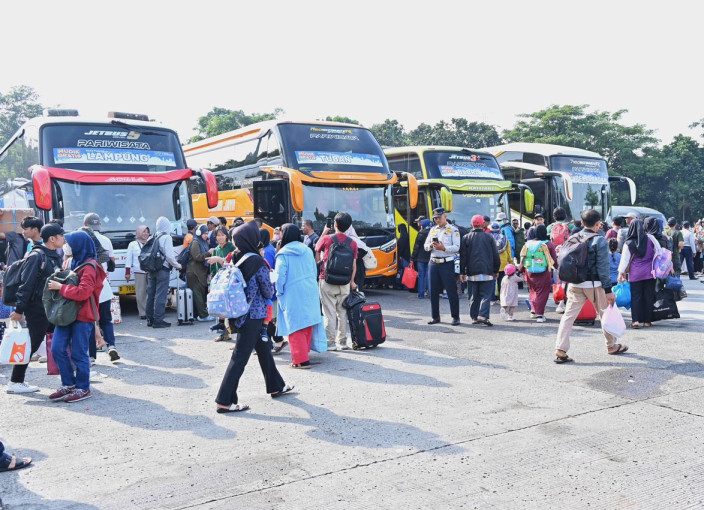
The policy of providing up to a 30 percent discount on transportation fares during the Eid homecoming (mudik) period is expected to stimulate regional economic circulation while also reshaping people’s mobility patterns. However, its effectiveness in the regions largely depends on the readiness of transportation systems and the accuracy of policy targeting.
According to a report from the Coordinating Ministry for Economic Affairs, the circulation of money during the Eid homecoming period is estimated to reach around Rp148 trillion. Public consumption during the 2026 Eid period is projected to grow by approximately 10 to 15 percent, contributing to national economic growth of 5.4 to 5.5 percent in the first quarter of 2026.
Transportation expert Dr. Dewanti from Universitas Gadjah Mada stated that fare discounts can generate short-term economic impacts by increasing public mobility during the homecoming period.
“These discounts encourage people to shift from private vehicles to public transportation. In addition, they provide more room for people to spend their budgets on Eid, such as consumption and economic activities in their destination regions,” she explained on Monday (Mar. 30).
According to Dewanti, increased mobility during Eid is generally accompanied by higher household spending, including tourism and local consumption. This contributes to economic circulation in various homecoming destination areas. On the other hand, the discount policy also helps curb fare spikes and control inflationary pressures, particularly in the transportation sector.
However, she cautioned that the ultimate impact of this policy depends heavily on travel demand and transportation service capacity. Dewanti emphasized the importance of ensuring that the benefits of the discounts are truly felt by those in need.
“The provision of discounts must be monitored so that they are not only enjoyed by those who already have the means to travel but also reach vulnerable households,” she said.
In the context of public policy, she also reminded that discount programs should not compromise safety and service quality in transportation.
Furthermore, Dewanti explained that offering discounts for dates outside peak travel periods could shift people’s travel timing. This can help reduce traffic congestion by spreading travel flows over a longer period.
However, the effectiveness of this strategy depends on several factors, such as the size of the incentive, the flexibility of people’s travel schedules, and the early dissemination of information.
“If the information is not well communicated or the incentives are not attractive enough, people will still choose to travel during peak periods,” she added.
UGM also emphasized the importance of strengthening traffic management during both the outbound and return homecoming periods. The government needs to ensure that traffic arrangements are adaptive, consistent, and not confusing for road users.
In addition, the provision of real-time information is crucial, including traffic conditions, transportation network capacity, and potential disruptions such as extreme weather and disaster-prone areas.
“Information on heavy rain, flooding, landslides, and high temperatures must be communicated comprehensively and evenly to the public,” Dewanti explained.
In addition to government preparedness, Dewanti stressed that road users also play an important role in ensuring safe and comfortable homecoming travel. Through synergy between sound policies, infrastructure readiness, and public awareness, travel during the Eid homecoming period is expected to be not only smooth but also safe and enjoyable for all transportation users.
Author: Jelita Agustine
Editor: Gusti Grehenson
Post-editor: Jasmine Ferdian
Photo: Indonesian Ministry of Transportation