


Documentary films often serve as a medium for recording reality while also creating space for discussion. This is reflected in the emergence of Pesta Babi, a documentary that has recently gained widespread attention for highlighting a different side of Indigenous Papuan communities’ struggles. The film has attracted significant public interest, prompting group screenings in various locations and generating diverse reactions.
Lecturer at UGM’s Department of Communication Science, Faculty of Social and Political Sciences (FISIPOL), Dr. Budi Irawanto, S.IP., M.A., noted that documentary films differ from ordinary documentation in that they can address a wide range of social, political, and cultural issues. According to him, documentaries are works rooted in reality but still involve creative treatment by filmmakers.
“A documentary film is based on reality or actuality, but it also involves creative treatment. There is editing, music is added, and various other elements are incorporated,” he said on Friday (June 5).
Dr. Irawanto explained that documentaries always make truth claims grounded in the aesthetics of reality. Although they employ various creative techniques, the content and messages they convey are based on facts rather than on the director’s imagination alone.
“Documentary films have the ability to bring forward various sociopolitical issues that remain largely unknown to the public or receive limited attention in mainstream media,” he said.
According to Dr. Irawanto, the strength of documentaries lies not only in presenting facts but also in their ability to engage audiences emotionally. In addition to encouraging rational reflection, documentaries provide affective experiences through images, sound, music, and the expressions of the people featured.
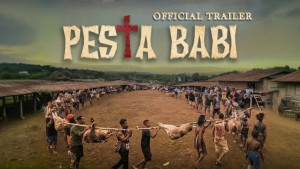
He cited Pesta Babi, a documentary about Papua, as an example. The film portrays environmental conditions, the expansion of development projects and corporate activities in customary territories, and the daily lives of Papuan communities. Through its visuals and narrative, audiences can witness realities rarely encountered in everyday news coverage.
“There is not enough reporting on Papua in our media because coverage remains Java-centric. The information presented in this film is something the public rarely finds in mainstream media,” he said.
According to him, documentaries can present real faces and capture the disappointment, fear, and anxiety experienced by communities affected by particular issues. This emotional depth is difficult to achieve through written reports alone. Dr. Irawanto noted that the cinematic technique of close-up shots allows audiences to feel closer to the subjects on screen.
Dr. Irawanto believes that one of the greatest strengths of documentary films emerges after the screening has ended. Documentary screenings are often followed by discussions that help audiences interpret the messages conveyed, allowing ideas to be disseminated more broadly.
“For example, in Pesta Babi, there is a red cross symbol. Why is it red, and what does it mean? The answer may already be present in the film, but discussion helps people gain a deeper understanding. This is what we actually call the public sphere,” he explained.
He linked this phenomenon to the concept of the public sphere introduced by German sociologist Jürgen Habermas. According to Dr. Irawanto, this space enables public discussion free from political intervention or the influence of power. For this reason, he views the dissolution of film screenings or intimidation of discussion forums as contrary to democratic principles.
“The public sphere is a space where people can discuss issues of public concern without intervention from political power or market interests,” he said.
According to Dr. Irawanto, efforts to ban film screenings in the digital era may actually increase public curiosity about the issues being raised. He argued that information control is becoming increasingly difficult because people now have many channels through which they can access and share information.
“Such bans often provoke even greater curiosity,” he remarked.
More broadly, Dr. Irawanto emphasized that documentaries do not merely depict reality but can also demand accountability from those responsible for the issues they portray. In his view, documentaries can serve as warnings about problems unfolding within society. If such issues are ignored, their impacts may become even more severe in the future.
Dr. Irawanto also observed that advances in digital technology have created greater opportunities for producing new documentary films. Documentary filmmaking no longer depends on expensive equipment or large production houses. It has also become possible for documentaries to be produced collaboratively by various groups and individuals.
“Anyone can make a documentary. With just a mobile phone, people can record, edit, and do everything necessary,” he said.
He stressed that documentary films will continue to play an important role in democratic life because of their ability to create spaces for public conversation about the issues facing society. According to him, documentaries can spark meaningful discussion. Watching films, sharing interpretations, engaging in dialogue, and debating different perspectives are all essential elements of democratic life.
“Debate, discussion, and disagreement are integral parts of democracy,” he concluded.
Author: Hanifah
Editor: Gusti Grehenson
Post-editor: Zabrina Kumara
Photo: Magnific and olenka.id