


The energy transition has become a key agenda item in global efforts to reduce carbon emissions. However, several ongoing projects have yet to fully consider their long-term environmental impacts. One case that has drawn attention is the geothermal project in Wae Sano, Flores, which requires land currently used to cultivate high-value crops such as cloves, vanilla, and coffee. This situation raises concerns, as the use of productive land without ecological assessment will affect the lives of future generations.
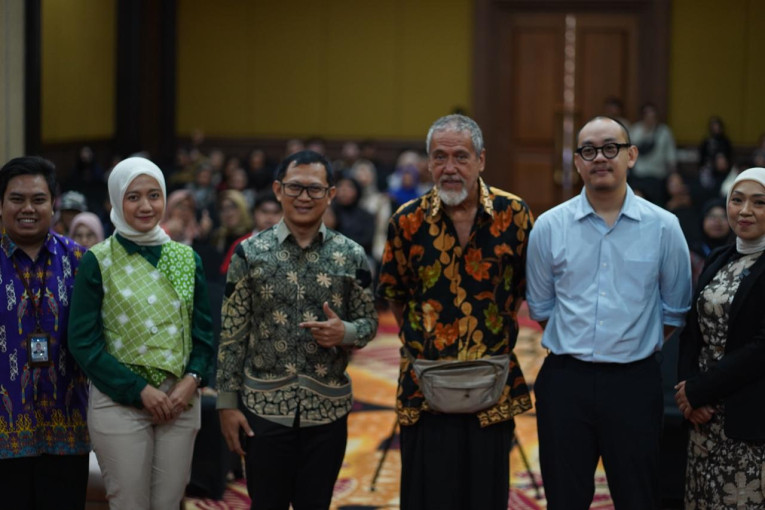
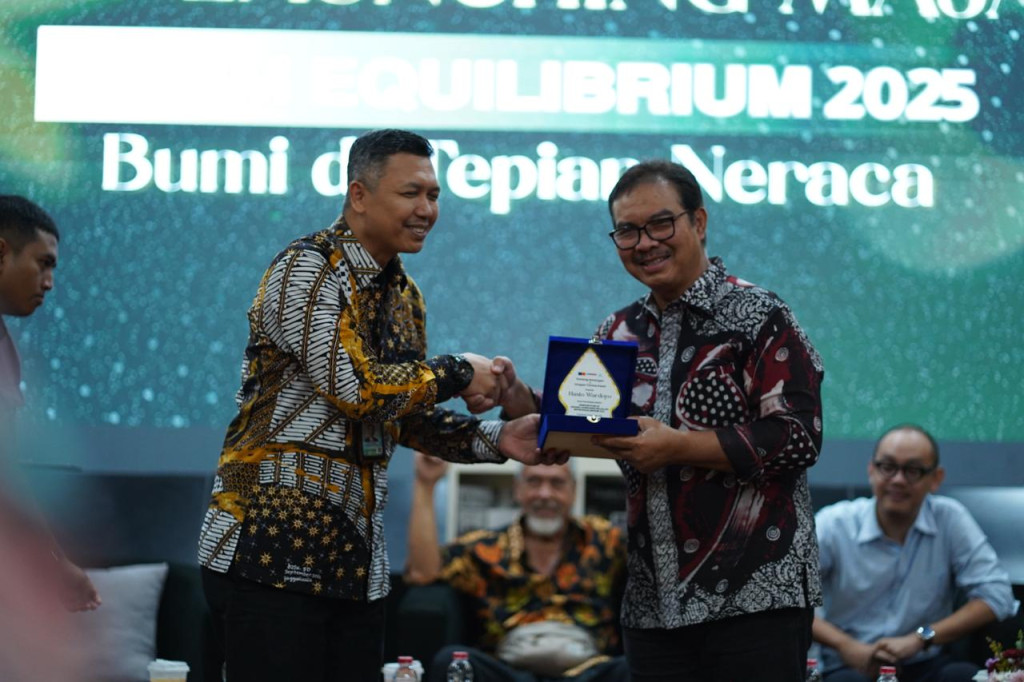
This issue surfaced during the Grand Launching of Equilibrium Magazine 2025, themed “Public Discussion: Earth on the Edge of the Balance Sheet,” held on Sunday (Nov. 16) at The Alana Hotel & Conference Center Malioboro, Yogyakarta.
The 2025 edition, carrying the theme “When the Earth Can No Longer Endure, and Humans No Longer Remember,” explores economic, social, and environmental struggles across various regions in Indonesia.
The event reaffirmed the urgency of prioritizing planetary sustainability rather than treating it as a mere afterthought in policymaking.
Vice-Dean for Academic and Student Affairs of the UGM Faculty of Economics and Business (FEB UGM), Dr. Bayu Sutikno, stated that the theme serves as an invitation to build a more mindful way of living.
“Creating an intelligent life, smart living in terms of education, finance, and health is our main mission,” he remarked.
Similarly, Mayor of Yogyakarta Hasto Wardoyo emphasized that the greatest challenge stems from human behavior itself.
Environmental conservation policies cannot be effective without a shift in society’s perspective.
“I believe that carrying out a form of social reconstruction, changing how people think, is extremely important,” he said.
Director and Founder of CELIOS, Bhima Yudhistira, discussed several initiatives, such as biodiesel and ethanol, which, despite being presented as solutions, also carry risks of generating new problems.
He highlighted the increased threat of deforestation in Papua and Kalimantan due to uncontrolled land clearing.
According to him, public transportation remains the most effective way to reduce emissions.
“Natural resources are not meant to be exploited but to be conserved because they hold intrinsic value,” he explained.
He also stressed that Indonesia still lacks the political will necessary to ensure future generations can live decently and remain protected from disasters.
In line with this, Gita Wirjawan underscored the challenges developing countries face in equitably distributing public services.
He noted that misaligned public policies can undermine service effectiveness.
He expressed hope that countries such as Indonesia, India, Laos, and Malaysia can establish more substantive forms of democracy, particularly in access to education, health, intellectual development, and social welfare.
Founder of the Bumi Langit Institute, Iskandar Waworuntu, stated that the root of various environmental crises is fundamentally a moral crisis.
He emphasized that humans must act as guardians of nature rather than extractors of resources.
The permaculture approach he practices views the earth holistically rather than in fragmented parts.
“Our foundation unites many disciplines grounded in ethics, morality, and human integrity,” he concluded.
Author: Jesi
Editor: Triya Andriyani
Post-editor: Lintang Andwyna
Photographer: Salwa