


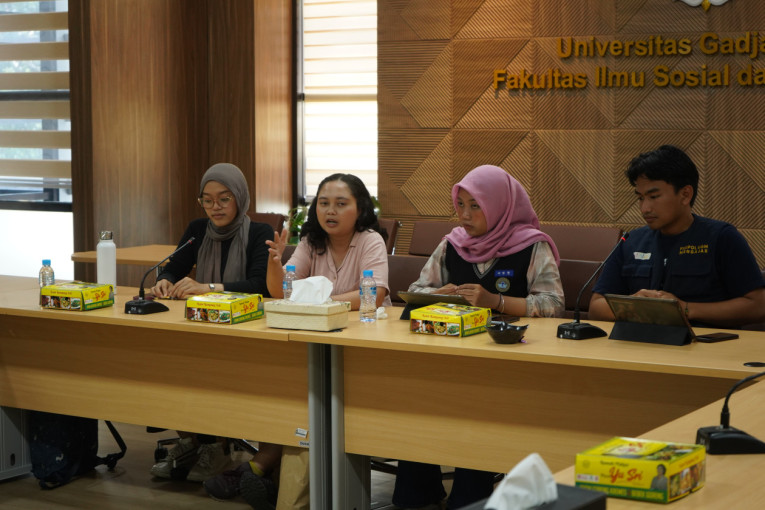
For approximately one month, while serving in disaster-affected areas in Aceh, 11 UGM student volunteers participating in the Fisipol Mengajar program observed that children’s literacy and numeracy skills remained limited. In response to this concern, the team focused on strengthening reading, writing, and arithmetic skills, as well as organizing Quran recitation activities and educational games to support children’s psychosocial recovery.
Previously, the volunteers were deployed to three disaster-affected areas, Pantan Nangka, Ketol, and Takengon in Bintang and Toweren villages from Jan. 10 to Feb. 8, 2026.
The Fisipol Mengajar program is a faculty initiative to support post-disaster rehabilitation and reconstruction, particularly in the education sector, in collaboration with the Sukma Foundation.
One of the volunteers, Adit, acknowledged that education has not yet become a top priority for the community amid limited access to basic needs. He noted that residents still require assistance with their daily needs.
“Such as staple food supplies, clean water, and infrastructure reconstruction. Unfortunately, education has not yet become a priority here,” said Adit, who was assigned to Pantan Nangka, in a statement released to reporters on Thursday (Feb. 12).
Another challenge in Ketol, highlighted by Efendi, is that the situation has become more difficult due to dwindling logistical assistance. He stated that after the public kitchen was closed, donated goods became increasingly limited,d and food supplies in the community began to run low.
“In addition to the very limited amount of donated goods, the community’s food stocks are also decreasing. The public kitchen was closed because staple food assistance had nearly run out,” Efendi explained.
Meanwhile, Sufaat, another volunteer in Ketol, added that aid distribution has not fully prioritized the most severely affected areas.
“In Ketol, the availability of clean water, school supplies, and the psychosocial condition of children remain serious concerns,” Sufaat added.
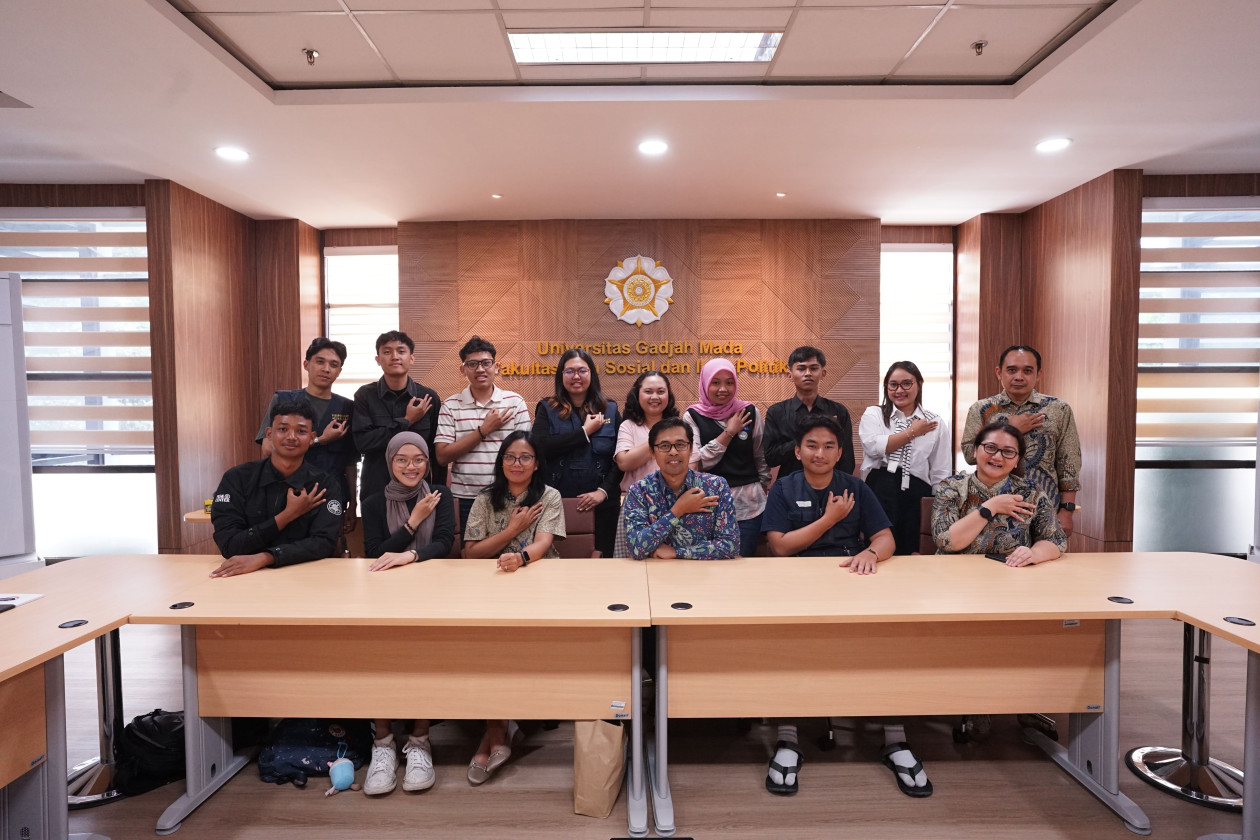
In response to these findings, UGM’s Faculty of Social and Political Sciences (Fisipol UGM) reaffirmed its commitment to promoting a more structured and sustainable response. The Vice Dean for Academic Affairs, Professor Poppy S. Winanti, encouraged the development of a post-disaster educational service module as a concrete outcome that can be replicated in similar situations in the future.
Meanwhile, the Dean of Fisipol UGM, Dr. Wawan Mas’udi, expressed hope that the Fisipol Mengajar program would serve as a starting point for consolidating broader rehabilitation and reconstruction efforts.
“This will certainly require the involvement of more stakeholders in addressing priority post-disaster issues in affected areas,” he added.
According to Dr. Mas’udi, post-disaster recovery efforts are closely linked to meeting physical needs, restoring education, and strengthening community social resilience. Therefore, all segments of society have a role to be directly present in affected areas, including higher education institutions.
The dean conveyed his full appreciation for the dedication of the volunteers who contributed and carried out their service through to completion. He emphasized that the volunteers’ field experience does not end as community service alone.
Dr. Mas’udi stated that it can serve as a foundation for developing social research, policy advocacy, and more comprehensive post-disaster education and rehabilitation models.
He explained that although this initiative was prepared within a relatively short timeframe, it received a very positive response. He also highlighted students’ strong enthusiasm to participate in the program.
Based on field experiences, Dr. Mas’udi believes many important findings have been documented and reflected upon by the volunteers. He expressed hope that similar programs can be continued in various forms.
“The faculty truly hopes there will be continuity, perhaps in the form of social research related to post-disaster recovery,” he said.
Author: Hanifah
Editor: Gusti Grehenson
Post-editor: Jasmine Ferdian
Photographs: Fisipol UGM