


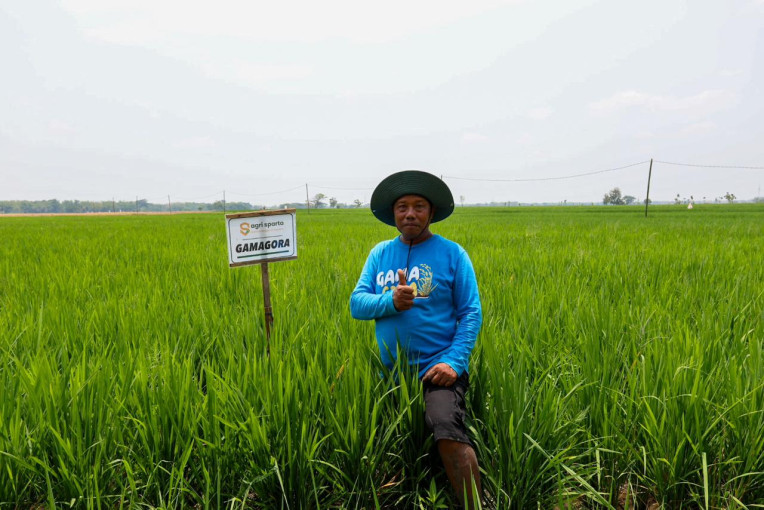
Gamagora 7, a rice variety bred by Universitas Gadjah Mada (UGM) and designed to address production challenges across diverse agroecological conditions, is now being cultivated in several regions.
Gamagora 7 has been successfully grown in North Sumatra, South Sumatra, Central Java, Yogyakarta, East Java, West Nusa Tenggara, South Sulawesi, and even on Enggano Island, Bengkulu.
The variety stands out for its shorter harvest period and stable performance across locations. This development demonstrates how innovation originating from research spaces can evolve into solutions adopted by communities.
Professor Taryono from the UGM Faculty of Agriculture explained that Gamagora 7 was developed to provide farmers with a more adaptive alternative variety.
He noted that its shorter harvesting age allows farmers greater flexibility in managing planting seasons. This characteristic is one of the reasons the variety has received positive responses in various regions.
“We actually have the intention to release other Gamagora lines as well,” said Professor Taryono on Wednesday (Dec. 10).
According to Professor Taryono, breeding work continually evolves in response to changing conditions and farmers’ needs in the field. Gamagora 7 is one outcome that reflects this responsiveness, particularly given testing results showing good stability.
“We hope that this variety will deliver tangible benefits for farmers in many regions,” Professor Taryono said.
In an interview session last September, UGM breeder Supriyanta emerged as one of the key figures in the long journey of Gamagora 7’s development.
Supriyanta explained that he underwent years of selection and evaluation processes before the variety’s characteristics were firmly established. Each testing season generated new records that helped determine the direction of improvement.
“Plant breeding is like repairing a leaking ship. As long as the speed at which we pump the water out exceeds the water coming in, the ship will keep moving. The same goes for breeding. There are always challenges, but we must keep moving forward,” he said.
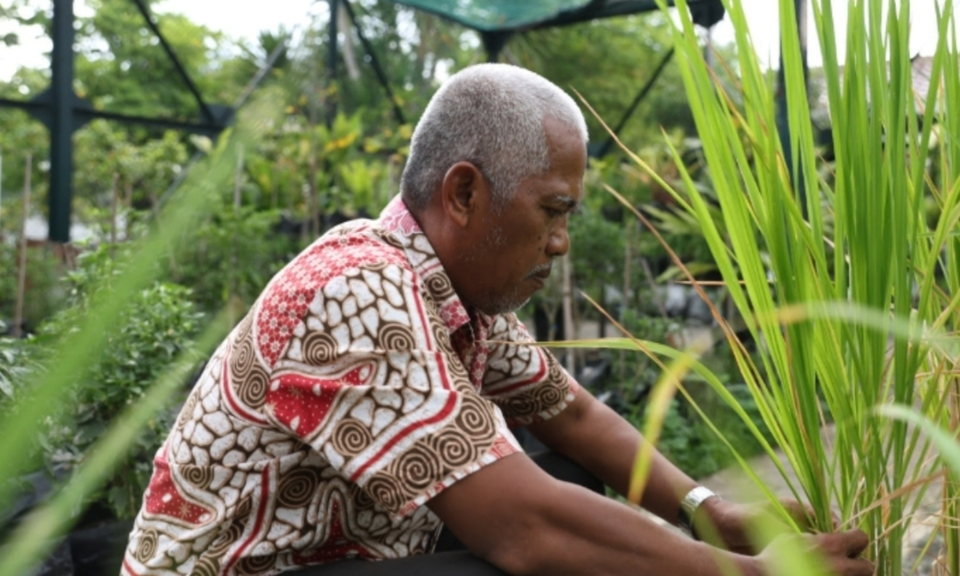
Supriyanta emphasized the importance of direct interaction with farmers to understand how well a variety performs under real field conditions. He noted that farmers’ feedback enriches the research process and helps strengthen cultivation recommendations.
Through field assistance, researchers can observe how the variety adapts to different land-management practices.
“I always think about how this variety can respond to farmers’ challenges,” he remarked.
According to him, the success of a variety depends not only on yield but also on how easy it is for farmers to cultivate. Gamagora 7 has demonstrated growth characteristics that are responsive to various land conditions, making farm management easier. This experience has reinforced the confidence that the variety can expand further.
“I hope this variety brings real benefits in the field,” Supriyanta said.
Taufan Alam, a young researcher involved in field testing, views Gamagora 7 as an important momentum in strengthening UGM’s plant breeding research.
He assessed that field data and observations provide a strong foundation for developing the next generation of varieties. According to him, this success offers the team a learning space to reinforce future innovations.
“Gamagora provides direction for further innovation,” Taufan Alam said.
He explained that the presence of the variety in many regions offers a broader picture of plant adaptation to different environments. These records serve as the basis for refining future breeding strategies. He regarded farmers’ involvement as a vital component in building a sustainable research ecosystem.
“We want this variety to become a gateway for learning for many stakeholders,” he stated.
Currently, the development of Gamagora 7 is progressing alongside further agronomic research. The team is developing Good Agricultural Practices (GAP) to optimize the yield potential of this variety across different agroecosystems.
At the same time, the breeding process continues through the preparation of new lines projected as the next generation.
“We hope future varieties will be more adaptive to climate change, have high yields, good quality, and early maturity,” Alam said.
With research continuing to advance, the journey of Gamagora 7 has become an important foundation for the development of future UGM superior varieties.
Researchers believe that agricultural innovation requires continuity between research, field assistance, and good cultivation practices. Support from various stakeholders gives this variety greater potential to expand across many regions.
“We believe innovation will continue to grow as long as farmers’ needs remain at its center,” Alam concluded.
Author: Triya Andriyani
Post-editor: Rajendra Arya
Photographer: Donnie Trisfian