


Indonesia possesses approximately 40 percent of the world’s geothermal energy potential, amounting to 23,965.5 megawatts (MW), evenly distributed across Sumatra, Java, Bali, and Sulawesi, making geothermal energy a promising source to meet national energy needs while reducing carbon emissions. However, the utilization of geothermal energy is not limited to electricity generation alone; Universitas Gadjah Mada (UGM) researchers believe geothermal potential extends beyond its conventional function. Silica deposits from geothermal fluids can be innovatively processed into plant enhancers and soil conditioners.
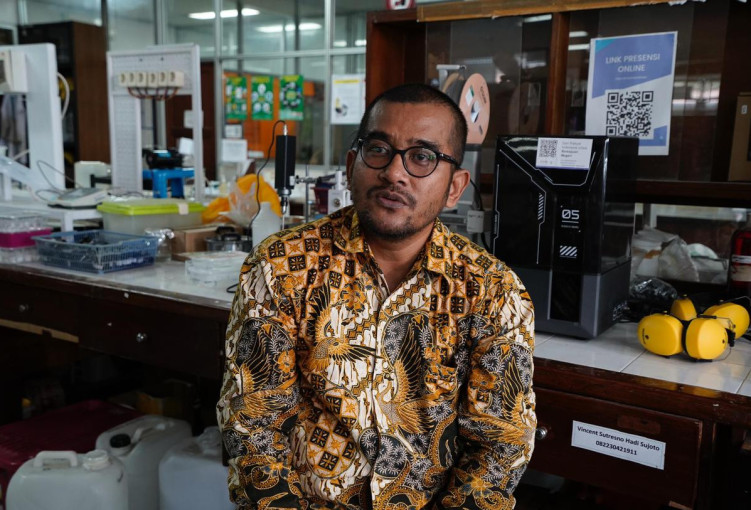
The transformation of geothermal silica into high-value nanosilica for agricultural applications has been developed by a lecturer from the Department of Chemical Engineering from the Faculty of Engineering of Universitas Gadjah Mada (FT UGM), Professor Himawan Tri Bayu Murti Petrus.
Recently, he received the Best Innovation award at the prestigious Hitachi Global Foundation Asia Innovation Awards 2025.
Through material engineering and the gradual development of process control, geothermal silica has been successfully processed into nanosilica with superior, stable, and consistent properties.
“This process is also designed to be replicable and scalable, opening opportunities for downstream development and future industrial application,” he told reporters on Monday. (Jan. 26)
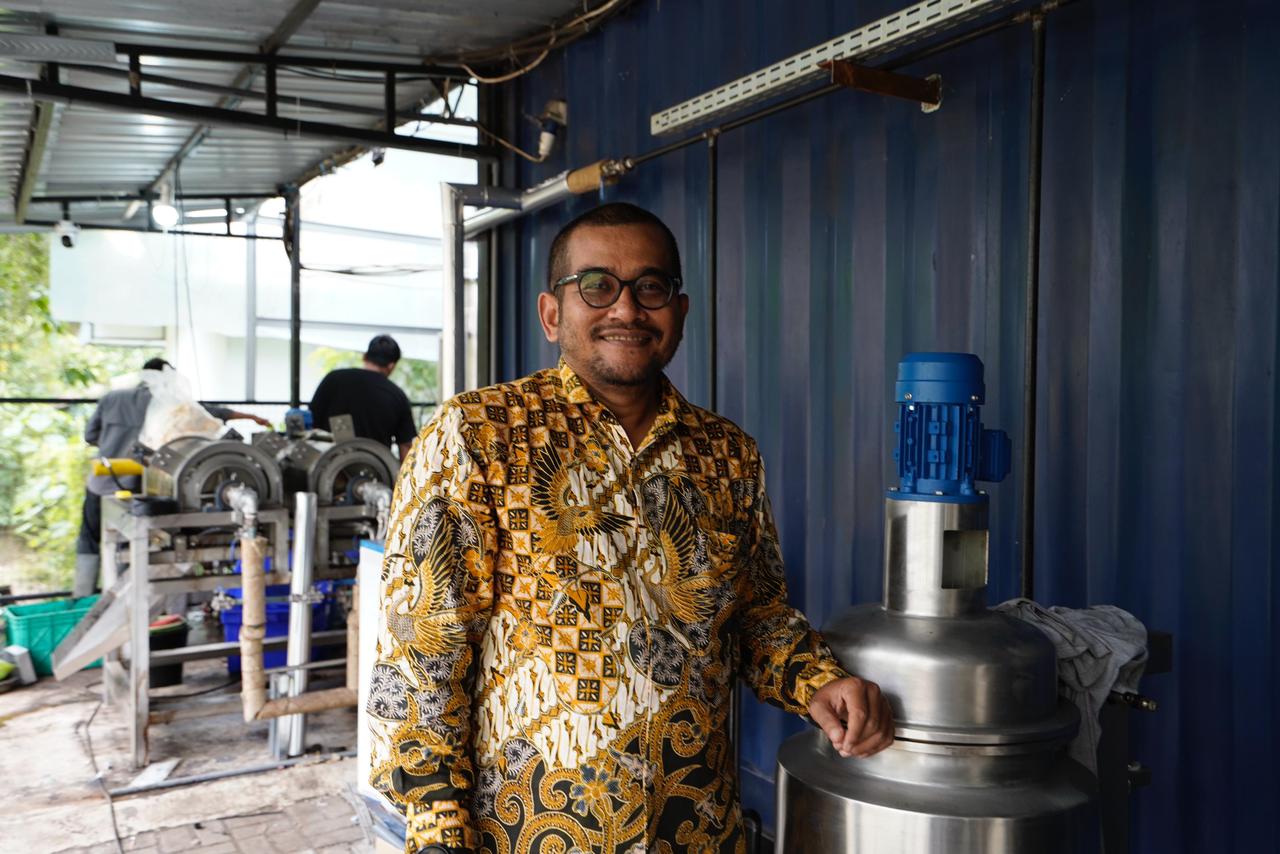
Professor Petrus explained that nanosilica strengthens plant cell walls, improves plant sturdiness, and enhances nutrient transport efficiency. Its advantage lies in its high bioavailability, as its size and morphology allow it to be readily absorbed by plants.
Its application is also highly efficient, requiring only about 1-2 kilograms per hectare, far lower than conventional macronutrient fertilizers such as NPK, thereby supporting more efficient, adaptive, and sustainable agricultural practices.
Field trials (demonstration plots) have shown that applying nanosilica can increase crop productivity by 30–50 percent across various commodities, including rice, maize, avocado, papaya, and grapes.
This improvement is not solely attributable to nanosilica, but also to its synergy with other components, such as humic substances and boron, which are formulated together using a total-extraction approach and a comprehensive soil health improvement strategy.
“Once again, this is not only about nanosilica itself, but also the synergy of the additives we include to ensure that the soil is healthy and the plants are healthy as well,” he explained.
Furthermore, he noted that the development of nanosilica has also expanded into the technology and energy sectors. In electronics, nanosilica is combined with hydrogels to enhance cooling in data centers and batteries.
This combination has been shown to increase the water absorption capacity of hydrogels by three to five times, thereby improving cooling efficiency and performance.
“Further research is also directed toward developing materials that can absorb water vapor from the air, as well as other applications such as biosensors and biomaterials that support the advancement of green technology and intelligent systems,” he said.
Despite its significant potential, the main challenge of this innovation lies in downstream development, namely, transitioning research outcomes from laboratory scale to industrial implementation and broader utilization.
Therefore, the development of a broader range of nanosilica-derived products will continue to be pursued, ensuring that the circular economy does not remain merely a concept but is realized through a sustainable, applicable value chain aligned with the needs of society and national industry.
“In addition to downstream challenges, another key issue is ensuring that we do not stop at a single product spectrum, but continue to expand it to unlock further downstream potential,” he explained.
Professor Petrus expressed hope that this innovation would not only contribute to scientific advancement but also deliver tangible benefits that the public can directly feel and encourage the adoption of sustainability-based technologies.
“As researchers, we always hope that our research outcomes do not stop at international journals, publications, or patents, but truly deliver benefits and have a real impact on society,” he said.
He added that the research has been consistently developed since 2013 and carried out through multidisciplinary collaboration supported by international partnerships with NTU Singapore, Swinburne University, Kyushu University, and the University of the Philippines.
These collaborations have strengthened cross-disciplinary knowledge exchange, integrated advanced process and material engineering approaches, and enriched sustainability perspectives in technological development.
“With the support of these international networks, the research has progressed not only at the laboratory scale, but also toward conceptual readiness for broader and more sustainable implementation,” he concluded.
Author: Cyntia Noviana
Editor: Gusti Grehenson
Post-editor: Jasmine Ferdian
Photographer: Salwa