


Indonesia has the highest dengue burden in Southeast Asia and the second highest in the world, accounting for approximately 17 percent of global dengue deaths in 2025. The Indonesian Ministry of Health reported that the dengue case fatality rate declined from 0.9 percent in 2021 to 0.4 percent in 2025. Meanwhile, the incidence rate dropped from 92 cases per 100,000 population in 2024 to 57 cases per 100,000 population in 2025.
Head of the Vector-Borne and Zoonotic Diseases, Venomous Animal Bites, and Poisonous Plants Working Team at the Directorate General of Disease Prevention and Control, Indonesian Ministry of Health, Dr. Fadjar SM Silalahi, said that despite the declining number of cases, vigilance remains essential to prevent future surges and protect public health gains.
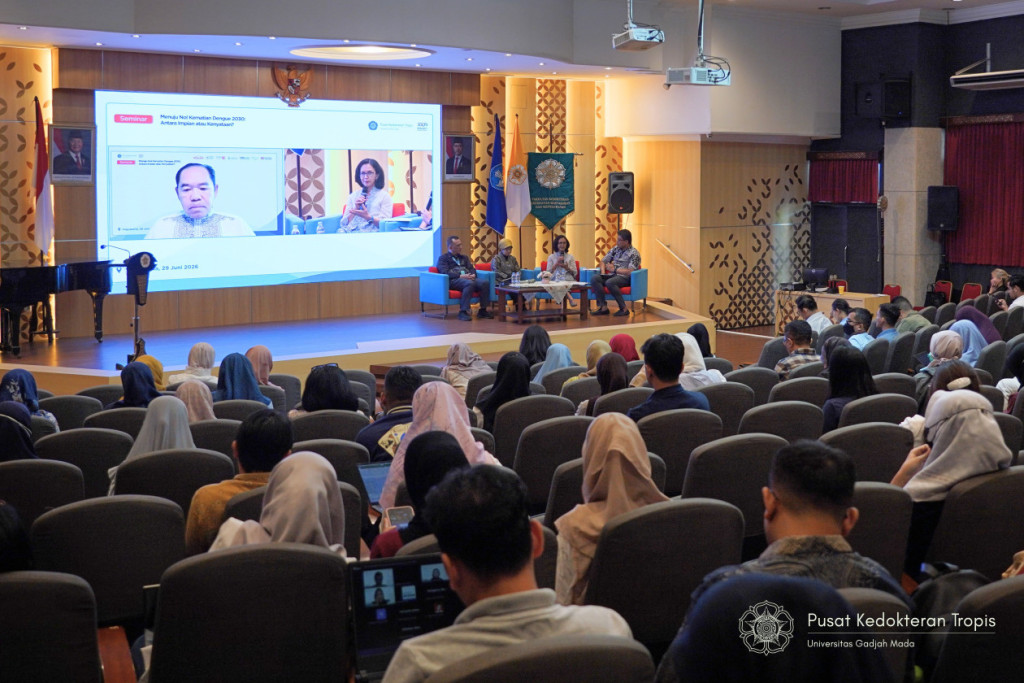
“If we look at the data, Indonesia has the highest dengue burden in Southeast Asia. This shows that dengue must remain a major public health concern,” said Dr. Silalahi during the ASEAN Dengue Day (ADD) 2026 seminar and workshop, “Menuju Nol Kematian Dengue 2030: Antara Impian atau Kenyataan?” (Toward Zero Dengue Deaths by 2030: Dream or Reality?), held at the Auditorium of the Faculty of Medicine, Public Health, and Nursing (FK-KMK UGM) on Monday (Jun. 29).
Dr. Ida Safitri Laksanawati, a lecturer in the Department of Child Health at FK-KMK UGM, emphasized that clinical management is one of the most critical components in reducing dengue-related mortality. Dengue progresses rapidly, making early diagnosis, close clinical monitoring, and timely treatment essential to prevent delays in care and improve survival.
“Dengue is an acute infectious disease because its clinical course typically lasts no longer than two weeks, unlike HIV or malaria, which can persist for months,” explained Dr. Laksanawati.
She further noted that the greatest challenge in dengue management lies in the early stages of the disease, when its symptoms are difficult to distinguish from those of other infectious illnesses prevalent in Indonesia.
“The biggest challenge is during the early phase, when it is difficult to differentiate dengue from other diseases,” she said.
In addition to clinical management, strengthening the referral system was another key strategy to reduce mortality. Dr. Diah Ayu Puspandari, a lecturer in the Department of Health Policy and Management at FK-KMK UGM, pointed out that many patients still seek treatment directly at referral hospitals without first accessing primary healthcare services, which can delay appropriate care.
“Based on our study, approximately 21.8 percent of patients went directly to referral healthcare facilities without first visiting community health centers or other primary healthcare facilities,” she explained while presenting findings from the FK-KMK UGM research team.
Dr. Puspandari said this practice contributes to higher healthcare costs. Therefore, there is a need to strengthen the role of primary healthcare facilities, improve coordination among healthcare providers, ensure the availability of referral transportation, enhance the capacity of referral hospitals, and optimize data and information systems to enable timely referrals and reduce the risk of severe cases and deaths.
“The implication is higher healthcare costs,” she said.
From the financing perspective, Professor Hasbullah Thabrany of FK at the University of Indonesia (UI) said that achieving zero dengue deaths requires more than well-prepared clinical services and referral systems. Adequate, effective, and efficient health financing is essential to ensure that dengue control strategies can be implemented optimally and supported sustainably.
“However, we need to ask whether public health financing is sufficient,” he said.
According to Professor Thabrany, public funding through the government and Indonesia’s National Health Insurance (JKN) plays a crucial role in ensuring the sustainability of health promotion, disease prevention, and curative services. Noted a correlation between inadequate funding and higher dengue incidence.
“High case numbers and mortality are correlated with insufficient funding,” explained the lecturer from the Department of Health Policy and Administration, Faculty of Public Health, University of Indonesia.
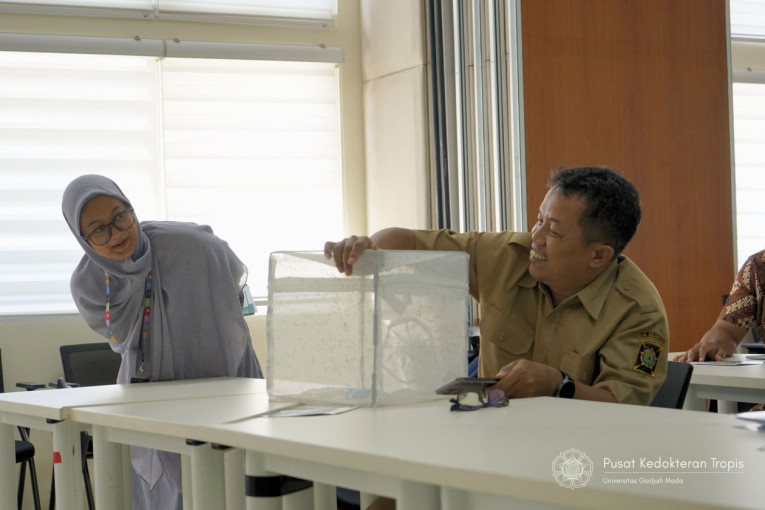
At the conclusion of the seminar, the ASEAN Dengue Day 2026 series continued with a workshop titled “Teknologi Pengendalian Vektor Inovatif Berbasis Wolbachia” (Innovative Wolbachia-Based Vector Control Technology). Participants learned about 15 years of experience implementing the Wolbachia method, including visits to the Wolbachia-infected Aedes aegypti mosquito production facility, mosquito release strategies, capacity-building initiatives, monitoring activities, and discussions with the UGM Wolbachia implementation team. The workshop was part of the UGM Center for Tropical Medicine’s efforts to support applied learning and evidence-based innovations for dengue control in Indonesia.
Author: Agito Sitepu
Editor: Gusti Grehenson
Post-editor: Jasmine Ferdian
Photo: Documentation of UGM Center for Tropical Medicine