


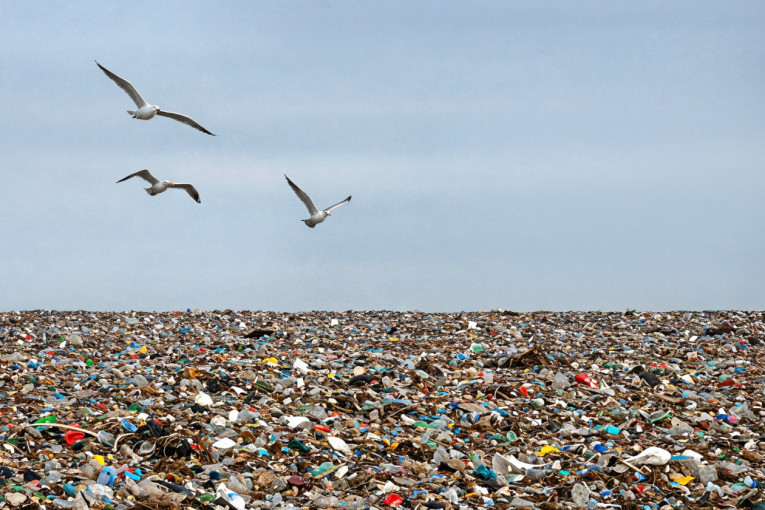
A total of 336 regencies and cities, or 65.4 percent of Indonesia’s administrative regions, were categorized as being in a waste emergency status as of January 2026. In addition to limited landfill capacity, the rapid increase in waste volume and the lack of household-level waste sorting are among the main causes of this problem. These have led local governments across Indonesia to face a serious crisis in waste management, making the issue one of the country’s major challenges. Amid rapid digital technological development, various innovations are now being explored to help address this problem, including the use of Artificial Intelligence (AI).
A lecturer at the Department of Management, Faculty of Economics and Business at Universitas Gadjah Mada (FEB UGM), Luluk Lusiantoro, Ph.D., together with a research team from FEB UGM, has developed an AI-powered application for waste management. The application, called Westa, is designed to help manage waste more effectively. Luluk explained that the development of the application stemmed from concerns about the current state of waste management in Indonesia, which remains poorly organized.
“The process of identifying waste types is still largely carried out manually by waste collectors or recyclers. In fact, this process is not easy, and not many people are willing to do it,” he said at the UGM campus on Friday (Mar. 13).
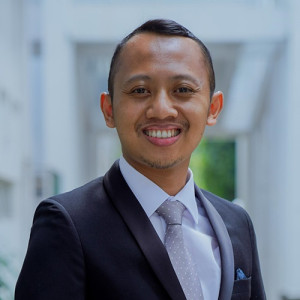
Through the Westa application, Luluk explained that identifying waste can be carried out more quickly and effectively. Users simply take a photo of the waste with a smartphone camera, and the AI system automatically recognizes the type of waste using computer vision. The Westa application can also estimate the weight of generated waste.
According to Luluk, data on waste weight play an important role because they are used to estimate the carbon emissions generated by the waste. In developing the Westa application, the research team used emission factors from the United States Environmental Protection Agency as a reference for calculating carbon emissions. The application is also designed to identify product brands responsible for generating the waste.
“By identifying product brands, the collected waste data can help trace producers whose products contribute to waste generation. This capability is closely related to the concept of Extended Producer Responsibility (EPR) in the circular economy. The principle emphasizes that producers are responsible not only during the production and distribution stages but also for the environmental impact after the product is consumed,” he explained.
Luluk added that the Westa application also includes a geotagging feature that allows the system to record the location where certain waste is found. With this feature, the generated data not only shows the type of waste but also reveals patterns of waste distribution across regions.
The data collected from the Westa application can also serve as a basis for governments and stakeholders in formulating more effective waste management policies. Through such data analysis, authorities can identify products that generate large amounts of waste and encourage producers to take greater responsibility for waste management.
“In the future, the development of Westa will not only focus on organizations or institutions but will also be directed toward broader use by the public,” he explained.
The Westa application is expected to be further developed to reach individual consumers. Through the application, users can photograph the waste they generate and view a daily or weekly waste profile through the application’s dashboard. By understanding which types of waste are produced most frequently, users can identify patterns of overconsumption and consider reducing unnecessary consumption to minimize waste.
“We hope that Westa can evolve into a waste circular ecosystem, a digital ecosystem that provides comprehensive data on waste profiles in Indonesia. It can become a one-stop waste circular ecosystem that offers data on types and quantities of waste, recycling rates, and carbon impacts, enabling various stakeholders to support more sustainable waste management,” he concluded.
Reporter: Kurnia Ekaptiningrum / FEB UGM Public Relations
Author: Agung Nugroho
Post-editor: Jasmine
Photo: Freepik & FEB UGM Documentation