


Twenty students from the Family of Social Development and Welfare Students (KAPSTRA) carried out a social initiative titled “KAPSTRA Eco-Learning” on Saturday and Sunday, November 8 to 9, 2025. Through workshops on herbal medicine preparation, cultivating family medicinal plants (TOGA), and producing eco-enzymes, the program aims to reduce the use of chemical-based products while preserving local biodiversity. Specifically, this social initiative aims to introduce simple methods for processing organic waste into products that benefit the environment and public health.
The first day of activities took place at Omah Sinau Masyarakat (OMSIMAS), Karangwaru, Yogyakarta. The event featured Siti Rupingah, Chair of the Lestari Women Farmers Group (KWT), from Gunung Gondang, Margosari, Pengasih. As the speaker, she delivered a session titled “Strengthening the Economy Through the Utilization of TOGA Potentials and Preserving TOGA Diversity”.
Siti Rupingah explained that family medicinal plants commonly grown around the home can offer various benefits when appropriately processed, including being made into traditional herbal drinks (jamu).
Producing jamu, she noted, can help improve the economic conditions of PKK women’s groups while maximizing land use to preserve local plants that serve as natural first-aid remedies.
“The benefits are very tangible. Consuming jamu can boost immunity, treat minor ailments, and even help prevent more serious illnesses, depending on the type of TOGA used,” she said on Monday (Nov. 24).
One participant, Yusia, shared her appreciation for the activity. She noted that the program provides valuable insights for PKK members and other women in the community.
“I hope everything explained by the students and the speaker can continue to be practiced,” she said.
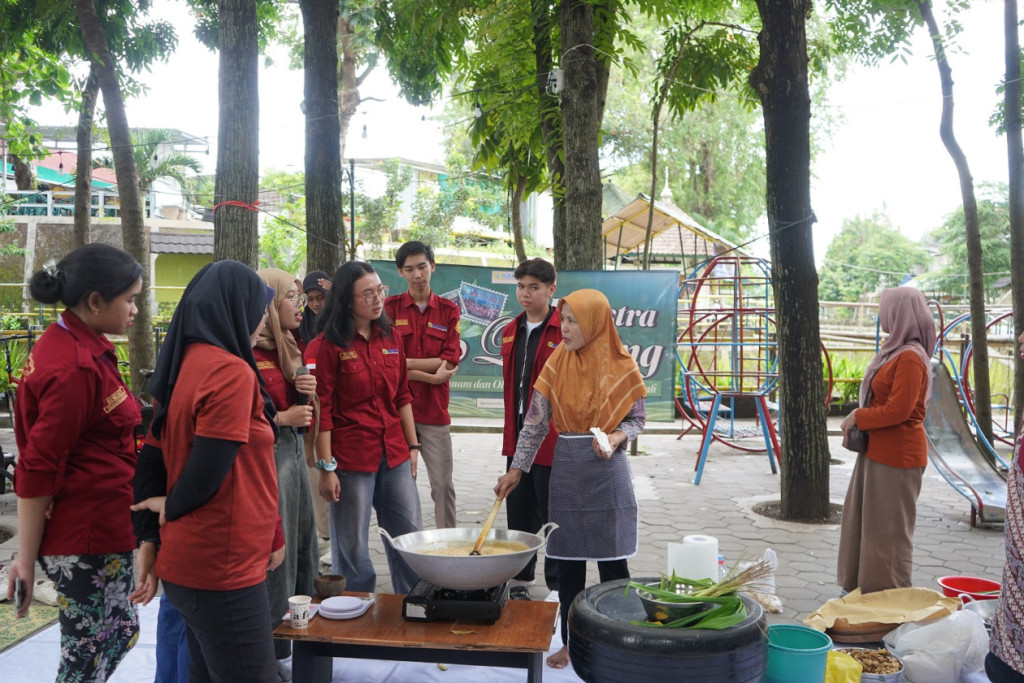
The activity continued with a hands-on workshop on making powdered jamu using an original recipe by Siti Rupingah (a recipe that won the Herbal Medicine Competition at the 2017 Bejo Herbal Carnival). Ingredients used in the powdered jamu included jahe emprit (a type of ginger), sugar, cinnamon, cloves, star anise, and other readily available local spices.
Through the jamu-making workshop, Yusia expressed her gratitude that both PKK women and students gained new knowledge about traditional herbal processing and learned to identify natural ingredients in their surroundings as resources for creative, environmentally friendly enterprises.
“This workshop reflects the real practice of eco-learning, where the community is encouraged to understand, process, and utilize local resources sustainably,” Yusia added.
On the second day, KAPSTRA continued the social initiative with eco-enzyme training in collaboration with the Eco Enzyme Volunteers of Sleman. Using the theme “Green Footprint: Plant and Process for a More Sustainable Earth”, the training was held at Rumpang QQ in Sinduharjo, Sleman.
The session began with an introduction to eco enzymes (their definition, benefits, and preparation steps) delivered by Nafi Khoirulnisa and Farhan Zaki, with Kiki and Fimel from the Eco Enzyme Volunteers of Sleman in attendance.
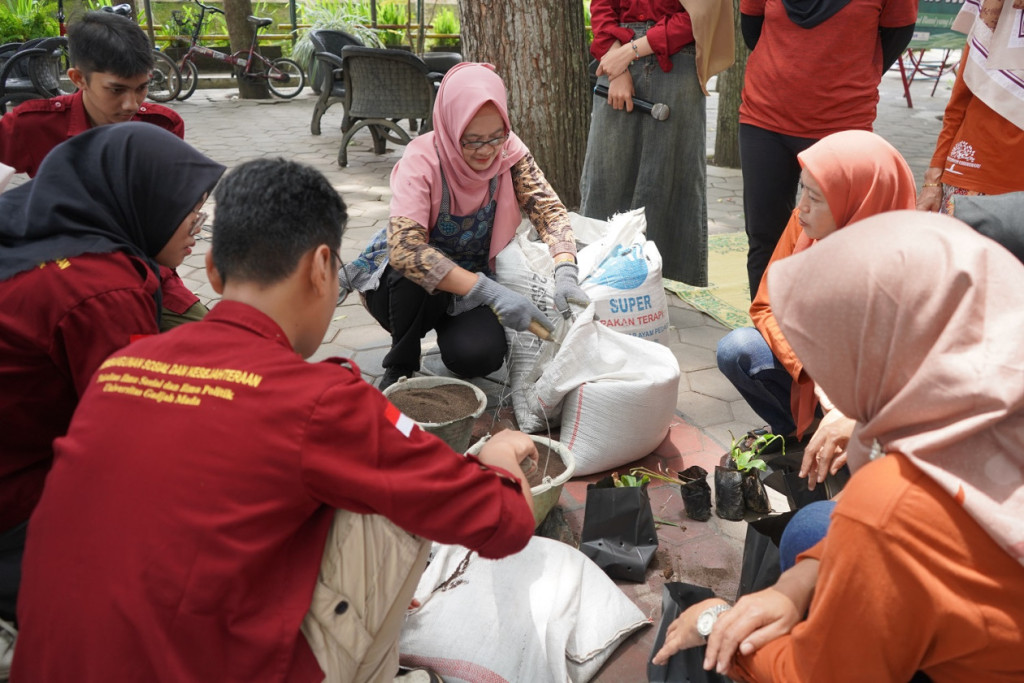
Beyond the presentation, participants were guided through a direct practice of making eco-enzymes from fruit peels. During the session, they learned to mix ingredients in a 1:3:10 ratio: 1 part sugar or molasses, three parts fruit peels, and 10 parts water. The mixture is then left to ferment for at least 90 days to achieve optimal results.
“This practice allows participants to learn firsthand how kitchen waste that would normally end up in the trash can be processed into a multipurpose liquid beneficial for the environment. When we give to nature, nature gives back even more,” said Kiki.
After producing the eco enzyme, participants were also introduced to various derivative products, such as bar soap, eco-enzyme pillows, and camphor made from fermented fruit residues. These products demonstrate that eco enzymes can function not only as cleaning agents but also as versatile household products.
Fimel explained that eco enzymes offer numerous benefits, including improving soil fertility, revitalizing water quality, reducing chemical use, and more.
“I can’t live without eco enzymes, because nearly all my household needs depend on them,” said Fimel, a member of the Eco Enzyme Volunteers of Sleman.
Nafi Khoirulnisa expressed hope that through this activity, participants would gain not only practical experience in making eco enzymes but also knowledge of simple waste management techniques that can significantly benefit the environment.
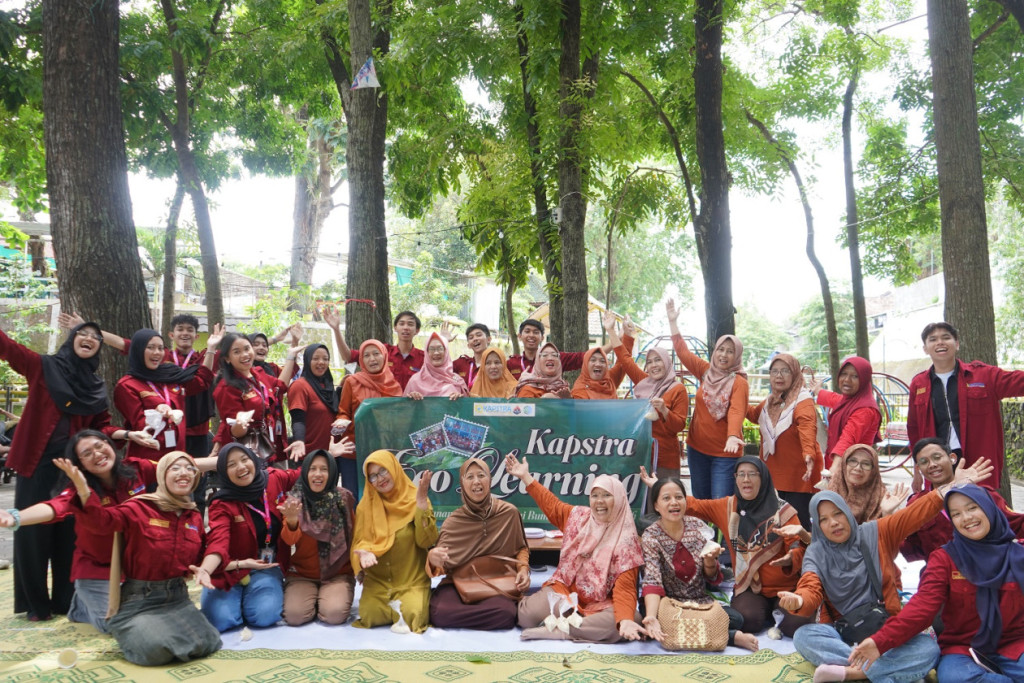
“The KAPSTRA Eco-Learning program is expected to encourage ecological awareness and foster sustainable, environmentally friendly habits among students and the wider community,” said Nafi Khoirulnisa, one of the members of KAPSTRA.
Author: Leony
Editor: Agung Nugroho
Post-editor: Rajendra Arya
Photographs: KAPSTRA