


Yogyakarta’s cultural landscape continues to evolve as the city and the creative industry grow. Artistic and cultural practices are increasingly visible in public spaces, creative activities, and economically valuable products. This development raises questions about the boundary between preserving culture and commodifying it. At the same time, artists need space to create, while communities need space to preserve their living environments. Cultural development, therefore, needs to make room for both artists and residents as its primary actors.
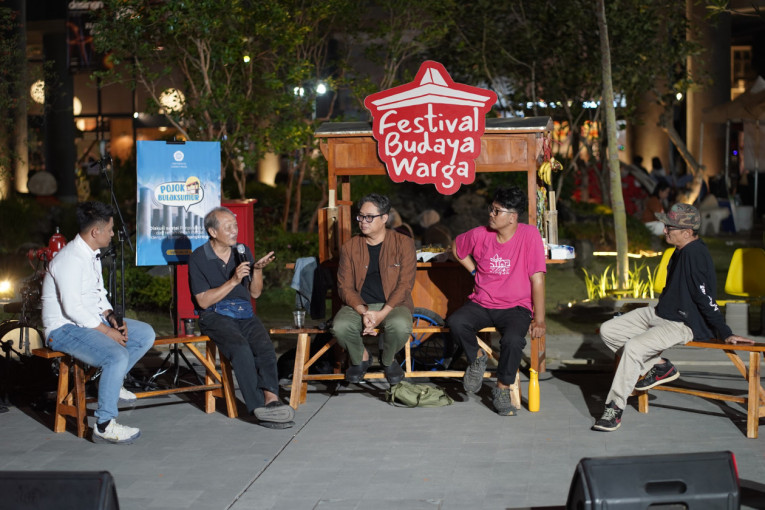
A Pojok Bulaksumur Discussion titled “Nyawa yang Dijual? Seni, Kuasa, dan Wajah Baru Kebudayaan Jogja” (“A Soul for Sale? Art, Power, and the New Face of Jogja’s Culture”) addressed the issue, held in the corridor of UGM’s Gelanggang Inovasi Kreativitas (GIK) on Saturday (August 29).
The discussion featured artist Anang Saptoto, Yogyakarta Cultural Council member Ishari Sahida, also known as Ari Wulu, UGM Faculty of Cultural Sciences Anthropology lecturer Dr. Muhammad Zamzam Fauzanafi, and UGM literary scholar Professor Faruk. The four speakers explored the relationship between art, the creative industry, cultural commodification, and communities’ role in shaping Yogyakarta’s cultural landscape.
Anang Saptoto said the presence of cultural practices in different spaces cannot necessarily be understood as the selling of culture. Visual art enables people to present cultural practices at the village, city, national, and international levels for various purposes. Therefore, consider the context and purpose of each practice before concluding that culture is being commercialized.
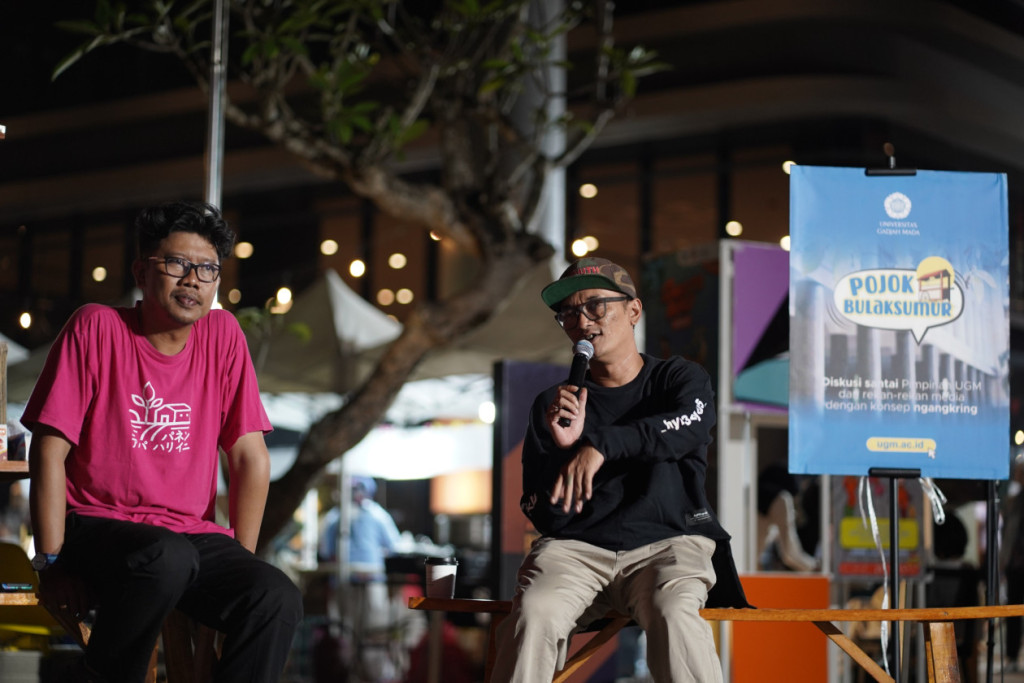
Anang explained that artistic practices can bring attention to issues or concerns that have not received sufficient attention. When an artwork is presented in a public space, it offers not only culture as a commodity but also the ideas artists seek to convey.
“Perhaps these cultural practices are actually carried out to amplify something that is usually unheard,” he said.
According to Anang, artists engage in a wide range of practices. In some contexts, artworks and creative products are sold, such as at art fairs and creative product exhibitions. However, this does not automatically mean that culture itself is being sold.
“Not every context involves selling culture. That is simply the practice. What is actually being presented here is the issue,” he said.
Meanwhile, Ishari Sahida, known as Ari Wulu, discussed the issue from the perspective of a musician working directly in the creative industry. He said it is important to distinguish between creating art as a form of expression and engaging in artistic activities as a profession. This distinction affects artists, who may need to compromise when responding to market demands or working on commissions.
Ari explained that when creating art as a form of expression, artists have greater freedom to develop their ideas and experiences. When they enter the industry, however, economic considerations and market demands come into play. A different situation arises when artists receive commissions and must produce work according to their clients’ needs.
“You are indeed trying to make money, then you create something using a method you know will make the product sell. Those are different things. Second, you receive an order from a client and create a product according to the client’s needs using your capabilities,” he explained.
According to Ari, the distinction between art as expression and art as work is still not clearly understood in Yogyakarta. As a result, artists can find themselves caught between meeting their economic needs and maintaining their identity and ideals. Economic realities, he noted, are inseparable from working in the arts.
Unlike the previous two speakers, Dr. Muhammad Zamzam Fauzanafi approached commodification by examining how society defines culture. Culture has generally been understood as an object or something that can be seen and touched. This perspective makes it easier to position culture as a commodity people can move, price, and buy and sell.
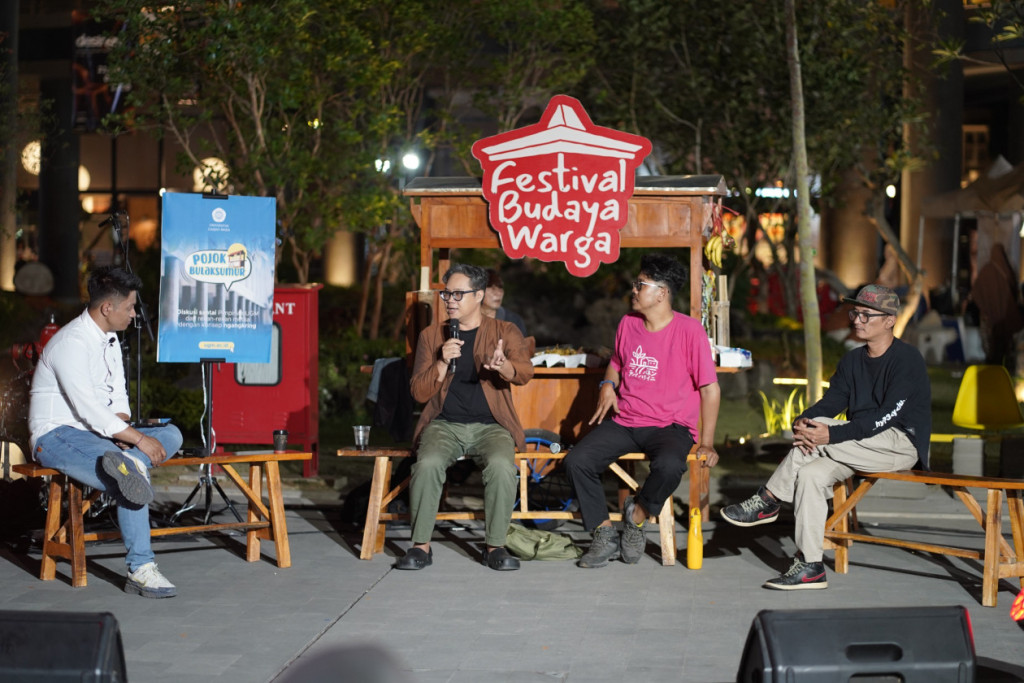
Dr. Fauzanafi offered a different perspective by viewing culture as a “verb,” or a human practice. Culture lies not only in the products people create but also in the processes through which they engage in and create cultural practices.
“Culture should be viewed as a verb. Earlier, it was called practice. So culture is not the object, but the work,” he said.
Dr. Fauzanafi further said cultural practices should be developed horizontally by involving communities as active participants. Artists do not necessarily have to be the most prominent or most brilliant figures in cultural practices. Instead, they can serve as facilitators for residents, allowing cultural work to be carried out collectively rather than by particular individuals.
Artists working together with farming groups and communities are one example of collaborative cultural practice. Artworks and other forms of cultural work can be produced collectively while still providing space for artists’ expertise.
“Artists should not be treated as something rare and constructed as the most brilliant of them all. Instead, artists are people who facilitate communities,” he said.
Meanwhile, Professor Faruk examined the commodification of culture through the concept of exchange. Exchange is part of human life and has existed long before modern industry. Cultural issues, therefore, cannot be viewed simply in terms of whether something is bought and sold. Instead, the focus should be on the nature of the exchange and whose interests it serves.
Professor Faruk explained that exchanges undertaken to meet basic needs and sustain creative work are normal. Problems arise when exchange becomes a form of greed, or “gragas.” Such conditions can develop into monopolies, control over access, and the appropriation of spaces that should be available to others.
“It is not about whether something is sold or not, but whether there is greed,” he emphasized.
An unlimited market logic can encourage people to continually pursue higher profits until they seek to control economic and political spaces. Under such conditions, exchange is no longer simply a means of meeting needs but can become an industrial and capitalist practice that eliminates others.
This perspective also offers insight into the slogan “Jogja Ora Didol” (“Jogja Is Not for Sale”). The slogan does not necessarily mean rejecting all forms of economic exchange within culture.
“What is more important is ensuring that exchange takes place fairly and does not develop into greed, monopoly, or control of space by a small number of parties,” he emphasized.
The four speakers showed that Yogyakarta’s culture cannot be viewed in simple black-and-white terms as either “sold” or “preserved.” Art can be both expression and work; culture can have economic value while also serving as a medium for voicing issues; and exchange can support livelihoods while potentially becoming a means of monopoly.
Ultimately, the discussion on “Nyawa yang Dijual?” invites the public to reconsider who has the space and authority to determine the direction of Yogyakarta’s culture and to ensure that cultural development continues to provide space for artists and residents as its primary actors.
Author: M. Aidil Syahputra
Editor: Gusti Grehenson
Post-Editor: Jasmine Ferdian
Photograph: Firsto