


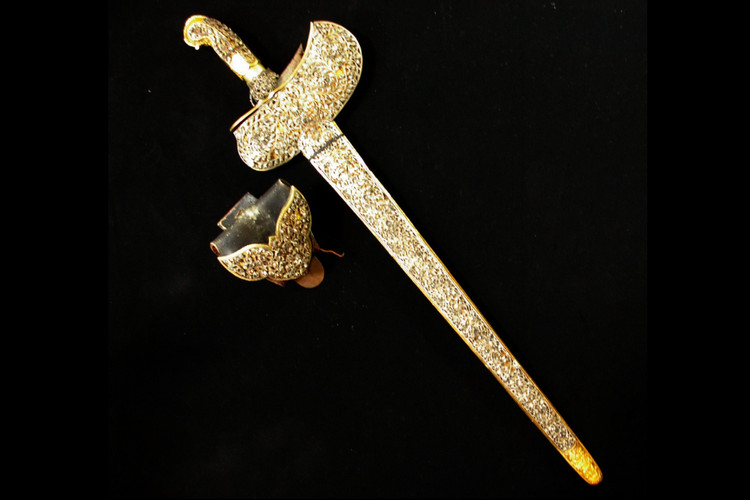
The government, through the Ministry of Culture of the Republic of Indonesia, has officially designated April 19 as National Keris Day since 2025. This strategic move is important to strengthen the position of the keris as one of Indonesia’s 16 intangible cultural heritages recognized by UNESCO. In addition, this commemoration marks an important turning point in the redefinition of the role of this traditional Nusantara weapon in modern society.
Keris collector and academic at the Faculty of Cultural Sciences UGM (FIB UGM), Abdul Jawat Nur, emphasized that literacy about keris must reach all segments of society so as not to remain trapped in misleading narratives. He stressed that a keris should not be seen as an exclusive and intimidating object.
“Keris is for everyone. Even women in the past also owned keris. We should not allow people to casually claim that the keris is forbidden. Keris is a noble cultural heritage, containing artistic, historical, and economic values. We must preserve it,” he said on Monday (Apr. 20).
Jawat explained that beyond being a weapon, the keris also functions as an ageman, an object that provides positive suggestion to its wearer. This meaning has evolved beyond its original function as a close-range weapon. As an ageman, the keris is specifically tailored to the owner’s profession. Jawat cited puppeteers (dalang), who often wear specific types of keris as part of their profession.
“Puppeteers use the Pandawa Cinarito keris, as it is believed to help facilitate one’s speech,” he explained.
In the modern era, Jawat believes that the function of the keris has undergone a complete transformation in line with the times. In his observation, there are now almost no keris produced specifically for physical warfare. This is because the keris is no longer relevant in modern battlefields that rely on long-range attacks.
“Times have changed significantly. For example, a keris typically measures around 37 cm. Later, during wars against the Dutch, there were reportedly keris reaching up to one meter in length to counter swords. Today, keris are made based on demand as ageman for various professions,” he stated.
Regarding several cases of fraud in keris trading, Jawat shared guidelines for the public when purchasing a keris. As an initial step, he emphasized the importance of understanding pakem (standards), such as the number of luk (curves), which traditionally does not exceed 13 for classic keris. Furthermore, he explained that keris can also be identified by their materials, which generally consist of iron, steel, and pamor.
“We can observe it with the naked eye. A grayish color indicates steel, while a deep black color indicates iron. Meanwhile, the pamor material comes from meteorites,” he said.
Nevertheless, Jawat acknowledged that maintaining the authenticity of keris in the modern era presents significant challenges, especially with the practice of replication by keris craftsmen. According to him, it is entirely possible to make new keris that resemble old ones. He also highlighted the phenomenon of mystical claims made by certain individuals. Jawat advised the public, especially the younger generation, not to be easily deceived by illogical stories. According to him, such narratives are often created to increase selling prices.
“Do not simply believe strange stories, especially when the price is low. It is impossible for a keris containing gold and diamonds to be sold for Rp500,000. It is better to buy from a keris collector or order directly from an empu (master craftsman),” he concluded.
Author: Aldi Firmansyah
Editor: Gusti Grehenson
Post-editor: Jasmine Ferdian
Photo: Museum Prabu Geusan Ulun