


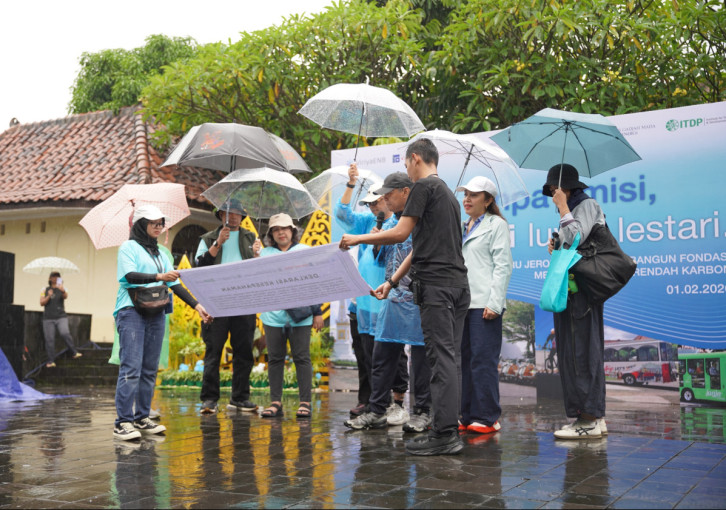
The Center for Transportation and Logistics Studies of Universitas Gadjah Mada (Pustral UGM) has officially launched the Low Emission Zone (LEZ) movement through a declaration held at Jeron Beteng area, Yogyakarta on Sunday (Feb. 1). The declaration, read by Professor Bakti Setiawan, outlined a shared commitment in applying LEZ principles aimed at reducing environmental impacts, improving air quality, and developing a more sustainable transportation system.
Its implementation will be carried out gradually through a prototype in Jeron Beteng as efforts to support national climate targets while safeguarding a World Heritage area.
The declaration marking a new direction for the Jeron Beteng LEZ was attended by various stakeholders, including Dr. Dewanti as Secretary of Pustral UGM, Professor Ikaputra as former Head of Pustral UGM, Chrestina Erni as Head of Dishub DIY, Anna Herbranti as Head of the PUPESDM DIY, Suzanty Sitorus as Executive Director of VIRIYAENB, representatives of Keraton Ngayogyakarta Hadiningrat, village officials, expert staff, and the public.
Through the slogan “Nyawiji tanpa emisi, Tradisi luwih Lestari” (United without emissions, traditions more sustainable), Professor Ikaputra emphasized that emissions are among the largest contributors to climate change.
According to him, urban areas, particularly cultural heritage zones such as Jeron Beteng, play a strategic role in reducing carbon emissions, particularly those from transportation.
“Climate change is a real global problem, and one of its main causes is emissions from the transportation sector. As a UNESCO World Heritage area, Yogyakarta is also encouraged to reduce emissions and serve as an example of climate change mitigation efforts,” he said.
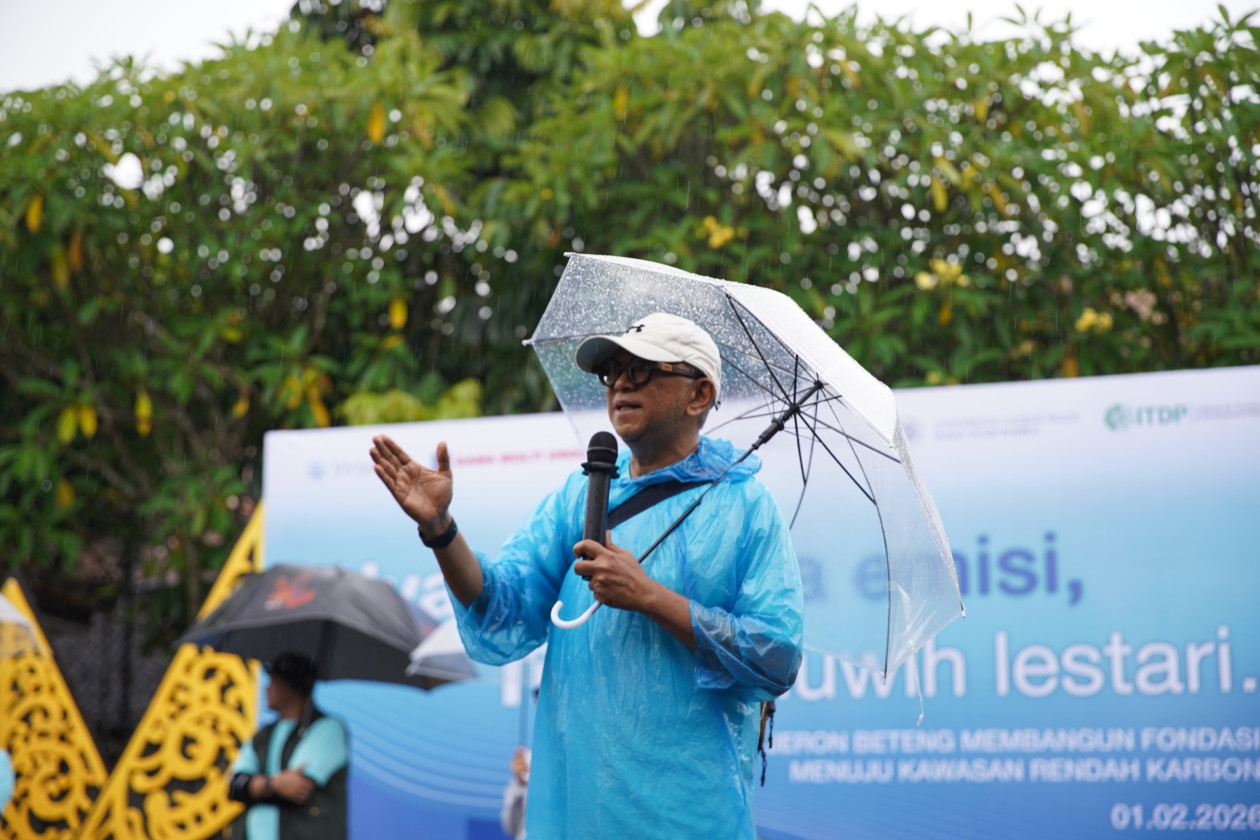
Professor Ikaputra explained that Jeron Beteng was selected as the initial site for the initiative because, as a cultural heritage area, it has strong public appeal and is easily recognized. Once the initiative runs smoothly, the application of LEZ principles is expected to expand beyond the fortress area.
“Cultural heritage sites serve as a form of branding because people come here, but that does not mean other areas do not need it. In fact, they need it greatly. Cultural heritage areas can serve as role models because they are already well known, so once an example is established, it can be expanded, for instance, from Keraton to Ngasem Market, to the outer areas of the fortress, and even beyond the cultural heritage zone,” he explained.
He noted that collective initiatives at the local level are key to Indonesia’s meaningful contribution to global emissions reduction efforts.
“Local initiatives are essential for Indonesia to play its own role in reducing emissions at the global level,” said Professor Ikaputra.
The initiative has received positive responses from the government, community groups, and local residents. Such support reflects a shared vision to advance emissions reduction efforts in the Jeron Beteng area.
“The response from the government has been extraordinary. Today, we have the Head of Dishub DIY, representatives of the DIY Cultural Office, residents, and community groups gathered here, even though there is not yet any formal status declaring this area as a Low Emission Zone that we are developing,” Professor Ikaputra said.
Moreover, in the Jeron Beteng LEZ Declaration, Professor Ikaputra noted that efforts to realize the initiative can succeed only through collaboration among the government, the community, and Keraton, as a shared responsibility to protect the planet’s sustainability and cultural heritage.
“This movement serves as a pilot project to promote low-emission and zero-waste lifestyles, before being expanded and standardized through collective commitment,” he concluded.
Author: Zabrina Kumara Putri
Editor: Gusti Grehenson
Post-editor: Jasmine Ferdian
Photographer: Ika Agustine