


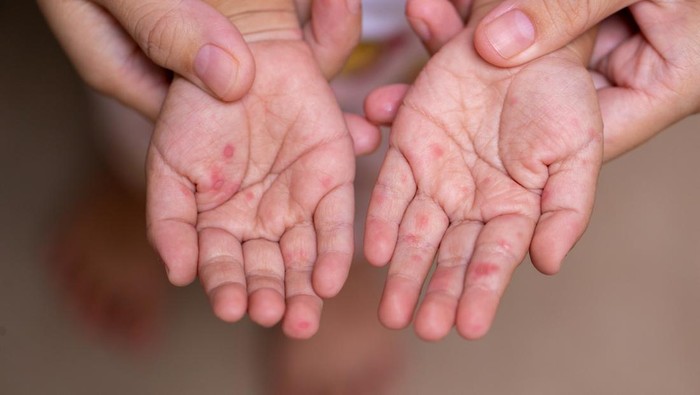
As the Eid al-Fitr homecoming season approaches, vigilance against infectious diseases has once again become a major concern. One of these is measles, which has reportedly seen a rise in cases in several regions, including the Special Region of Yogyakarta (DIY). Head of Disease Prevention and Control at the DIY Health Office, Dr. Ari Kurniawati, revealed that measles cases in Yogyakarta have increased in recent months. As of the ninth week of 2026, a total of 73 confirmed measles cases have been recorded, representing an approximately 5.6-fold increase compared to the same period last year. She explained that most cases have been found among children aged 2–9 years.
“Some cases have also occurred in infants under nine months who are not yet eligible for vaccines,” Ari stated during the TropmedTalk talk show titled “Rising Measles Cases Ahead of Homecoming: Should We Panic?”, held online by the UGM Center for Tropical Medicine (PKT), Tuesday (3/17).
A lecturer at the Department of Child Health, Faculty of Medicine, Public Health, and Nursing (FK-KMK UGM), Dr. Ida Safitri Laksanawati, Sp.A(K)., noted that this vulnerability affects not only children but also adults. The key factor lies in the completeness of the Measles and Rubella (MR) combination vaccine doses. According to her, although coverage of the first dose of vaccination in DIY is relatively high, exceeding 95%, coverage of the second dose remains around 90%. This gap creates a vulnerability in maintaining herd immunity.
“This should serve as a warning for us. When MR2 coverage is not optimal, within the next five years, antibody levels in vaccinated individuals will decline significantly,” the pediatrician emphasized at Dr. Sardjito General Hospital.
Ida stressed that the public should not respond to this situation with excessive panic, but rather with increased vigilance through careful preparation. She encouraged travelers to be more cautious in assessing risks before traveling.
“Pay attention to where cases are spreading and with whom you will be traveling. This is especially important for family members in high-risk age groups, such as six-month-old infants who have not yet received the measles vaccine. If it is not essential, avoid taking them into crowded places,” she explained.
Meanwhile, a lecturer in the Department of Biostatistics, Epidemiology, and Population Health at FK-KMK UGM, Dr. Risalia Reni Arisanti, shared field findings indicating that transmission often occurs unknowingly within families. According to her observations, because early symptoms resemble those of other diseases, such as dengue fever, people often do not initially suspect measles, leading to less appropriate medical treatment. As a preventive measure, she urged the public to be more alert.
“Each of us is expected to act wisely. When feeling unwell, the first step is to wear a mask and limit interactions to prevent transmission,” she said.
Author: Aldi Firmansyah
Editor: Gusti Grehenson
Post-editor: Zabrina Kumara
Photo: iStock