


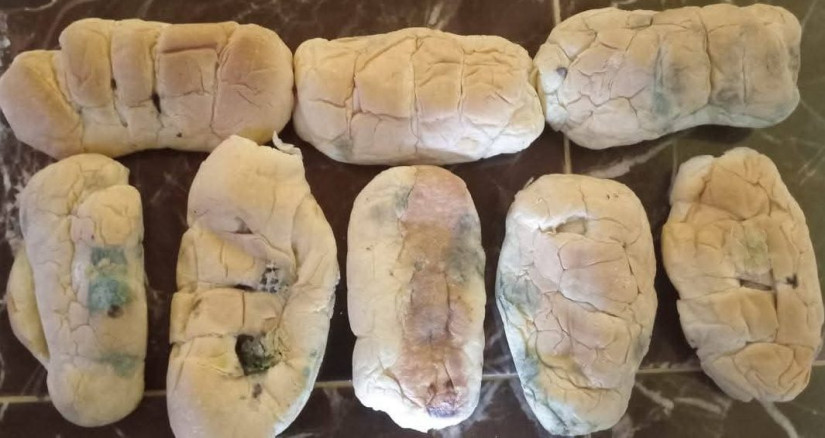
Moldy bread was found in the dry meal packages distributed under the Free Nutritious Meals (MBG) program during Ramadan. In one case, hundreds of loaves distributed through the program in Blora Regency, Central Java, were returned to the Nutritional Fulfillment Service Unit (SPPG) after mold was discovered.
Similar incidents were also reported at State Junior High School (SMPN) 1 Delanggu, as well as in several areas in South Sumatra, including State Elementary School (SDN) 1 Tugu Papak in Semaka District, SDN 1 Kanyangan, SDN 1 Negarabatin, and SDN 1 Pulau Benawang in West Kotaagung District, along with several other elementary schools in East Kotaagung.
Although bread is considered practical for storage and distribution, the MBG program implemented as bread should still prioritize food quality and safety for consumption.
Professor of Pharmacology and Clinical Pharmacy at the Faculty of Pharmacy UGM (Pharmacy UGM), Professor Zullies Ikawati, stated that the discovery of moldy bread in the MBG menu should be a serious concern for many parties. While the program aims to improve nutritional intake among schoolchildren, food safety must remain the top priority. Moldy bread indicates the growth of microorganisms and means the product is no longer safe to consume.
“Incidents like this are generally related to problems in storage, distribution, or poorly controlled shelf life. Therefore, the procurement system, storage practices, and food quality monitoring in the MBG program must be strengthened to prevent similar incidents from recurring,” she said at the Faculty of Pharmacy, Universitas Gadjah Mada, on Friday (Mar. 6).
As an expert in pharmacology and clinical pharmacy, Professor Zullies explained that moldy bread is usually contaminated by molds such as Aspergillus, Penicillium, or Rhizopus. In addition to visible mold growth, some types of molds can produce mycotoxins, toxic compounds generated by fungi.
“Examples include Aflatoxin, Ochratoxin, or other toxins, depending on the type of mold. Although not all molds produce toxins, as a general principle, moldy food should not be consumed because we cannot easily determine the type of mold present or whether it has already produced toxins,” she explained.
Professor Zullies emphasized that consuming moldy bread can cause various health effects. For some individuals, it may lead to digestive problems such as nausea, vomiting, stomach pain, or diarrhea. In sensitive individuals, molds can also trigger allergic reactions.
Furthermore, if contaminated food contains certain levels of mycotoxins, long-term consumption may lead to more serious consequences, including liver disorders or other toxic effects.
“In children, whose immune systems are still developing, the risk of health effects can be greater than in adults,” she said.
According to Professor Zullies, moldy bread does not necessarily mean that the product has passed its expiration date. Bread may still develop mold before the expiry date if it is stored improperly, such as in overly humid environments or at excessively warm temperatures. Under these conditions, mold can grow more quickly. Therefore, regardless of the expiration date, moldy bread should not be consumed.
There are several physical signs indicating that bread is no longer safe to eat. Professor Ikawati mentioned the appearance of mold spots or patches, usually green, black, white, or bluish. Bread may also emit an unusual musty or sour odor, have an excessively moist or slimy texture, or show discoloration on its surface.
“If any of these signs appear, the bread should not be consumed,” she advised.
To prevent similar incidents in the future, Professor Ikawati hopes that relevant authorities will strengthen food quality supervision from production to distribution. This includes monitoring shelf life and production dates for every distributed product, ensuring proper storage conditions, such as appropriate temperature and low humidity, and implementing inspection systems before distribution to schools to detect unfit food early.
“If necessary, food safety training should also be provided to those involved in preparing school meals. With a proper monitoring system, the risk of food contamination like this can actually be minimized,” she added.
Author: Agung Nugroho
Post-editor: Jasmine Ferdian
Photo: Sebelas.Id