


The economic burden of healthcare services globally has reportedly continued to rise, reaching up to 10% of the world’s GDP. In Indonesia, rising healthcare costs are driven by the growing burden of catastrophic diseases and medical inflation, with catastrophic diseases contributing IDR 37 trillion in 2024, accounting for around 31% of the total National Health Insurance (JKN) budget. In addition, medical inflation, which is projected to exceed 13%, far above general inflation, has further escalated healthcare costs in Indonesia.
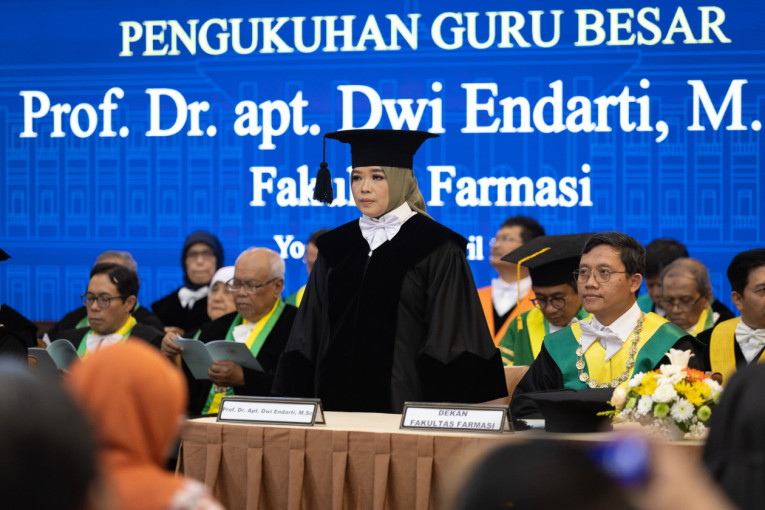
Professor of Pharmacology at the UGM Faculty of Pharmacy (Pharmacy UGM), Professor Dwi Endarti, stated that decision-making to promote cost-effectiveness of medicines should be evidence-based, utilizing Health Technology Assessment (HTA) to ensure that healthcare financing and access to quality medicines and vaccines remain efficient and affordable.
According to her, pharmacoeconomics plays a crucial role in Health Technology Assessment (HTA) by providing scientific evidence on the cost-effectiveness of one health technology compared to others, rather than focusing solely on clinical effectiveness.
“Pharmacoeconomic studies compare two or more healthcare interventions in terms of costs and treatment outcomes,” she explained in her inaugural speech titled The Role of Pharmacoeconomic Modeling in Ensuring Innovative Medicines in the National Health Insurance Program, Thursday (Apr. 3).
Pharmacoeconomic studies are conducted on medicines or healthcare interventions that are considered newer and proposed as alternatives to those currently used in practice. One of the most widely used types of pharmacoeconomic study in many countries, including Indonesia, is Cost-Utility Analysis (CUA), which uses humanistic outcomes typically expressed in Quality-Adjusted Life Years (QALY). QALY combines the quantity of life (life expectancy) with the quality of health measured in utility values.
“The use of the universal QALY unit enables more objective comparisons across various therapies and disease types,” she said.
Pharmacoeconomic studies can be conducted alongside clinical trials (observational methods) or through modeling. This approach offers advantages in utilizing actual data that reflect real-world medicine use. However, real-world data are only available after a drug has received marketing authorization and are limited in their ability to observe treatment outcomes, which somewhat contradicts the purpose of such studies.
“Considering current trends in health technology development aim to address long-term health problems that require substantial costs, such as cancer and degenerative diseases,” she noted.
In this study, a Decision Tree model was used, which is suitable for decision-making in short-term problems. Additionally, the Markov model was applied to describe disease progression or treatment processes as a series of health states.
Professor Dwi Endarti explained that healthcare service costs continue to rise due to the high price of innovative medicines. Therefore, quality and cost control measures are needed in determining healthcare benefit packages within the National Health Insurance program by selecting interventions based on the principle of best value for money.
“Pharmacoeconomic modeling is one solution to provide information on the cost-effectiveness of innovative medicines before they are included in healthcare benefit packages,” she concluded.
Efforts to promote pharmacoeconomic research in universities, hospitals, the pharmaceutical industry, and other research institutions must continue to be strengthened to enrich databases of pharmacoeconomic studies aligned with Indonesia’s local context. These efforts are expected to contribute to national policy-making, particularly in selecting innovative medicines for the JKN program.
Chair of the Board of Professors, Professor Muhammad Baiquni, noted that Professor Dwi Endarti is one of 541 active professors at UGM and one of 23 active professors among the 49 professors ever appointed at the Faculty of Pharmacy.
Author: Jelita Agustine
Editor: Gusti Grehenson
Post-editor: Jasmine Ferdian
Photo: Donnie