


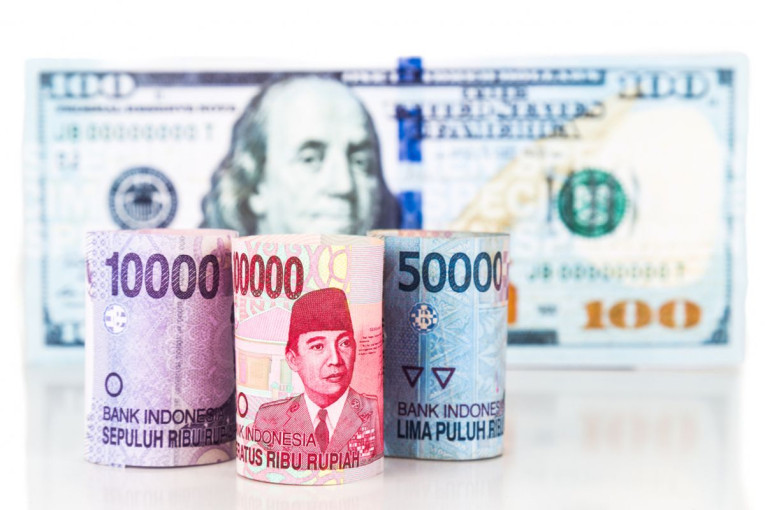
Geopolitical tensions in the Middle East are adding pressure to the global economy, including Indonesia. Rising energy prices, currency depreciation, and the threat of imported inflation are creating layered pressures that could restrain national economic growth in 2026.
Household purchasing power, which has long been the key to our economy, has not yet fully recovered. This situation leaves Indonesia vulnerable to unpredictable external shocks. Under these conditions, the direction of economic policy is a key factor in maintaining stability while promoting growth.
According to Yudistira Hendra Permana, a lecturer in the Department of Economics and Business at the Vocational College, Universitas Gadjah Mada (SV UGM), global uncertainty poses a more complex challenge than open conflict. The current geopolitical dynamics do not fully lead to direct warfare, instead marked by maneuvers and strategic pressures among countries. This creates a broad and difficult-to-anticipate space of uncertainty for many nations, including Indonesia. In such circumstances, hasty policy responses could amplify existing risks.
“What we are facing now is not open war, but a situation full of uncertainty, where each party exerts pressure without entering a major conflict. This makes it more difficult to respond because the direction of change is unclear,” said Yudis on Tuesday (Apr. 7).
Global pressures have also spilled over into the domestic economy through interconnected economic channels. Yudis noted that current inflation is driven more by rising production costs than by increased demand.
Higher energy and raw material prices have directly affected the real sector, including food commodities, which are essential for the public. Supply disruptions and increased production costs in the food sector have also contributed to rising consumer prices.
“The inflation we are currently experiencing largely comes from the cost side, from rising production costs, while people’s purchasing power has not fully recovered, making the pressure feel even heavier,” he explained.
These conditions have also affected business confidence in future economic prospects. He explained that survey results among industry players indicate concerns about increasing pressures in the near term.
The business sector views both global and domestic uncertainty as factors that could hinder expansion and investment. In this situation, caution has become the prevailing approach among economic actors.
“Businesses are looking ahead quite cautiously because cost pressures remain high and uncertainty has not subsided, so their expectations for the coming months tend to be less optimistic,” Yudis said.
Amid these pressures, Yudis observed that Indonesia’s economic policies still tend to be short-term oriented. He noted that many decisions focus more on maintaining immediate stability rather than building long-term foundations. This approach often results in reactive policies that respond to evolving conditions.
Additionally, fiscal space may come under strain when the government implements priority programs requiring large budgets without adequate planning.
“Often, the focus is on ensuring that the current year remains stable, while long-term planning receives less attention, making policies appear reactive and lacking a strong direction,” he added.
Furthermore, he highlighted that political considerations often influence the direction of economic policy. Yudis pointed out that some programs are implemented not solely based on economic needs but also on their political implications. This could create significant fiscal burdens if not supported by sound planning. In the long run, such conditions may reduce the government’s flexibility in responding to crises.
“When policies are heavily influenced by political considerations, fiscal risks become greater because decisions are not fully based on real economic needs,” he emphasized.
The impact of this less-than-optimal policy approach is beginning to be felt in the real sector and the financial system. Yudis stressed that cost pressures and uncertainty could slow credit distribution.
At the same time, banks face challenges in maintaining a balance between deposit and lending interest rates amid global interest rate dynamics. This situation could narrow the space for businesses to grow.
“When cost pressures rise, and uncertainty is high, banks will be more cautious in extending credit, affecting the real sector and limiting economic growth,” he said.
To address these challenges, Yudis underscored the importance of a strong commitment to long-term policies. He stated that investment in human capital development and the energy sector is key to strengthening economic resilience. Without consistent strategic measures, Indonesia risks remaining trapped in a recurring cycle of short-term policies. He emphasized that the courage to set clear priorities is urgently needed.
“If we want to be strong in the long term, then commitment to human capital development and energy transformation must be seriously implemented, not merely discussed,” he asserted.
In conclusion, he assessed that Indonesia’s current economic policy foundation is not yet sufficiently strong to withstand layered crises. Yudis explained that various structural challenges still need to be addressed to ensure more effective policies.
Without fundamental improvements, global pressures will continue to significantly impact the national economy. In the current situation, policy consistency and clear direction are crucial.
“Our foundation is not yet strong enough, so when pressures come from multiple directions, the responses are often suboptimal and require substantial improvement,” he concluded.
Author: Triya Andriyani
Post-editor: Jasmine Ferdian
Photo: Donnie and Kompas