


The phenomenon of thrifting, or hunting for secondhand items, has shifted from mere frugality to a popular lifestyle trend among young people. Although often perceived as an economical and eco-friendly solution, the practice of importing secondhand clothing carries complex consequences, particularly in driving overconsumption and exacerbating the environmental crisis caused by textile waste from fast fashion. In addition, this activity poses serious challenges to local industries and products. Recently, the government has even issued a policy to halt the import of secondhand clothing.
Brand Ambassador for Sahabat Lingkungan, Pujia Nuryamin Akbar, highlighted the environmental impact of secondhand clothing use. She noted that most used apparel is made from polyester, which contains microplastic compounds.
“The majority is made from materials containing microplastics. These particles not only end up in landfills but also break down during washing and eventually pollute the ocean,” she emphasized during the Master of Communication Discussion (Diskoma) held by the Faculty of Social and Political Sciences, Universitas Gadjah Mada (Fisipol UGM), titled “Behind the Thrifting Euphoria: Lifestyle, Environmental Crisis, and the Illusion of Sustainability,” on Thursday (Nov. 27) in an online format.
Akbar further traced the historical roots of the term “thrift”. Since the 14th century, she explained, thrift has been associated with values of frugality and responsible resource use.
She argued that the rise of modern thrifting cannot be separated from digital trends that promote overconsumption. Historically, the practice entered Indonesia through ports in Sumatra, Batam, and Sulawesi in the 19th century.
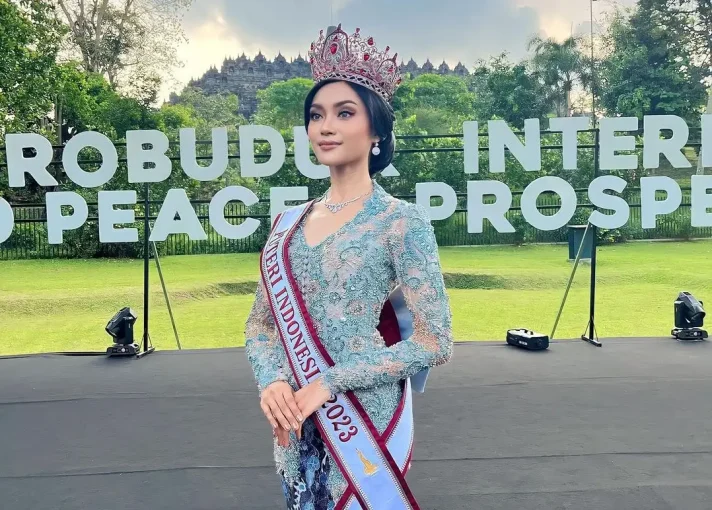
Meanwhile, Puteri Indonesia 2023 Farhana Nariswari discussed the impact of fast fashion and the unequal distribution of global textile waste. She presented data showing that most donated clothing from developed countries ultimately ends up in developing nations.
“Only about 10 percent of donated clothing is actually reused. The remaining 90 percent becomes waste that ends up in developing countries,” Nariswari explained.
Nariswari also emphasized the importance of appreciating local products. She introduced the concept of high-quality, handcrafted items (artigianale) and linked them to Indonesia’s rich textile heritage, such as tenun and batik.
“I wear fabrics from various regions during photoshoots and activities throughout the Puteri Indonesia pageant series as a form of support for local artisans,” she concluded.
Author: Aldi Firmansyah
Editor: Gusti Grehenson
Post-editor: Rajendra Arya
Photograph: Farhana Nariswari