


Indonesia’s agricultural sector is currently facing dual pressures: soil erosion and human resource erosion. Land degradation caused by monoculture practices, excessive use of chemical fertilizers, and land conversion has lowered soil quality and increased production costs. This condition coincides with young people’s declining interest in pursuing farming, further hindering regeneration. Ironically, the perception that farming is an unpromising profession has led to an aging population dominating the sector.
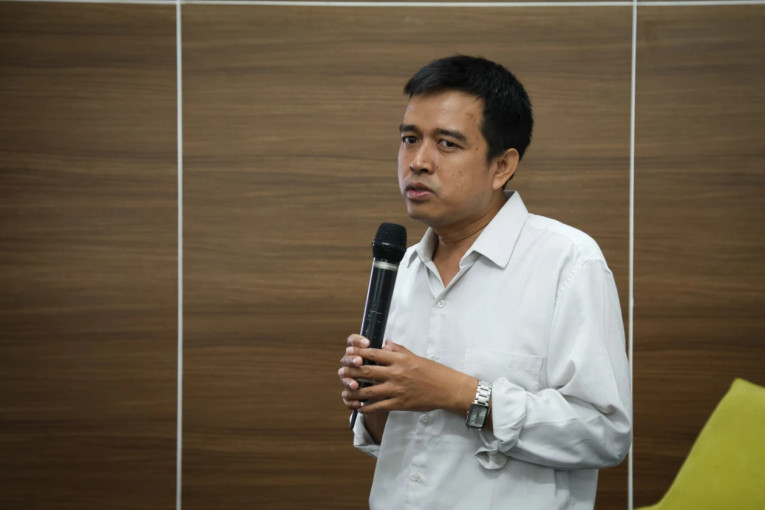
In a webinar titled “Synergy of Knowledge and Institutions for Sustainable Agriculture”, lecturer at the Department of Social Development and Welfare, Dr. Hempri Suyatna, described this phenomenon as alarming and requiring serious intervention.
He noted that the failure of farmer regeneration stems from agriculture’s inability to compete with other occupations perceived as more stable. In his presentation, Dr. Suyatna underscored the urgency of the situation.
“The average age of our agricultural workforce is above 45, and very few young people are interested,” he said.
In his view, farmer vulnerability is not rooted in a lack of effort, but in an economic system that does not support them. He explained that agricultural distribution chains remain dominated by intermediaries, leaving farmers with little bargaining power.
This dependency keeps farmers’ incomes from improving despite their hard work. Dr. Suyatna highlighted the deeper issue behind this condition.
“Farmers are not poor because they are lazy, but because of structural barriers,” he emphasized.
At the local level, various structural challenges amplify the problem. Farmers still face limited access to capital and technology, hindering productivity growth. Additionally, low managerial capacity and the absence of a productive business orientation make it difficult for farmers to create added value.
Responding to these issues, Dr. Suyatna shared observations from the field.
“Many factors influence this situation, such as agricultural product prices that are often manipulated by middlemen,” he added.
According to Dr. Suyatna, the most critical weakness lies in farmer institutions. He noted that most farmer groups have yet to function as economic organizations and remain mainly focused on implementing government programs.
With minimal collective action, farmers lack the bargaining power to access markets more equitably. He further explained the challenges these institutions face.
“The role of farmer institutions in responding to government programs is still considered insufficient, and member support has yet to reach its full potential,” he said.
Farmer institutions, Dr. Suyatna continued, form an essential foundation for increasing competitiveness and improving member welfare. Strong institutions enable farmers to develop joint planning, enhance production capacity, and strengthen marketing networks.
Such collective efforts are believed to support the creation of a more stable village agricultural ecosystem. He reiterated the broader significance of institutional strength.
“Institutions are not merely activity platforms, but socioeconomic frameworks,” he stated.
In his concluding remarks, Dr. Suyatna expressed his hopes for the future of Indonesia’s agricultural sector. He believes that strengthening farmer institutions can help improve agriculture’s image, making it more modern and appealing to younger generations.
Furthermore, robust institutions are expected to serve as an entry point for developing more structured village agribusiness systems.
“We hope that strong institutions will enhance member competitiveness and become the entry point for agribusiness systems at the village level,” he concluded.
This webinar is part of the science and technology campaign Empowering Research, Advancing Food Security, supported by the Directorate for the Dissemination and Utilization of Science and Technology, Ministry of Higher Education, Science, and Technology, through the Science and Technology Campaign Program (Resona Saintek).
Author: Aldy Firmansyah
Editor: Triya Andriyani
Post-editor: Rajendra Arya