


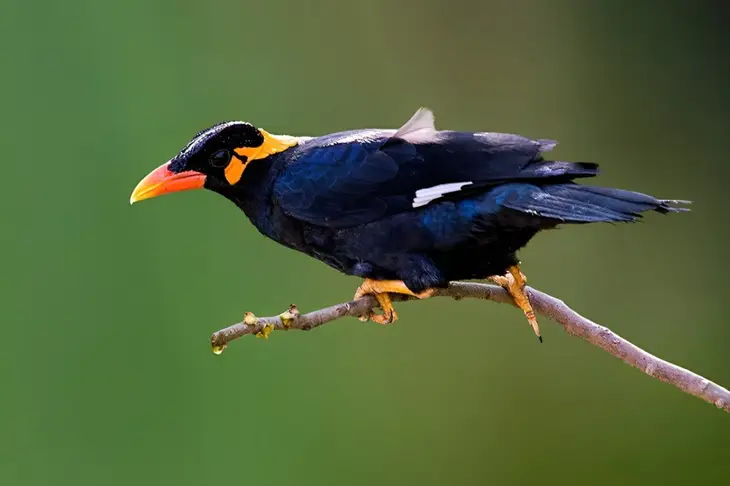
Songbirds remain a prime commodity, driving bird hunting rates in Indonesia, particularly on the island of Sumatra. Data compiled by FLIGHT (Protection Indonesia’s Birds) show that from 2023 to 2025, authorities confiscated up to 134,515 songbirds. Of this total, 70.21 percent originated from the Sumatra region.
Wildlife observer and lecturer at the Faculty of Biology, Universitas Gadjah Mada (Biology UGM), Donan Satria Yudha, links this songbird-hunting phenomenon to cultural, economic, and weak monitoring factors in conservation areas.
Donan explained that bird hunting is rooted in various long-standing societal reasons. He noted at least four main motives behind the widespread hunting of birds: keeping birds as pets, hunting as a hobby, consumption, and eradication due to their perceived status as pests. The problem arises when the hunted birds belong to rare species that threaten ecosystem balance.
“Legal hunting can actually be beneficial if properly regulated. Through an appropriate licensing and management system, such activities can contribute to habitat preservation. However, uncontrolled illegal hunting will instead disrupt ecosystem balance,” he said on Thursday (Apr. 30).
Regarding the high rate of poaching in Sumatra, Donan pointed to interrelated factors. Economic reasons play a significant role, supported by strong market demand. Moreover, Java serves as a major transit point for birds hunted in Sumatra. There is also a long-standing perception in Javanese society that bird ownership symbolizes authority and has become part of daily philosophy since ancient times.
“Songbirds have high economic value. Market demand, especially in Java, is also strong, resulting in a continuous supply chain of hunted birds,” he explained.
He also highlighted habitat destruction from forest conversion, which further narrows birds’ habitat. This habitat crisis makes bird species more vulnerable to capture, brings them closer to human settlements, and increases their susceptibility to hunting.
In the ecosystem chain, birds play crucial roles in pollination, seed dispersal, and natural pest control. A decline in bird populations affects not only ecosystems but also humans. If bird populations drop drastically, forest regeneration will be disrupted.
“If bird populations decline sharply, forest regeneration will be hindered, which ultimately contributes to rising global temperatures and the threat of pest outbreaks that will disrupt the agricultural sector,” Donan emphasized.
To address these challenges, he emphasized the need for inclusive conservation approaches that involve communities as active subjects. Donan stressed that collaboration between the government and communities in the designation of conservation areas must be strengthened so that people develop an environmental perspective and collectively safeguard their surroundings.
“Usually, hunters come from outside the area, while local communities are the ones who truly protect the region. Therefore, they need to be involved from the beginning, for example, through village regulations. If communities develop environmental awareness, there is potential for ecotourism as an alternative and sustainable source of income,” he said.
Donan asserted that communities need approaches that not only prohibit but also empower. Education for younger generations and routine patrols are also essential steps to ensure the sustainability of bird conservation efforts.
Author: Ika Agustine
Editor: Gusti Grehenson
Post-editor: Rajendra Arya
Photo: Good News From Indonesia